+256-702 595 926 | info@bookgorillatracking.com

Kibale Chimpanzee Trekking: Complete Guide to Chimp Tracking

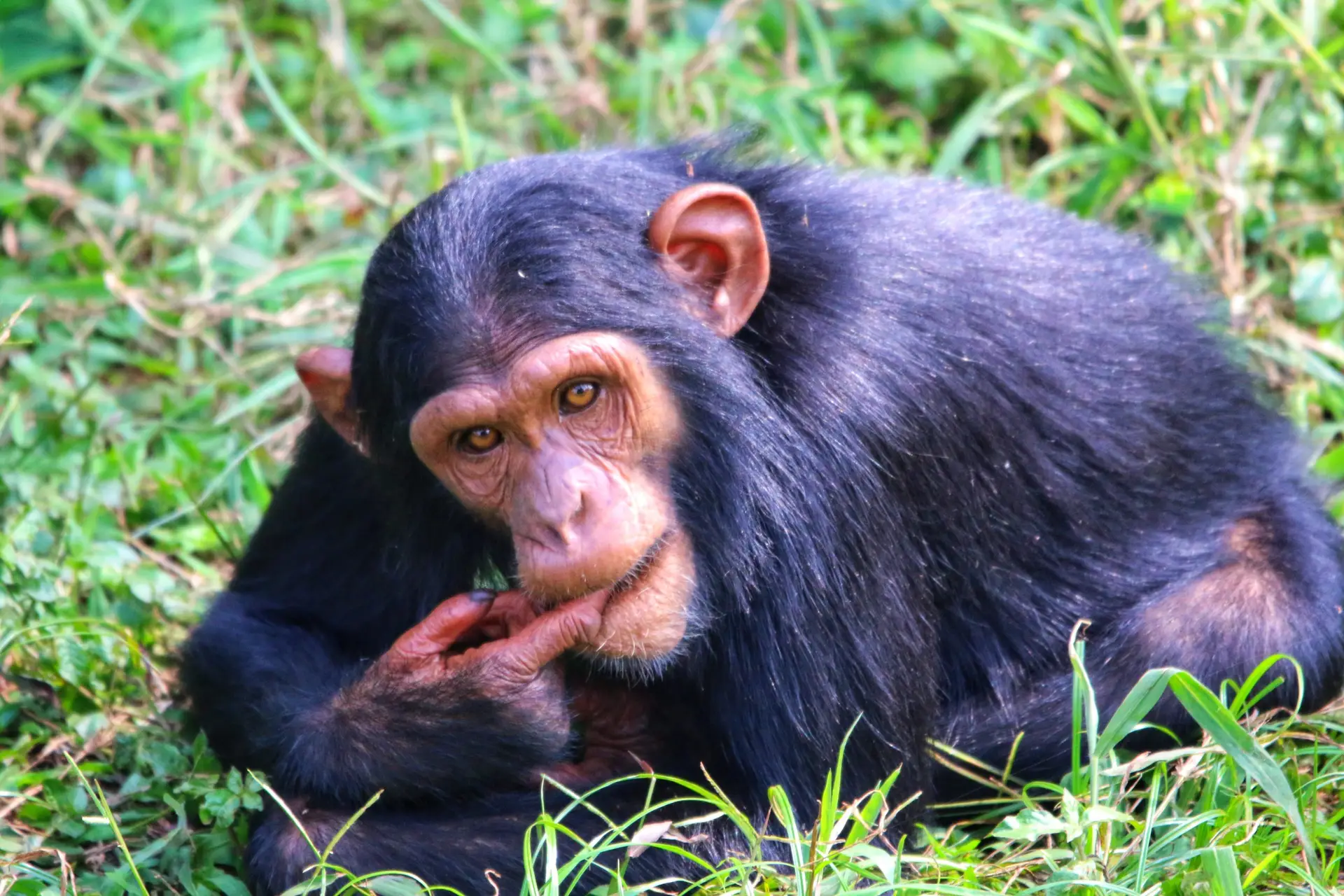
Kibale Chimpanzee Trekking: Complete Guide to Chimpanzee Tracking in Uganda
Kibale chimpanzee trekking is one of the most exciting wildlife experiences in Uganda. Deep in the lush forests of western Uganda, Kibale National Park protects one of Africa’s most important populations of wild chimpanzees and is renowned for its extraordinary diversity of primates.
Often called the “Primate Capital of the World,” Kibale is home to chimpanzees as well as red colobus monkeys, black-and-white colobus monkeys, red-tailed monkeys, L’Hoest’s monkeys and other primate species.
Unlike a conventional game drive where wildlife is often viewed from a vehicle, chimpanzee trekking takes you on foot into the rainforest. You follow experienced guides and trackers through the forest, listening for chimpanzee calls and searching the canopy for movement.
When you finally find the chimpanzees, the experience can be incredibly dynamic. They may be feeding high in the trees, grooming one another, playing, communicating loudly or moving rapidly through the forest.
This complete guide explains everything you need to know about Kibale chimpanzee trekking, including permits, trekking times, what to expect, the Chimpanzee Habituation Experience, the best time to visit, what to pack and how to combine Kibale with a wider Uganda safari.
Where Is Kibale National Park?
Kibale National Park is located in western Uganda, close to Fort Portal and south of the Rwenzori Mountains.
The park covers approximately 795 square kilometres and contains a mixture of tropical rainforest, woodland, grassland and wetland habitats. Its elevation and varied habitats support remarkable biodiversity.
The main tourism centre for chimpanzee trekking is Kanyanchu, which is the starting point for the park’s famous chimpanzee tracking experience.
Kibale can easily be included in a longer Uganda safari connecting destinations such as Queen Elizabeth National Park, Bwindi Impenetrable National Park, Semuliki National Park and Murchison Falls National Park.
Why Is Kibale Called the Primate Capital of the World?
Kibale is famous for its concentration and diversity of primates.
Uganda Wildlife Authority records 13 primate species in Kibale, making the forest one of Africa’s most important destinations for primate watching. These include chimpanzees, red colobus monkeys, black-and-white colobus monkeys, red-tailed monkeys, L’Hoest’s monkeys and grey-cheeked mangabeys.
The park is also home to numerous bird species and other forest wildlife.
For travellers interested in wildlife beyond the Big Five, Kibale offers a completely different safari experience: instead of open savannahs, you enter a dense tropical forest where wildlife is often hidden in the canopy and vegetation.
Chimpanzees in Kibale National Park
Kibale supports one of Uganda’s largest populations of wild chimpanzees, with UWA currently estimating more than 1,500 chimpanzees in the park.
Chimpanzees are our closest living relatives and share many characteristics with humans, including complex social relationships, communication, cooperation, grooming and tool use.
However, they remain wild animals and should always be treated with respect.
One of the most memorable parts of chimpanzee trekking is hearing them before seeing them.
A distant pant-hoot can suddenly echo through the forest. The calls may become louder as guides and trackers determine where the chimpanzees are moving.
Then, after following the trail through the vegetation, you may suddenly look into the canopy and discover a chimpanzee staring back at you.
What Is Kibale Chimpanzee Trekking?
Kibale chimpanzee trekking is a guided forest walk in search of habituated chimpanzee communities.
The experience begins with registration and a briefing at the Kanyanchu Visitor Centre. Visitors are then divided into trekking groups and accompanied by trained UWA guides and trackers.
According to current UWA guidance, chimpanzee tracking at Kibale takes place in morning and afternoon sessions, with tracking starting at approximately 8:00 AM and 2:00 PM. The actual trek can take several hours depending on where the chimpanzees are located and how they move through the forest.
Once the chimpanzees are located, standard tracking allows visitors a maximum of one hour of viewing time with them.
What Happens During a Chimpanzee Trek?
Your experience normally follows several stages.
1. Arrival at Kanyanchu
You arrive at the Kanyanchu Visitor Centre in time for registration and briefing.
Your guide explains the trekking rules, safety procedures and appropriate behaviour around chimpanzees.
2. Entering the Forest
After the briefing, you begin walking into Kibale’s rainforest.
The forest environment itself is part of the attraction. You may encounter other monkeys, birds, butterflies and signs of larger mammals along the trail.
3. Tracking the Chimpanzees
Experienced trackers look for signs that reveal where chimpanzees have moved.
These can include fresh nests, footprints, feeding remains and calls coming from the canopy.
Chimpanzees can travel considerable distances during the day, so the exact duration and difficulty of the trek cannot be guaranteed in advance.
4. Finding the Chimpanzees
The moment you locate the chimpanzees is usually the highlight.
You may see them high in the trees, moving through branches or occasionally on the forest floor.
Their behaviour can include feeding, grooming, playing, resting, calling and interacting with other members of their community.
5. One Hour With the Chimpanzees
Once you find the habituated chimpanzees, you can observe them for up to one hour during normal tracking.
Your guide helps interpret their behaviour and points out individuals and interesting activities.
Because chimpanzees are constantly moving, every trek is different.
How Difficult Is Kibale Chimpanzee Trekking?
Chimpanzee trekking in Kibale is considered a moderate forest adventure, but the difficulty varies considerably.
The forest has uneven terrain, roots, slopes, dense vegetation and muddy trails, particularly after rain.
Some days may involve relatively easy walking, while others can require several hours of hiking in search of a moving chimpanzee community.
A reasonable level of fitness is recommended.
If you are concerned about the physical demands, discuss your mobility and fitness level with your safari operator before booking. Hiring a porter can also make the experience easier while providing direct income to a member of the local community.
Kibale Chimpanzee Trekking Permit Price
Chimpanzee trekking requires a permit issued through Uganda Wildlife Authority.
The official UWA conservation tariff for July 2024–June 2026 listed Kibale chimpanzee tracking at:
| Visitor category | Chimpanzee tracking |
|---|---|
| Foreign Non-Resident | US$250 |
| Foreign Resident | US$200 |
| East African Citizen | UGX 180,000 |
The same tariff lists the Chimpanzee Habituation Experience at US$300 for foreign non-residents, US$250 for foreign residents and UGX 250,000 for East African citizens.
Because UWA tariffs can change, travellers planning a future safari should confirm the applicable rate for their travel dates before making payment.
Chimpanzee Habituation Experience in Kibale
If one hour with chimpanzees is not enough, consider the Chimpanzee Habituation Experience (CHEX).
Instead of tracking a fully habituated group for the standard viewing period, visitors spend an extended period observing a chimpanzee community that is undergoing habituation.
The experience begins earlier in the morning and provides an opportunity to observe chimpanzees over a much longer period.
You may watch them as they leave their nests, feed, move through the forest, socialize, rest and eventually prepare for another night in the trees.
Current UWA guidelines allow up to four hours of viewing time for the Chimpanzee Habituation Experience.
This makes habituation particularly attractive to photographers, wildlife enthusiasts, researchers and travellers who want a deeper understanding of chimpanzee behaviour.
UWA confirms that chimpanzee habituation and tracking take place throughout the year.
Best Time for Chimpanzee Trekking in Kibale
Kibale can be visited throughout the year.
Many travellers prefer the relatively drier periods of June to September and December to February, when forest trails are generally easier to navigate.
However, there is an interesting advantage to visiting during wetter periods.
UWA notes that chimpanzee tracking can be particularly rewarding during the rainy season because food is more abundant and chimpanzees may remain closer to accessible forest areas. During drier periods, chimpanzees may move deeper into the forest in search of food.
The trade-off is that rainy-season trekking can mean wetter and muddier trails.
For travellers who don’t mind getting muddy, the green rainforest and active wildlife can make the experience extremely rewarding.
What to Pack for Kibale Chimpanzee Trekking
Because Kibale is a tropical rainforest, good preparation makes a significant difference.
We recommend packing:
- Waterproof hiking boots
- Lightweight long trousers
- Long-sleeved shirt
- Lightweight rain jacket or poncho
- Gardening or hiking gloves
- Comfortable daypack
- Insect repellent
- Reusable water bottle
- Hat
- Sunscreen
- Camera with extra batteries
- Waterproof protection for cameras and electronics
- Walking stick
Avoid carrying unnecessary heavy luggage. You will appreciate travelling light once you are several kilometres into the forest.
Chimpanzee Trekking Rules
Chimpanzees are wild animals and are also susceptible to human diseases. Responsible tourism is therefore essential.
During your trek:
- Follow your guide’s instructions at all times.
- Maintain the required distance from the chimpanzees.
- Do not attempt to touch or feed them.
- Do not make unnecessary loud noises.
- Do not throw objects toward the animals.
- Do not leave food or rubbish in the forest.
- Avoid trekking if you are unwell.
- Follow current health and wildlife regulations issued by UWA.
Disease transmission is a genuine conservation concern because chimpanzees are biologically close to humans. UWA notes that disease is among the threats affecting chimpanzees and has documented similarities between parasites affecting chimpanzees and people living around protected areas.
The goal is simple: enjoy the encounter without changing the animals’ natural behaviour.
Wildlife and Birds You Can See in Kibale
Chimpanzees are the main attraction, but Kibale offers much more.
During a forest walk, you may encounter:
- Red colobus monkeys
- Black-and-white colobus monkeys
- Red-tailed monkeys
- L’Hoest’s monkeys
- Grey-cheeked mangabeys
- Olive baboons
- Forest elephants
- Bushbucks
- Duikers
- Giant forest hogs
- Numerous butterfly species
Kibale is also an excellent birding destination. UWA records approximately 370 bird species, including several Albertine Rift species.
For birdwatchers, the forest can produce exciting sightings alongside the chimpanzee experience.
Bigodi Wetland Sanctuary
A visit to Kibale should not necessarily end with chimpanzee trekking.
Nearby Bigodi Wetland Sanctuary offers an excellent community-based nature experience.
The wetland is particularly popular with birdwatchers and primate enthusiasts. Guided walks provide opportunities to explore papyrus wetlands, forest edges and community-managed landscapes.
Adding Bigodi to a Kibale itinerary is a good way to combine wildlife, birding and community tourism in one destination.
How to Get to Kibale National Park
By Road
Kibale can be reached by road from Kampala and Entebbe via Fort Portal.
UWA gives the road distance from Kampala to Kibale as approximately 326 kilometres, taking around six hours depending on road conditions and stops. From Fort Portal, the park is approximately one hour away.
For a safari, we normally recommend allowing additional time rather than planning the drive around the exact UWA estimate, as traffic, road conditions and sightseeing stops can affect journey times.
By Air
Travellers looking to reduce road travel can use domestic or chartered flights toward western Uganda, followed by a road transfer to Kibale.
UWA notes options involving Kasese and Fort Portal, with onward transfers to the park.
Where to Stay for Chimpanzee Trekking in Kibale
There are accommodation options around Kibale ranging from comfortable budget properties to luxury forest lodges.
When choosing accommodation, consider:
- Distance from Kanyanchu Visitor Centre
- Your safari budget
- Whether you want a forest setting
- Meal arrangements
- Availability of early breakfast
- Whether the lodge can arrange packed meals if needed
- Quality of service and guiding support
For early morning chimpanzee trekking, staying reasonably close to Kanyanchu can make the experience more comfortable.
As a tour operator, we generally recommend choosing accommodation based on the overall itinerary rather than simply selecting the most expensive lodge. A good location, reliable service and suitable meal arrangements can matter more than luxury alone.
Kibale Chimpanzee Trekking vs Gorilla Trekking
Kibale chimpanzee trekking and mountain gorilla trekking are different experiences.
Gorilla trekking generally involves spending time with a relatively settled gorilla family, while chimpanzees are often much more active and mobile.
Chimpanzees may move rapidly through the canopy, vocalize loudly and travel through the forest during your encounter.
Gorilla trekking is often more focused on observing social behaviour at ground level, while chimpanzee trekking can feel faster and more unpredictable.
If you have time and budget, combining both experiences creates one of Uganda’s most rewarding primate safaris.
Can You Combine Kibale With Gorilla Trekking?
Yes.
One of the most popular Uganda safari combinations is:
Entebbe/Kampala → Kibale → Queen Elizabeth National Park → Bwindi → Lake Mburo → Entebbe
This route allows travellers to combine chimpanzee trekking with:
- Wildlife game drives
- Kazinga Channel boat cruises
- Mountain gorilla trekking
- Birding
- Cultural experiences
- Forest walks
- Scenic landscapes
Kibale also combines naturally with Queen Elizabeth National Park because the two destinations are relatively close compared with many other Uganda safari routes.
Why Book a Chimpanzee Trekking Safari With a Local Operator?
Chimpanzee trekking is more than simply purchasing a permit and arriving at the park.
A well-planned safari should coordinate:
- Chimpanzee permits
- Accommodation
- Transportation
- Park activities
- Meals
- Driver-guide services
- Airport transfers
- Optional cultural and nature activities
- Connections with other national parks
A local operator can also help you choose the right trekking date, accommodation and route based on the rest of your Uganda itinerary.
This is especially important when combining Kibale with Bwindi gorilla trekking, because travel times between destinations can be significant.
Frequently Asked Questions About Kibale Chimpanzee Trekking
How much does chimpanzee trekking cost in Kibale?
The UWA tariff for July 2024–June 2026 listed the Kibale chimpanzee tracking fee at US$250 for foreign non-residents, US$200 for foreign residents and UGX 180,000 for East African citizens. Tariffs should be confirmed for your travel dates.
How long does chimpanzee trekking in Kibale take?
The total trek varies depending on the location and movement of the chimpanzees. UWA states that tracking typically begins at 8:00 AM for morning tracking and 2:00 PM for afternoon tracking. Standard viewing time after finding the chimpanzees is a maximum of one hour.
How long do you stay with the chimpanzees?
Standard chimpanzee tracking allows up to one hour of viewing. The Chimpanzee Habituation Experience allows up to four hours of viewing under current UWA guidelines.
Is chimpanzee trekking difficult?
The difficulty is moderate but varies. The rainforest can be muddy, slippery and uneven, and the chimpanzees may move deep into the forest. A reasonable level of fitness is recommended.
What is the best month for chimpanzee trekking in Kibale?
Kibale can be visited throughout the year. June to September and December to February are popular periods because conditions are generally drier, while wetter periods can offer lush scenery and potentially favourable chimpanzee movements.
Can children go chimpanzee trekking?
UWA’s current Kibale visitor information states that participants in chimpanzee tracking must be at least 16 years old. Always confirm the current regulations when booking.
Is chimpanzee trekking guaranteed?
No wildlife encounter can be guaranteed. However, Kibale has a long-established chimpanzee tracking programme and UWA reports a sighting success rate of more than 90% for its monitored Kanyanchu chimpanzee community.
Is chimpanzee habituation worth it?
For serious wildlife enthusiasts, photographers and travellers interested in primate behaviour, the habituation experience can be worth the additional time and cost because it provides a much longer observation period.
Final Thoughts: Is Kibale Chimpanzee Trekking Worth It?
Absolutely.
Kibale chimpanzee trekking offers one of the most immersive primate experiences in Africa. You don’t simply arrive at a viewing point and wait for wildlife to appear. You walk through an ancient rainforest, listen for calls, follow tracks and signs, and gradually enter the world of one of our closest living relatives.
The experience can be noisy, muddy, unpredictable and physically demanding.
That is exactly what makes it special.
One moment you may be walking quietly beneath enormous trees. The next, a loud pant-hoot erupts somewhere above you and the entire forest seems to come alive.
Then you see them.
A chimpanzee swings through the canopy. Another watches from a branch. Young ones play while adults groom each other. Somewhere nearby, another individual calls.
For anyone planning a Uganda safari, Kibale chimpanzee trekking deserves a place on the itinerary.
And when combined with Queen Elizabeth National Park, Bwindi gorilla trekking, Lake Mburo or other destinations, it can become part of a much bigger journey through Uganda’s forests, savannahs, lakes and communities.
Thinking of an East Africa trip? Look no further. Let us tailor your Kibale chimpanzee trekking safari around your interests, travel dates and budget.

[…] if you are arriving from Kampala or continuing to Kibale the following day. Travellers planning chimpanzee trekking should also consider the location of their accommodation relative to the park entrance and their […]
[…] Chimpanzee trekking is Kibale’s best-known wildlife activity. Visitors walk with authorized guides to locate habituated chimpanzees and observe their behavior during the day. […]