+256-702 595 926 | info@bookgorillatracking.com

Inyambo Cattle Rwanda: History of the Royal Long-Horned Cows

Inyambo Cattle in Rwanda: Discovering the Royal Long-Horned Cows and Their Cultural Significance
Introduction
Inyambo cattle, popularly known as Rwanda’s royal cows, are among the country’s most fascinating cultural symbols. These magnificent long-horned cattle have a special place in Rwanda’s traditional history, royal heritage and pastoral culture. For centuries, they were associated with the Rwandan monarchy, representing prestige, wealth, beauty and the importance of cattle keeping in traditional society.
Unlike ordinary cattle raised primarily for meat or milk production, Inyambo were historically bred and trained for ceremonial purposes. Their impressive horns, graceful appearance and distinctive movements made them important participants in royal celebrations and traditional ceremonies.
Today, visitors to Rwanda can learn about these remarkable animals at the King’s Palace Museum in Nyanza, where the royal cattle heritage is preserved and presented to visitors.
For travellers interested in African culture, traditional livestock keeping and Rwanda’s royal history, seeing the Inyambo cattle is a memorable experience. The visit can also be combined with the Ethnographic Museum in Huye, Kigali city tours and gorilla trekking in Volcanoes National Park.
Whether you are exploring Rwanda’s cultural attractions or planning a broader East African safari, learning about the Inyambo cattle offers a unique opportunity to discover an important part of Rwanda’s identity.
What Are Inyambo Cattle?
Inyambo are a traditional type of long-horned cattle historically associated with Rwanda’s royal court.
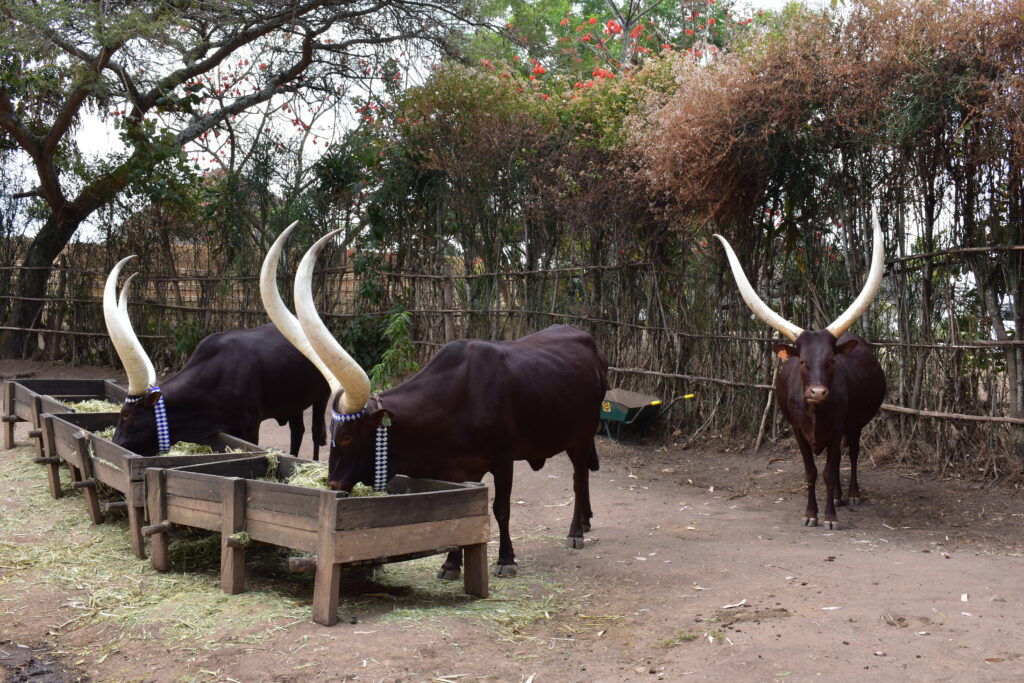
They are particularly recognised for their long, elegant horns, slender bodies and graceful appearance. Their distinctive physical features made them highly valued within the traditional Rwandan monarchy.
Inyambo were not simply livestock. They carried considerable cultural and symbolic importance and were closely connected to royal ceremonies, traditional leadership and the prestige of the kingdom.
The cattle were specially selected and trained to participate in ceremonial processions and royal events. Their handlers developed a close relationship with the animals, using traditional songs, poems and gentle guidance to encourage coordinated movements.
Today, Inyambo remain an important representation of Rwanda’s pastoral heritage and cultural history.
The History of Inyambo Cattle in Rwanda
The history of Inyambo cattle is closely connected to the development of Rwanda’s traditional monarchy and pastoral culture.
Historically, cattle were highly valued in Rwandan society. They represented more than economic wealth because they were associated with social status, prestige, family relationships and political influence.
Among the different cattle kept in the kingdom, Inyambo occupied a particularly distinguished position. Their distinctive appearance and ceremonial importance made them closely associated with the royal court.
Historical accounts trace the development of the royal Inyambo herds to the reign of King Yuhi III Mazimpaka, when long-horned cattle became especially associated with royal prestige.
The cattle were carefully selected, bred and maintained under special arrangements. They were kept by dedicated caretakers who understood their behaviour and were responsible for maintaining their appearance and preparing them for ceremonial performances.
During the monarchy, Inyambo were regarded as royal treasures. Their presence at the palace demonstrated the king’s wealth, authority and cultural influence.
Even after Rwanda abolished its monarchy, the cultural significance of these cattle continued. Today, efforts to preserve their heritage have made them an important attraction at the King’s Palace Museum in Nyanza.
Physical Characteristics of Inyambo Cattle
Inyambo cattle are particularly admired for their remarkable physical appearance.
Although they belong to the wider family of East African long-horned cattle associated with the Ankole breed, they are distinguished by their royal heritage and ceremonial traditions.
Some of their notable characteristics include:
1. Exceptionally Long Horns
Their most recognisable feature is their impressive, elongated horns.
The horns often curve gracefully upwards and outwards, creating a distinctive appearance. Their size and shape are among the reasons these cattle became associated with royal prestige.
2. Graceful Body Structure
Inyambo are admired for their elegant physical appearance, including their relatively slender bodies, long legs and graceful movements.
Their appearance was historically important because they were expected to participate in royal processions and ceremonial displays.
3. Distinctive Coat Colours
Many Inyambo have brown or reddish-brown coats, although colour variations occur.
Their coats are carefully maintained by their handlers through regular grooming and attention.
4. Gentle Temperament
These cattle are known for their calm and graceful presentation.
Their traditional training and close relationship with their handlers help them remain accustomed to human presence and ceremonial activities.
5. Impressive Height and Appearance
Their tall body structure, long horns and elegant movements make them particularly impressive when seen in person.
For visitors encountering them for the first time, their appearance is often one of the most memorable aspects of a King’s Palace Museum excursion.
Why Are Inyambo Cattle Called Royal Cows?
Inyambo are called royal cows because of their historical association with Rwanda’s kings and royal court.
During the monarchy, they were maintained as prestigious animals and featured in important royal ceremonies.
Their ownership and presentation were associated with the authority, wealth and dignity of the king.
Unlike ordinary livestock maintained mainly for agricultural production, the royal Inyambo herd had a special ceremonial purpose.
They were displayed during important events, including celebrations and gatherings held in honour of the king.
The cattle could also be presented as prestigious gifts to visiting dignitaries and other royal figures.
Their historical role explains why they remain important symbols of Rwanda’s royal heritage today.
The Role of Inyambo Cattle in Traditional Rwandan Ceremonies
One of the most fascinating aspects of Inyambo cattle is their historical participation in royal ceremonies.
During the monarchy, these animals were trained to participate in organised processions in front of the king and members of the royal court.
Their handlers used traditional songs, poetry and movements to guide them.
The cattle were sometimes decorated with beautiful ornaments and jewellery, making their appearance even more impressive during ceremonial occasions.
Their graceful movements and long horns created a distinctive spectacle that reflected the importance of cattle within traditional Rwandan culture.
These ceremonies were not simply entertainment. They demonstrated the cultural relationship between the monarchy, livestock keeping and the pastoral traditions of Rwanda.
How Were Inyambo Cattle Trained?
The traditional training of Inyambo cattle is among the most interesting aspects of Rwanda’s royal heritage.
Historically, young cattle were placed under the care of experienced handlers who gradually trained them to respond to particular songs, sounds and movements.
The training involved patience, regular interaction and a strong relationship between the animals and their caretakers.
Two important traditional forms of vocal expression were used:
Amahamba: Traditional songs associated with guiding and communicating with the cattle.
Amazina y’inka: Traditional Rwandan cattle poetry, through which handlers praised the animals’ beauty, appearance, horns and graceful movements.
The handlers used these expressions to guide the cattle during ceremonial processions.
The animals learned to follow their handlers’ movements, making it possible to organise graceful parades during important royal occasions.
This tradition continues to be preserved at the King’s Palace Museum, where visitors can learn about the relationship between the cattle and their caretakers.
The Importance of Traditional Songs and Poetry to Inyambo Cattle
Traditional songs and poetry are central to the cultural experience of Inyambo cattle.
Rwandan cattle poetry is an important form of oral heritage that celebrates the beauty, strength and value of cattle.
Handlers traditionally composed or recited poetic expressions describing the animals’ physical characteristics, particularly their impressive horns, body structure and graceful appearance.
These expressions were also used during ceremonies to guide the cattle and maintain their calm behaviour.
When visiting the King’s Palace Museum, travellers may have an opportunity to witness handlers singing or reciting traditional poetry to the cattle.
This is a particularly fascinating cultural experience because it demonstrates how music, oral traditions and livestock keeping were connected within Rwanda’s traditional society.
Where Can You See Inyambo Cattle in Rwanda?
The most recognised destination for visitors interested in seeing Rwanda’s royal cattle is the King’s Palace Museum in Nyanza District, Southern Province.
The museum preserves important elements of Rwanda’s former monarchy and provides an opportunity to discover the country’s royal heritage.
The Inyambo cattle are kept within the museum grounds, where visitors can learn about their history, traditional care and ceremonial significance.
The museum experience includes:
-
Learning about the history of Rwanda’s royal cattle.
-
Observing the impressive long horns.
-
Discovering traditional cattle-keeping practices.
-
Understanding the relationship between the cattle and the monarchy.
-
Learning about traditional songs and cattle poetry.
-
Discovering how Inyambo were prepared for royal ceremonies.
The royal cattle are descended from the historical royal herd and are maintained as part of Rwanda’s cultural heritage.
Visiting Inyambo Cattle at the King’s Palace Museum
A visit to the Inyambo cattle is an excellent cultural activity for travellers exploring Nyanza.
Upon arrival at the King’s Palace Museum, visitors can explore the historical palace exhibitions before proceeding to learn about the royal cattle.
The experience introduces visitors to the special relationship between the animals and their caretakers.
Depending on the arrangements made, visitors may have an opportunity to observe the cattle being groomed, fed or guided through traditional presentations.
The caretakers explain the importance of the animals, their physical characteristics and the cultural practices associated with their maintenance.
It is advisable to arrange the specific Inyambo visiting experience in advance because access and special presentations are subject to museum arrangements.
Can Tourists Watch Inyambo Cattle Perform Traditional Parades?
Yes. Visitors can enquire about special Inyambo presentations at the King’s Palace Museum.
Traditional parades involve the handlers guiding the cattle through coordinated movements while using songs and poetry.
These presentations recreate elements of the ceremonies that were historically performed during the Rwandan monarchy.
However, a parade should not be assumed to be included in every ordinary museum visit. Visitors should arrange the activity separately and confirm its availability and applicable charges.
The Rwanda government’s Irembo platform provides an official service for arranging visits to Inyambo cattle through the Rwanda Cultural Heritage Academy.
The Role of Inyambo Cattle in Modern Rwanda
Although Rwanda is no longer governed by a monarchy, Inyambo cattle remain important cultural symbols.
Their preservation demonstrates the country’s commitment to maintaining traditional knowledge and protecting elements of its historical identity.
The Rwanda Agriculture Board has been involved in breeding and maintaining the royal cattle, helping preserve their distinctive characteristics and associated traditions.
Their presence at the King’s Palace Museum also supports cultural tourism, giving international visitors an opportunity to discover Rwanda’s pastoral heritage.
Inyambo have also become associated with modern cultural diplomacy, with special cattle sometimes featuring in prestigious gift-giving traditions involving national leaders.
Today, these cattle represent a connection between Rwanda’s historical monarchy and its contemporary cultural identity.
Inyambo Cattle and the Wider Ankole Cattle Heritage
Inyambo cattle are closely associated with the wider Ankole long-horned cattle heritage of East Africa.
The Ankole cattle are found in countries including Rwanda, Uganda and Burundi.
They are particularly recognised for their long horns, which are among the most distinctive features of traditional cattle in the region.
In Uganda, long-horned Ankole cattle are particularly associated with southwestern communities, especially in the cattle-keeping areas of Ankole.
In Rwanda, Inyambo have a special historical distinction because of their association with the royal court and ceremonial traditions.
Although the animals share a wider regional cattle heritage, the term Inyambo is especially associated with Rwanda’s royal cattle tradition.
For travellers interested in East African pastoral culture, comparing Rwanda’s Inyambo heritage with Uganda’s Ankole cattle traditions offers an interesting cultural experience.
Other Attractions to Combine with an Inyambo Cattle Visit
A visit to the royal cattle can be combined with several other attractions in Rwanda.
1. King’s Palace Museum
The King’s Palace Museum is the principal attraction for visitors interested in Rwanda’s royal heritage.
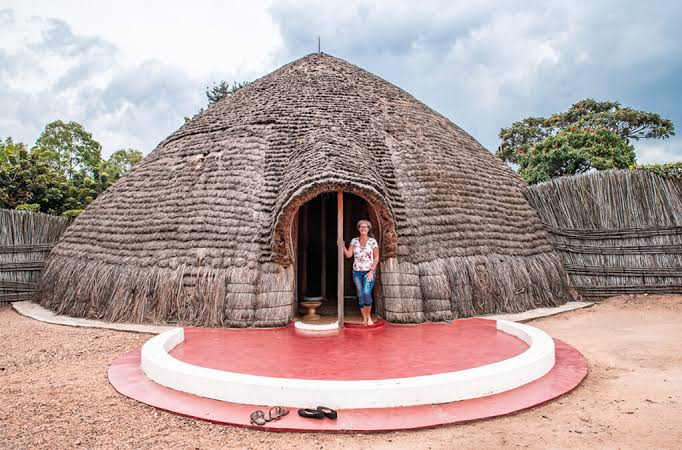
Explore the reconstructed traditional royal residence, the modern palace associated with King Mutara III Rudahigwa and the historical exhibitions explaining the country’s monarchy.
The Inyambo cattle experience is one of the main highlights of visiting the museum.
2. Ethnographic Museum in Huye
The Ethnographic Museum provides a broader understanding of Rwanda’s traditional lifestyle and cultural history.
Visitors can explore traditional agricultural equipment, pottery, basketry, clothing, architecture and historical artefacts.
The museum is an excellent addition to a King’s Palace excursion because it complements the royal history with a wider exploration of Rwandan society.
3. Mwima Mausoleum
The Mwima Mausoleum is associated with Rwanda’s former royal family.
It is another interesting historical attraction for travellers exploring Nyanza and the country’s monarchical heritage.
4. Kigali City
The Kigali City offers several historical, cultural and modern attractions.
Visitors can explore the Kigali Genocide Memorial, local markets, cultural institutions and other landmarks.
5. Nyungwe National Park
The Nyungwe National Park is ideal for travellers who want to combine cultural tourism with wildlife experiences.
Popular activities include chimpanzee tracking, canopy walkway experiences, birdwatching and guided rainforest walks.
How to Get to the King’s Palace Museum in Nyanza
The King’s Palace Museum is located approximately 88 kilometres from Kigali.
Visitors can reach Nyanza through the following transportation options.
By private safari vehicle: This is one of the most convenient options, especially for visitors combining the museum with other cultural attractions.
By public transportation: Buses operate between Kigali and destinations in Southern Rwanda. Visitors can use local transport to reach the museum from Nyanza town.
From Huye: Travellers visiting the Ethnographic Museum can continue to Nyanza to explore the King’s Palace and see the royal cattle.
For visitors booking with Book Gorilla Tracking, private transportation can be arranged as part of a customised Rwanda cultural safari.
Inyambo Cattle Visiting Fees and Booking Arrangements
Visiting Inyambo cattle is an organised museum activity offered through the Rwanda Cultural Heritage Academy.
The visiting service is available to both Rwandan citizens and international travellers.
According to the official IremboGov guidance, visitors need to provide identification details when applying. Rwandan citizens use their national identification numbers, while foreign visitors use their passport numbers.
The price varies depending on the particular visiting arrangements.
Visitors should first arrange and pay the applicable museum entrance fee before applying for the separate Inyambo visiting service.
Applications can be made through the official platform:
Advance arrangements are recommended, particularly for travellers who want a special presentation or organised cultural experience.
Best Time to Visit Inyambo Cattle in Rwanda
The Inyambo cattle can be visited throughout the year, subject to museum opening hours and visiting arrangements.
However, June to September is particularly convenient for travellers combining the experience with other outdoor activities across Rwanda.
December to February is another suitable period for cultural excursions.
Since the cattle experience is primarily organised within the King’s Palace Museum grounds, seasonal weather generally has less influence than it does on outdoor wildlife activities.
Visitors should nevertheless confirm the availability of their preferred experience before travelling.
Why Include Inyambo Cattle in Your Rwanda Safari?
Including an Inyambo cattle experience in your Rwanda itinerary adds a valuable cultural dimension to your holiday.
Many international visitors travel to Rwanda for mountain gorilla trekking, golden monkey tracking and wildlife experiences.
However, the country’s cultural heritage is equally fascinating.
A visit to the royal cattle provides opportunities to:
-
Discover Rwanda’s traditional monarchy.
-
Learn about the historical importance of cattle.
-
Understand traditional pastoral practices.
-
Experience traditional cattle poetry and songs.
-
Explore the history of the royal court.
-
Appreciate the cultural relationship between Rwanda and the wider East African cattle-keeping communities.
For travellers interested in cultural tourism, this experience offers something different from conventional wildlife safaris.
Suggested 5-Day Rwanda Cultural and Gorilla Trekking Safari
Book Gorilla Tracking can incorporate the Inyambo cattle experience into a broader Rwanda itinerary.
Day 1: Arrival in Kigali
Meet your safari representative at Kigali International Airport and transfer to your hotel.
Depending on your arrival time, enjoy a Kigali city excursion.
Day 2: Kigali – Nyanza – Inyambo Cattle Experience
After breakfast, depart Kigali for Nyanza.
Visit the King’s Palace Museum and explore the traditional royal residence.
Proceed to the Inyambo cattle enclosure to learn about Rwanda’s royal cattle heritage. Enjoy the organised visiting experience and discover the traditional songs and poetry associated with the animals.
Overnight in Nyanza or continue to Huye, depending on your accommodation arrangements.
Day 3: Ethnographic Museum and Transfer to Volcanoes National Park
Visit the Ethnographic Museum in Huye and discover Rwanda’s traditional lifestyle, craftsmanship and history.
Later, travel towards Volcanoes National Park.
Day 4: Mountain Gorilla Trekking
After breakfast, proceed to the park headquarters for a gorilla trekking briefing.
Accompanied by experienced park rangers, enter the forest in search of an assigned mountain gorilla family.
Enjoy the authorised observation period once the gorillas are located.
Return to your lodge after the experience.
Day 5: Golden Monkey Tracking or Departure
Depending on your flight schedule, enjoy golden monkey tracking or another cultural activity around Musanze.
Later, transfer to Kigali International Airport.
This itinerary can be extended or adjusted according to your travel dates and preferred accommodation category.
Frequently Asked Questions About Inyambo Cattle
1. What are Inyambo cattle?
Inyambo are Rwanda’s traditional long-horned royal cattle, historically associated with the monarchy and important ceremonial occasions.
2. Why are Inyambo called royal cows?
They are called royal cows because they were traditionally maintained by Rwanda’s kings and used during royal ceremonies as symbols of prestige, wealth and authority.
3. Where can I see Inyambo cattle in Rwanda?
The most recognised place to see Inyambo is the King’s Palace Museum in Nyanza, Southern Province.
4. Are Inyambo cattle a special breed?
They are a distinctive royal cattle type associated with the wider Ankole cattle heritage of East Africa. Their cultural significance comes particularly from their association with Rwanda’s monarchy.
5. Why do handlers sing to Inyambo cattle?
Traditional songs and cattle poetry were used to guide the animals, encourage calm behaviour and train them to follow their handlers during ceremonial processions.
6. What is Amazina y’inka?
Amazina y’inka is a traditional Rwandan form of cattle poetry in which the beauty, appearance and qualities of cattle are praised.
7. Are Inyambo cattle used for milk and meat?
Historically, the royal Inyambo were maintained primarily for ceremonial and symbolic purposes rather than ordinary commercial livestock production.
8. Can tourists watch Inyambo cattle parades?
Visitors can enquire about special presentations at the King’s Palace Museum. These activities require arrangements and may attract additional charges.
9. Are Inyambo cattle found in Uganda?
Uganda has long-horned Ankole cattle that share a wider regional heritage with Rwanda’s Inyambo. The term Inyambo, however, is particularly associated with Rwanda’s royal cattle tradition.
10. How much does it cost to visit Inyambo cattle?
The price depends on the visiting arrangements. Visitors should check the current charges through the Rwanda Cultural Heritage Academy’s official IremboGov service.
11. How long does an Inyambo cattle visit take?
The duration depends on the museum activities arranged. Allow additional time if you plan to explore the traditional palace and other museum exhibitions.
12. Can I combine an Inyambo cattle visit with gorilla trekking?
Absolutely. You can include the experience in a customised Rwanda safari featuring mountain gorilla trekking in Volcanoes National Park.
Conclusion: Discover Rwanda’s Royal Cattle Heritage with Book Gorilla Tracking
Inyambo cattle are among Rwanda’s most fascinating cultural treasures. Their impressive long horns, graceful appearance and historical connection to the monarchy make them an important representation of the country’s pastoral heritage.
From their role in royal ceremonies to the traditional songs and poetry used by their handlers, these remarkable animals preserve a cultural tradition that has been passed down through generations.
A visit to the King’s Palace Museum in Nyanza offers travellers an opportunity to discover this heritage firsthand while learning about Rwanda’s former kings and traditional way of life.
At Book Gorilla Tracking, we can incorporate an Inyambo cattle experience into your Rwanda cultural holiday, King’s Palace excursion or gorilla trekking safari.
Contact Book Gorilla Tracking today to organise your visit to Rwanda’s royal cows and discover one of the country’s most fascinating cultural traditions.