+256-702 595 926 | info@bookgorillatracking.com

Ankole Long-Horned Cattle | History, Culture & Where to See Them

Ankole Long-Horned Cattle in Uganda: History, Characteristics, Cultural Significance and Where to See Them
Introduction
Ankole long-horned cattle are among the most distinctive and culturally significant indigenous cattle in East Africa. Recognised for their exceptionally long, elegant horns, graceful body structure and striking appearance, these cattle are an important part of Uganda’s agricultural heritage, traditional lifestyle and pastoral culture.
Locally associated with the Ankole region of southwestern Uganda, these magnificent animals have been raised by generations of pastoral communities. They are particularly important among the Bahima cattle keepers, for whom cattle represent much more than a source of food or income. Historically, cattle have symbolised wealth, family heritage, social status, cultural identity and community relationships.
The Ankole long-horned cattle are also closely related to the wider Sanga cattle heritage found across parts of East and Central Africa. Their remarkable horns are perhaps their most recognisable feature, sometimes extending several feet from the head and creating an impressive appearance.
For visitors exploring Uganda, seeing Ankole cattle provides an interesting opportunity to discover the country’s traditional pastoral lifestyle. The experience can be incorporated into a cultural safari through western Uganda, particularly around Mbarara, Kiruhura, Isingiro and other cattle-keeping communities.
Whether you are interested in traditional livestock farming, African cultural heritage, photography or rural tourism, Ankole long-horned cattle offer a fascinating insight into Uganda’s relationship with cattle.
What Are Ankole Long-Horned Cattle?
Ankole long-horned cattle are an indigenous East African cattle population particularly associated with southwestern Uganda and neighbouring parts of the Great Lakes region.
They belong to the wider Sanga cattle group, which developed through historical interbreeding between indigenous African taurine cattle and zebu cattle introduced into the region.
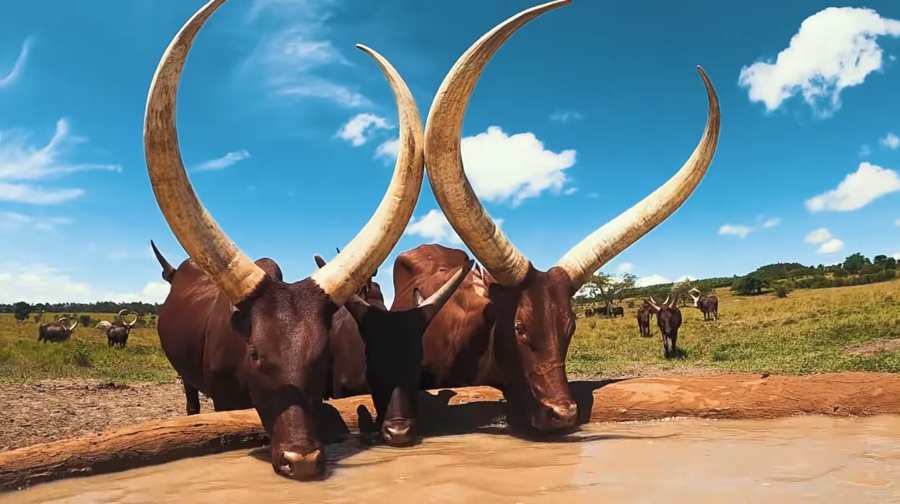
They are especially recognised for their enormous horns, which grow outwards and upwards from the head. The horns vary in shape, length and curvature, making individual animals particularly distinctive.
Ankole cattle are well adapted to the environmental conditions of the region and have traditionally been raised by pastoral communities in areas where livestock keeping is an important part of everyday life.
In Uganda, these cattle are strongly associated with the Bahima pastoralists of Ankole, although other communities also keep them.
Their cultural and economic importance makes them an important symbol of Uganda’s traditional agricultural heritage.
Origin and History of Ankole Long-Horned Cattle
The Ankole long-horned cattle have a long history in the Great Lakes region of East Africa. They are among Uganda’s oldest indigenous cattle populations and have traditionally been raised in southwestern Uganda.
Their development is associated with the wider Sanga cattle group, which emerged through the historical mixing of indigenous African cattle and zebu cattle.
The cattle became particularly important among pastoral communities in the Ankole region, where livestock keeping developed into an important economic and cultural activity.
The Bahima pastoralists are especially associated with raising these cattle. For generations, they have maintained extensive knowledge of cattle selection, breeding, grazing, animal health and traditional livestock management.
Historically, cattle were regarded as a measure of household wealth and social standing. A large herd represented economic security, family prestige and the ability to support a household.
The importance of Ankole cattle continues today, with farmers and conservation organisations working to protect their genetic characteristics and maintain their traditional value.
Physical Characteristics of Ankole Long-Horned Cattle
The most striking feature of Ankole cattle is their enormous horns. However, there are several other characteristics that make this indigenous breed unique.
1. Exceptionally Long Horns
The horns are the most recognisable feature of Ankole cattle.
They grow outwards from the head before curving upwards, creating an impressive lyre-like appearance. Both bulls and cows have horns, although their size and shape vary between individual animals.
The horns are made of keratin and contain a network of blood vessels that contributes to heat exchange.
Their impressive appearance has made Ankole cattle particularly popular among photographers, livestock enthusiasts and visitors interested in African pastoral culture.
2. Distinctive Coat Colours
Ankole cattle display several coat colours and patterns.
Common colours include:
-
Dark red and reddish brown.
-
Light brown and fawn.
-
Black.
-
White.
-
Cream.
-
Various spotted and mixed patterns.
Dark reddish-brown cattle are particularly admired by some traditional breeders.
3. Large Body Structure
Ankole cattle generally have a medium-sized body structure, long legs and a relatively slender appearance.
Their physical characteristics are suited to extensive grazing systems, where animals may travel considerable distances in search of pasture and water.
4. Heat Tolerance
One of the breed’s important adaptations is its ability to survive in hot tropical environments.
Their loose skin, large body surface and distinctive horn structure contribute to heat management.
They are also recognised for their ability to survive under challenging grazing conditions, making them valuable in areas where feed and water availability can fluctuate.
5. Strong Adaptability
Ankole cattle are known for their hardiness and ability to utilise natural vegetation.
They can survive on relatively poor-quality pasture and cope with periods of limited water availability better than many specialised exotic dairy breeds.
These characteristics make them important indigenous genetic resources for livestock production in East Africa.
Why Are Ankole Cattle Famous for Their Long Horns?
Ankole cattle are particularly famous because of their unusually large and elegant horns.
Their horns are not simply decorative features. They are part of the animals’ natural biology and have attracted considerable interest among livestock researchers and traditional breeders.
In pastoral communities, horn size, shape, colour and symmetry have historically been important considerations when selecting breeding bulls.
A bull with large, well-shaped horns was often highly valued because of its appearance and association with desirable traditional breed characteristics.
The horns also help with thermoregulation through the circulation of blood within their structure.
For visitors encountering Ankole cattle for the first time, their horns are usually the most memorable feature.
The Bahima People and Their Relationship with Ankole Cattle
The relationship between the Bahima pastoralists and Ankole cattle is one of the most interesting aspects of Uganda’s traditional cultural heritage.
The Bahima are traditionally cattle-keeping communities associated with southwestern Uganda, particularly the Ankole region.
For generations, cattle have played a central role in their livelihoods, social relationships and cultural practices.
Their traditional lifestyle revolves around livestock management, including grazing, watering, milking, breeding and caring for calves.
Some important aspects of the relationship include:
Wealth and prestige: Traditionally, owning a large herd of cattle represented wealth, influence and social standing.
Milk production: Cattle milk has been an important source of nutrition, with traditional dairy products forming part of household diets.
Marriage traditions: Cattle have historically featured in marriage arrangements and the exchange of bridewealth.
Family heritage: Cattle herds have been passed between generations, preserving family wealth and livestock traditions.
Traditional knowledge: Cattle keepers have developed specialised knowledge about animal behaviour, breeding, pasture management and livestock health.
Today, Ankole cattle remain an important symbol of the region’s pastoral identity.
Traditional Uses of Ankole Long-Horned Cattle
Although these cattle are admired for their appearance, they also serve several practical purposes.
1. Milk Production
Ankole cows produce milk that is traditionally used in households and local dairy production.
Their milk is particularly valued for its high butterfat content, which makes it suitable for preparing traditional butter and ghee.
The quantity of milk produced is generally lower than that of specialised commercial dairy breeds, but its traditional value remains significant.
2. Meat Production
Ankole cattle are also raised for beef production.
Their meat is generally regarded as relatively lean compared with that of some specialised commercial cattle breeds.
Their adaptability and ability to survive under extensive grazing conditions make them valuable to livestock farmers.
3. Traditional Wealth and Savings
Cattle have historically functioned as an important form of household wealth.
Families may maintain herds as a long-term economic asset, selling selected animals when money is required for education, healthcare, agricultural investment or other household needs.
4. Production of Ghee
Ghee is an important traditional dairy product in southwestern Uganda.
It is prepared by processing milk into butter and subsequently heating the butter to separate the milk solids and water from the clarified fat.
Ankole cattle milk is particularly valued for traditional butter and ghee production because of its high butterfat content.
5. Manure and Agricultural Production
Cattle manure is used in agricultural production as an organic soil amendment.
In traditional farming communities, livestock and crop production are closely connected, with manure helping to support soil fertility and agricultural activities.
How Are Ankole Cattle Raised?
Ankole cattle are traditionally raised under pastoral and mixed livestock management systems.
Their keepers move or manage herds according to the availability of grazing land, water and seasonal pasture conditions.
In some areas, cattle graze across extensive rangelands, while other farmers use fenced paddocks and more controlled grazing systems.
Traditional cattle management involves:
-
Selecting suitable grazing areas.
-
Providing access to clean water.
-
Monitoring animal health.
-
Managing breeding and calving.
-
Caring for young calves.
-
Protecting cattle against predators and livestock diseases.
-
Maintaining the quality of breeding animals.
The Bahima pastoralists have developed considerable indigenous knowledge about these practices.
Research conducted on Ankole cattle-keeping farms has documented how pastoralists select breeding animals using characteristics such as body size, horn shape, coat colour and family breeding history.
The Importance of Ankole Cattle Conservation in Uganda
Despite their historical importance, indigenous Ankole long-horned cattle face challenges from changing livestock production systems.
One major concern is crossbreeding with exotic cattle, particularly specialised dairy breeds such as Friesians.
Crossbreeding can improve certain commercial production characteristics, especially milk output. However, uncontrolled crossbreeding can reduce the number of genetically distinctive pure Ankole cattle.
Other challenges include:
-
Loss of traditional grazing areas.
-
Increasing pressure on pastoral land.
-
Changing livestock farming practices.
-
Climate variability and prolonged dry seasons.
-
Competition from commercial dairy breeds.
-
Limited awareness of indigenous genetic resources.
The Ugandan government and livestock conservation organisations have supported initiatives to maintain the breed.
The National Animal Genetic Resources Centre and Data Bank (NAGRC&DB) operates Nshaara Ranch in Kiruhura District, where Ankole long-horned cattle are maintained and developed.
The ranch supports conservation, breeding, livestock improvement and farmer training.
Conserving Ankole cattle is important not only for agriculture but also for protecting Uganda’s cultural heritage and traditional pastoral knowledge.
Where to See Ankole Long-Horned Cattle in Uganda
Uganda’s southwestern region is the best area to explore Ankole cattle and traditional pastoral culture.
Visitors travelling from Kampala towards Mbarara, Lake Mburo National Park and Bwindi Impenetrable National Park may encounter large herds grazing in the countryside.
The following destinations offer opportunities to discover Ankole cattle.
1. Nshaara Ranch
Nshaara Ranch is an important destination for Ankole cattle conservation.
Located in Kiruhura District in southwestern Uganda, the ranch is managed by the National Animal Genetic Resources Centre and Data Bank.
It plays an important role in preserving indigenous Ankole cattle and supporting breeding and livestock development programmes.
Visitors interested in livestock conservation and agricultural heritage can enquire about educational visits and access arrangements.
2. Igongo Cultural Centre
Igongo Cultural Centre is one of the most interesting cultural tourism destinations in western Uganda.
Located along the Mbarara–Masaka highway, the centre celebrates the history and cultural heritage of the Ankole region.
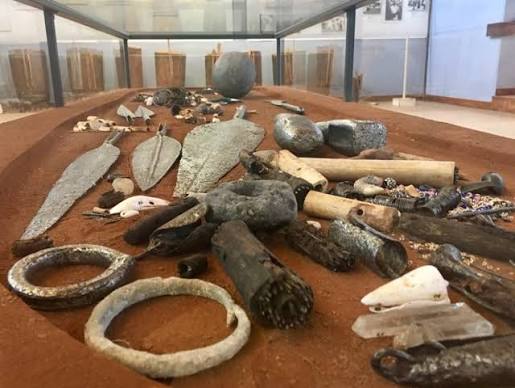
Visitors can explore the Eriijukiro Museum, which presents traditional lifestyles, cultural practices, agricultural activities and historical artefacts.
The centre provides a valuable introduction to the relationship between the people of Ankole and their cattle.
It is an excellent stop for travellers heading to Lake Mburo National Park or continuing towards Bwindi.
3. Kamihingo Farm
Kamihingo Farm is an agritourism destination associated with the conservation and promotion of Ankole long-horned cattle.
The farm offers opportunities for visitors to learn about traditional cattle keeping and pastoral culture.
Depending on the arrangements, visitors can enquire about:
-
Observing Ankole cattle herds.
-
Learning about traditional cattle management.
-
Understanding milk preparation.
-
Discovering local dairy products.
-
Exploring the cultural importance of livestock.
-
Participating in selected farm experiences.
The farm has also developed tourism activities at its locations in Kiruhura and Sembabule.
4. Ankole Cow Village
Ankole Cow Village is a community tourism initiative established to promote the cattle heritage of the Ankole region.
The initiative includes cattle-keeping experiences, cultural education and opportunities to learn about products derived from Ankole cattle.
Two locations associated with the initiative include Mwesigwa Resort Farm in Kibega and Kamihingo Farm in Sanga, Kiruhura District.
Visitors can explore the importance of cattle within traditional communities and learn about the economic opportunities associated with Ankole livestock.
5. Lake Mburo National Park
Lake Mburo National Park is one of the most popular safari destinations in western Uganda.
The surrounding region is famous for cattle keeping, and visitors travelling through the area can encounter Ankole cattle grazing on neighbouring ranches and pastoral lands.
A safari to Lake Mburo can therefore combine wildlife viewing with a cultural experience centred on traditional cattle keeping.
Popular park activities include game drives, boat cruises, walking safaris, horseback safaris and birdwatching.
This combination is particularly attractive to international travellers interested in both wildlife and Ugandan culture.
What to Expect During an Ankole Cattle Cultural Tour
An Ankole cattle experience offers more than simply observing livestock. It introduces visitors to the traditional lifestyle, agricultural practices and cultural heritage of southwestern Uganda.
Depending on the farm or community arrangements, visitors may enjoy several activities.
1. Observing Ankole Cattle Herds
One of the highlights is seeing large herds of long-horned cattle grazing across the green pastures and open landscapes of Ankole.
Visitors can appreciate the impressive horns, different coat colours and distinctive appearance of individual animals.
A local cattle keeper can explain the differences between bulls, cows and calves and how farmers select animals for breeding.
2. Learning Traditional Milking Practices
Milk production is an important part of Ankole pastoral culture.
Visitors can learn how traditional cattle keepers milk their cows and how milk is handled within rural households.
Where the farm permits participation, visitors may have an opportunity to try hand milking under the guidance of an experienced herder.
3. Discovering Traditional Milk Processing
Ankole cattle are important in the production of traditional dairy products.
Visitors can learn how fresh milk is processed into butter and ghee using traditional techniques.
This experience provides insight into the relationship between cattle keeping, household nutrition and traditional food preparation.
4. Meeting Local Cattle Keepers
Interacting with local cattle keepers is one of the most rewarding aspects of an Ankole cultural experience.
Visitors can learn about the daily responsibilities of herders, traditional animal selection, livestock health and the importance of cattle within family life.
These conversations also provide opportunities to understand how pastoral communities are adapting to modern agricultural practices.
5. Photography and Cultural Experiences
Ankole cattle are particularly attractive subjects for wildlife and cultural photography.
Their long horns, contrasting coat colours and graceful appearance create excellent photographic opportunities.
Visitors should always seek permission before photographing cattle keepers, their homes or private property.
Ankole Cattle and Inyambo: What Is the Difference?
Travellers visiting Uganda and Rwanda sometimes confuse Ankole long-horned cattle with Rwanda’s royal Inyambo cattle.
Although they share a wider regional cattle heritage, the names have different cultural associations.
| Ankole cattle | Inyambo cattle |
|---|---|
| Particularly associated with southwestern Uganda | Particularly associated with Rwanda’s royal heritage |
| Traditionally raised by pastoral communities | Historically associated with the Rwandan monarchy |
| Used for milk, meat, breeding and cultural purposes | Historically maintained for royal and ceremonial purposes |
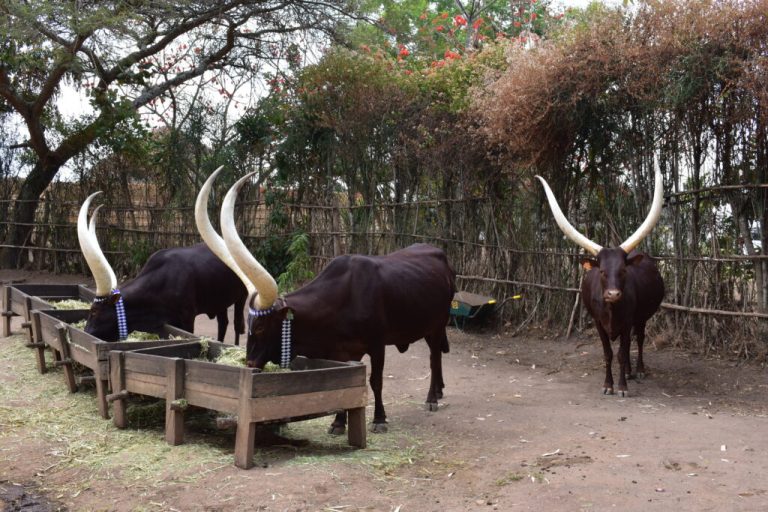
| Commonly encountered in Ankole cattle-keeping areas | Associated with the King’s Palace Museum in Nyanza |
| Part of the wider Sanga cattle heritage | Part of Rwanda’s distinctive royal cattle tradition |
The distinction is important for visitors interested in understanding the cattle heritage of the Great Lakes region.
Suggested 5-Day Uganda Cultural and Wildlife Safari Featuring Ankole Cattle
Book Gorilla Tracking can incorporate an Ankole cattle experience into a western Uganda safari featuring cultural activities and wildlife encounters.
Day 1: Arrival in Entebbe and Transfer to Kampala
Upon arrival at Entebbe International Airport, meet your safari guide and transfer to your hotel.
Depending on your arrival time, enjoy a short excursion around Entebbe or Kampala.
Day 2: Kampala to Mbarara – Ankole Cultural Experience
After breakfast, depart Kampala and travel towards Mbarara through Uganda’s central and western countryside.
Stop at Igongo Cultural Centre to explore the cultural history of Ankole.
Depending on prior arrangements, proceed to a suitable cattle farm for an introduction to Ankole long-horned cattle.
Learn about traditional cattle keeping, milk production and the cultural significance of livestock.
Overnight in Mbarara or the Lake Mburo area.
Day 3: Lake Mburo National Park
After breakfast, transfer to Lake Mburo National Park.
Enjoy a morning game drive in search of zebras, impalas, elands, buffaloes, giraffes and other wildlife.
In the afternoon, consider a boat cruise on Lake Mburo or a guided nature walk.
Return to your lodge for dinner and overnight.
Day 4: Lake Mburo to Bwindi Impenetrable National Park
After breakfast, depart for Bwindi Impenetrable National Park.
Enjoy the scenic countryside and landscapes of southwestern Uganda along the journey.
Arrive at your lodge, relax and prepare for the following day’s gorilla trekking adventure.
Day 5: Mountain Gorilla Trekking
After an early breakfast, transfer to the park headquarters for a gorilla trekking briefing.
Accompanied by experienced park rangers, enter the forest in search of an assigned mountain gorilla family.
Once the gorillas are located, enjoy the authorised observation period, watching these endangered primates interact in their natural habitat.
After the trek, return to your lodge.
This itinerary can be extended to include chimpanzee tracking in Kibale National Park, Queen Elizabeth National Park or additional cultural experiences.
Best Time to See Ankole Long-Horned Cattle in Uganda
Ankole cattle can be observed throughout the year because they are permanently raised in their traditional home regions.
However, the drier months are particularly convenient for farm visits and cultural excursions.
The main dry periods are:
-
June to September.
-
December to February.
During these months, road conditions are generally more favourable for visiting rural farms and cattle-keeping communities.
Morning visits are particularly recommended because cattle-keeping activities, including milking and herding, often begin early.
Travellers interested in participating in farm activities should arrange their visits in advance.
What to Pack for an Ankole Cattle Tour
For a comfortable cattle and cultural experience, consider carrying:
-
Comfortable walking shoes.
-
Lightweight clothing.
-
A hat or cap.
-
Sunscreen.
-
Sunglasses.
-
A camera.
-
Drinking water.
-
Insect repellent.
-
Some local currency for personal purchases.
If participating in a farm visit, follow the host’s instructions regarding animal handling, hygiene and safety. Keep a safe distance from bulls and cows with young calves.
Why Book an Ankole Cattle Cultural Tour with Book Gorilla Tracking?
At Book Gorilla Tracking, we believe that Uganda offers much more than mountain gorilla trekking.
The country’s cultural heritage, traditional communities, indigenous livestock and beautiful landscapes provide visitors with opportunities to experience East Africa beyond conventional wildlife safaris.
We can organise customised cultural experiences featuring Ankole long-horned cattle, traditional communities and western Uganda’s most interesting destinations.
Our services include:
-
Private 4×4 safari transportation.
-
Experienced English-speaking safari guides.
-
Organised Ankole cattle farm visits.
-
Cultural excursions around Mbarara and Kiruhura.
-
Visits to Igongo Cultural Centre.
-
Lake Mburo wildlife safaris.
-
Uganda gorilla trekking packages.
-
Chimpanzee tracking experiences.
-
Accommodation arrangements across different budget categories.
-
Tailor-made Uganda cultural and wildlife itineraries.
Whether you want a short cattle-keeping experience or a longer safari combining Ankole culture with gorilla trekking, we can help organise your journey.
Frequently Asked Questions About Ankole Long-Horned Cattle
1. What are Ankole long-horned cattle?
Ankole long-horned cattle are indigenous East African cattle belonging to the Sanga group. They are particularly associated with southwestern Uganda and are recognised for their exceptionally long horns.
2. Where do Ankole cattle originate?
They are traditionally associated with the Great Lakes region of East Africa, particularly southwestern Uganda, where they have been raised by pastoral communities for generations.
3. Why do Ankole cattle have such long horns?
Their horns are natural biological structures containing blood vessels that contribute to heat exchange. They are also important characteristics used by traditional breeders when selecting animals.
4. Are Ankole cattle indigenous to Uganda?
Yes. Ankole long-horned cattle are among Uganda’s important indigenous cattle populations and are particularly associated with the Ankole region.
5. What is the relationship between Ankole cattle and the Bahima?
The Bahima are traditionally pastoral cattle keepers associated with the Ankole region. Cattle have historically played an important role in their culture, economy and social organisation.
6. Are Ankole cattle good milk producers?
Ankole cows produce milk with relatively high butterfat content, making it suitable for traditional butter and ghee production. However, their milk quantities are generally lower than those of specialised commercial dairy breeds.
7. What colours are Ankole cattle?
They occur in different colours, including reddish brown, dark red, black, white, cream and mixed patterns.
8. Where can I see Ankole cattle in Uganda?
Some of the best places to explore include Mbarara, Kiruhura, Nshaara Ranch, Igongo Cultural Centre, Kamihingo Farm and cattle-keeping communities around Lake Mburo.
9. Can tourists visit Ankole cattle farms?
Yes. Some farms offer organised agritourism experiences where visitors can learn about traditional cattle keeping, milk processing and pastoral culture. Advance arrangements are recommended.
10. Are Ankole cattle endangered?
The breed faces conservation challenges, particularly from uncontrolled crossbreeding and changing livestock production systems. Conservation initiatives in Uganda are working to preserve its distinctive genetic characteristics.
11. Are Ankole cattle the same as Rwanda’s Inyambo?
They belong to the wider regional cattle heritage, but Inyambo refers particularly to Rwanda’s royal cattle tradition. Ankole cattle are especially associated with southwestern Uganda.
12. Can I combine an Ankole cattle tour with gorilla trekking?
Absolutely. Ankole cattle experiences can be incorporated into a western Uganda safari featuring Lake Mburo National Park, Bwindi Impenetrable National Park and mountain gorilla trekking.
Conclusion: Discover Uganda’s Ankole Long-Horned Cattle with Book Gorilla Tracking
Ankole long-horned cattle are among Uganda’s most remarkable indigenous livestock treasures. Their exceptionally long horns, graceful appearance, adaptability and historical importance make them an important part of the country’s agricultural and cultural heritage.
From learning about traditional Bahima pastoral practices to exploring cattle farms around Mbarara and Kiruhura, visitors can discover the fascinating relationship between Ugandan communities and their livestock.
A visit to an Ankole cattle farm is an excellent addition to a western Uganda safari, particularly when combined with Lake Mburo National Park, Igongo Cultural Centre and gorilla trekking in Bwindi.
Contact Book Gorilla Tracking to organise your Ankole cattle cultural experience and discover the fascinating pastoral heritage of southwestern Uganda.