Call: +256 702 595 926 | Email: info@bookgorillatracking.com

Grauer’s Gorilla Facts: Eastern Lowland Gorilla Guide

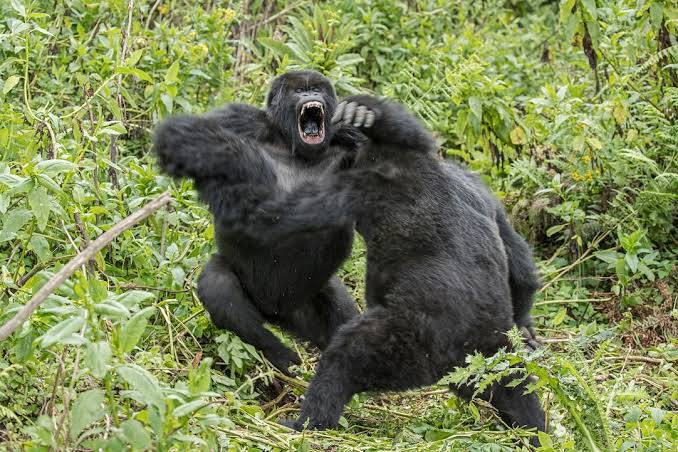
Facts About Grauer’s Gorilla: The Eastern Lowland Gorilla of Congo
Introduction
Grauer’s gorilla, commonly known as the eastern lowland gorilla, is the largest of the four traditionally recognised gorilla subspecies. It lives exclusively in the eastern Democratic Republic of the Congo (DRC), where it inhabits tropical lowland rainforests, transitional forests and montane environments.
Scientifically known as Gorilla beringei graueri, this remarkable great ape is a subspecies of the eastern gorilla. It is closely related to the mountain gorilla but differs in several physical characteristics, including its body proportions, fur and preferred habitats.
Grauer’s gorillas are among Africa’s most threatened great apes. Habitat destruction, illegal hunting, mining activities and insecurity have contributed to major population declines across their range. Conservation areas such as Kahuzi-Biega National Park play an important role in protecting the remaining populations.
For travellers interested in wildlife, primates and conservation, learning about Grauer’s gorillas offers insight into one of the Democratic Republic of the Congo’s most remarkable animals.
Quick Facts About Grauer’s Gorilla
| Feature | Facts |
|---|---|
| Common name | Grauer’s gorilla or eastern lowland gorilla |
| Scientific name | Gorilla beringei graueri |
| Animal group | Mammal and great ape |
| Conservation status | Critically Endangered |
| Natural range | Eastern Democratic Republic of the Congo |
| Largest protected population stronghold | Kahuzi-Biega National Park and surrounding forests |
| Diet | Mainly plant material, including leaves, stems, fruit and other vegetation |
| Social structure | Family groups generally led by a dominant silverback |
| Typical habitat | Lowland tropical rainforest, transitional forest and montane forest |
| Main threats | Habitat loss, hunting, mining-related disturbance and armed conflict |
1. Grauer’s Gorilla Is the Largest Gorilla Subspecies
One of the most interesting facts about Grauer’s gorillas is their impressive size. They are generally considered the largest of the four gorilla subspecies.
Adult males are substantially larger than females and develop a distinctive silver-grey patch of hair across their backs as they mature. These males are called silverbacks.
A mature male may weigh around 160–200 kilograms, although individual size varies. Females are considerably lighter, commonly weighing around 70–90 kilograms.
Their powerful bodies, broad chests, long arms and large hands help them move through dense vegetation and support their predominantly plant-based diet.
Despite their size, Grauer’s gorillas are generally peaceful animals when left undisturbed. They typically avoid people, and encounters with wild gorillas must always be managed by trained guides following appropriate safety rules.
2. Where Do Eastern Lowland Gorillas Live?
Grauer’s gorillas are endemic to the eastern Democratic Republic of the Congo. This means they occur naturally nowhere else in the world.
Their distribution includes forest landscapes associated with Kahuzi-Biega National Park, Maiko National Park, the Itombwe Massif and several community-managed or protected forest areas.
Unlike the name “eastern lowland gorilla” might suggest, the subspecies does not live exclusively in lowland forests. It occupies elevations of approximately 600 to 2,900 metres above sea level.
Its habitats include:
- Lowland tropical rainforest.
- Transitional forest between lowland and montane environments.
- Montane forest.
- Bamboo forest at suitable elevations.
- Swampy areas and other habitats containing appropriate vegetation.
This broad habitat range allows Grauer’s gorillas to exploit different food sources as vegetation changes with altitude and season.
3. Kahuzi-Biega National Park Is an Important Gorilla Habitat
Kahuzi-Biega National Park is one of the most important protected areas for Grauer’s gorillas.
Located in South Kivu Province, the park protects extensive forest habitats and is internationally recognised for its biodiversity and conservation significance.
Historically, the park has been a major destination for eastern lowland gorilla trekking. Under normal tourism operations, visitors have been able to join guided forest treks to observe habituated gorilla groups.
The park also contains volcanic mountain landscapes, including Mount Kahuzi and Mount Biega, alongside habitats that support other primates, birds and forest wildlife.
Travel note: Kahuzi-Biega National Park announced a tourism closure in January 2026 because of the security situation in South Kivu. Its official updates in September 2026 continued to report that insecurity had halted tourism. Travellers must verify official reopening and current security conditions before planning a visit.
4. What Do Grauer’s Gorillas Eat?
Grauer’s gorillas are predominantly herbivorous. Their diet consists largely of plant material, although they occasionally consume small invertebrates.
Depending on the habitat and season, their food can include:
- Leaves and young shoots.
- Stems and pith.
- Wild fruits.
- Roots and other plant parts.
- Bark and vines.
- Bamboo shoots at suitable elevations and when seasonally available.
- Ants, termites and other small invertebrates in small quantities.
Their diet changes according to food availability. Gorillas living in lower-elevation forests may consume more fruit when it is abundant, while other habitats provide a greater proportion of leaves, stems and herbaceous vegetation.
Because they spend much of their day feeding, Grauer’s gorillas help influence the structure of the forest. They can disperse seeds through their droppings and contribute to forest regeneration.
5. How Do Grauer’s Gorillas Live in Family Groups?
Grauer’s gorillas are social animals that typically live in groups containing a dominant adult male, several females and their offspring. Some groups may contain additional adult males.
The silverback usually plays a central role in group cohesion, movement and protection. He also participates in social interactions and may help protect the group when it encounters danger.
Daily life generally includes feeding, resting, grooming, travelling and interacting with other group members.
Young gorillas learn important behaviours through observation and play. Mothers provide close care for their infants, while other members of the group may also interact with and protect younger animals.
Gorilla groups use forest areas for feeding and resting, and members usually build sleeping nests from vegetation each evening. These nests may be constructed on the ground or, in some circumstances, in trees.
6. How Can You Recognise a Grauer’s Gorilla?
Grauer’s gorillas share many features with mountain gorillas, but several characteristics can help distinguish them.
Large, stocky body
Grauer’s gorillas have a robust build, broad hands and a powerful body. Adult males are particularly large.
Shorter fur
Their fur is generally shorter than that of mountain gorillas, although coat appearance varies with the individual and environmental conditions.
Broad hands and long arms
Their strong hands and long arms support movement through dense forest and terrestrial travel.
Silverback colouring
Mature males develop silver-grey hair across the back, a feature shared with other gorilla subspecies.
Facial characteristics
Grauer’s gorillas are often described as having relatively broad faces and a distinctive combination of facial and body proportions. However, visual identification in the forest should be left to trained researchers and guides.
7. Grauer’s Gorilla vs Mountain Gorilla
Grauer’s gorillas and mountain gorillas are both subspecies of the eastern gorilla, but they differ in distribution, appearance and habitat preferences.
| Feature | Grauer’s gorilla | Mountain gorilla |
|---|---|---|
| Scientific name | Gorilla beringei graueri | Gorilla beringei beringei |
| Natural distribution | Eastern DRC | Uganda, Rwanda and eastern DRC |
| Typical habitat | Lowland, transitional and montane forests | Montane and other high-altitude forest habitats |
| Body size | Generally the largest gorilla subspecies | Large-bodied, with a particularly thick coat |
| Fur | Generally shorter | Generally longer and thicker |
| Best-known trekking destination | Kahuzi-Biega National Park | Bwindi Impenetrable National Park and Volcanoes National Park |
| Conservation status | Critically Endangered | Endangered |
Although both are eastern gorillas, Grauer’s gorillas are not simply mountain gorillas living at a lower altitude. They have their own ecological characteristics and occupy a distinct natural range.
8. How Many Grauer’s Gorillas Are Left in the Wild?
Grauer’s gorillas have suffered substantial population declines over recent decades.
Historical estimates from the mid-1990s suggested approximately 16,900 individuals. Subsequent research documented severe losses, with a 2016 assessment estimating that the population had fallen to around 3,800 based on surveys conducted during the preceding period.
More recent research has produced higher estimates in some assessments. A 2021 range-wide estimate was approximately 6,800 individuals, reflecting improved survey coverage and updated information rather than proof that all earlier losses had been reversed.
These estimates are not directly interchangeable because researchers use different survey periods, methods and coverage. The exact number of Grauer’s gorillas remaining in the wild is uncertain.
Despite uncertainty over the total population, the subspecies remains classified as Critically Endangered. Its future depends on effective protection of forests, prevention of illegal hunting and improved security in areas where gorillas live.
9. Why Are Grauer’s Gorillas Critically Endangered?
Several pressures threaten the survival of Grauer’s gorillas.
Habitat destruction
Forest clearing for agriculture, settlements and other human activities reduces the amount of suitable habitat available to gorillas.
Illegal hunting
Gorillas can be killed for bushmeat or caught in snares intended for other animals. Even traps not specifically set for gorillas can cause serious injuries or death.
Mining activities
Artisanal mining in forest areas can attract settlements, increase hunting pressure and contribute to habitat disturbance.
Armed conflict and insecurity
Conflict makes conservation patrols, scientific surveys and wildlife monitoring more difficult. It can also expose protected areas to illegal exploitation.
Habitat fragmentation
When forests are divided into smaller, isolated patches, gorilla groups can become separated. This can limit movement and reduce opportunities for populations to remain genetically connected.
Protecting Grauer’s gorillas therefore requires more than safeguarding individual animals. It also requires maintaining connected forests, supporting local communities and addressing the wider pressures affecting their habitat.
10. How Does Gorilla Trekking Support Conservation?
Responsible gorilla tourism can provide financial support for protected-area management and create employment for guides, trackers, drivers and accommodation providers.
When tourism is operating legally and safely, permit revenue and related visitor spending can contribute to conservation and local livelihoods.
However, tourism alone cannot guarantee the survival of Grauer’s gorillas. Long-term conservation also requires effective protection from hunting, forest management, scientific monitoring, community participation and improved security.
Visitors must follow all park rules, avoid touching gorillas, maintain the required distance and never visit wild gorillas when they are ill or have been instructed not to trek.
Tourism should always be organised through authorised channels, with animal welfare and local safety as priorities.
11. Where Can You Learn More About Grauer’s Gorillas?
The following organisations provide useful information about eastern lowland gorillas and their conservation:
- Kahuzi-Biega National Park: Information about the park’s conservation work, visitor activities and operating status.
- WWF: Species information, habitat loss and conservation challenges.
- The Gorilla Organization: Information about gorilla species, habitats and protection efforts.
- IUCN Red List: Scientific assessments of conservation status, distribution and threats.
For travel planning, the official park website is the most appropriate place to check current operating information. General wildlife articles should not be used as confirmation that trekking is currently available.
Frequently Asked Questions About Grauer’s Gorillas
Are Grauer’s gorillas the same as eastern lowland gorillas?
Yes. Grauer’s gorilla is the scientific common name widely used for the eastern lowland gorilla, Gorilla beringei graueri.
Are Grauer’s gorillas bigger than mountain gorillas?
Grauer’s gorillas are generally considered the largest of the four gorilla subspecies. Individual size varies, but mature males can be exceptionally large.
Where can Grauer’s gorillas be found?
They occur naturally in eastern DRC, including forest areas associated with Kahuzi-Biega National Park, Maiko National Park, Itombwe and other forest landscapes.
What do eastern lowland gorillas eat?
They eat a wide variety of vegetation, including leaves, stems, shoots, fruit, vines and other plant material. They may occasionally consume ants, termites and other small invertebrates.
Are Grauer’s gorillas endangered?
They are classified as Critically Endangered, reflecting the very high risk of extinction they face in the wild.
Can tourists track Grauer’s gorillas in Congo?
Eastern lowland gorilla trekking has historically been offered in Kahuzi-Biega National Park. However, the park reported a tourism closure in 2026 because of insecurity. Travellers must confirm official reopening and safety conditions before making any plans.
Conclusion: Protecting the Future of Grauer’s Gorillas
Grauer’s gorillas are extraordinary great apes whose survival is closely connected to the forests of eastern Democratic Republic of the Congo. Their impressive size, complex social lives and varied diet make them an important part of the region’s natural heritage.
Yet their future remains uncertain because of habitat loss, hunting, mining-related pressures and insecurity. Protecting these gorillas requires sustained conservation action, support for local communities and the preservation of the forest landscapes on which they depend.
Raptors Africa Safaris encourages responsible wildlife tourism and greater awareness of Africa’s threatened primates. By learning about Grauer’s gorillas and the challenges they face, travellers can better understand why conservation remains essential to the future of Congo’s wildlife.
For further information, visit Book Gorilla Tracking and the official conservation resources linked above.

[…] of Uganda and Rwanda, Odzala-Kokoua offers the opportunity to explore the habitat of the western lowland gorilla, a distinct gorilla subspecies living in the forests of Central […]