+256-702 595 926 | info@bookgorillatracking.com

Species of gorillas

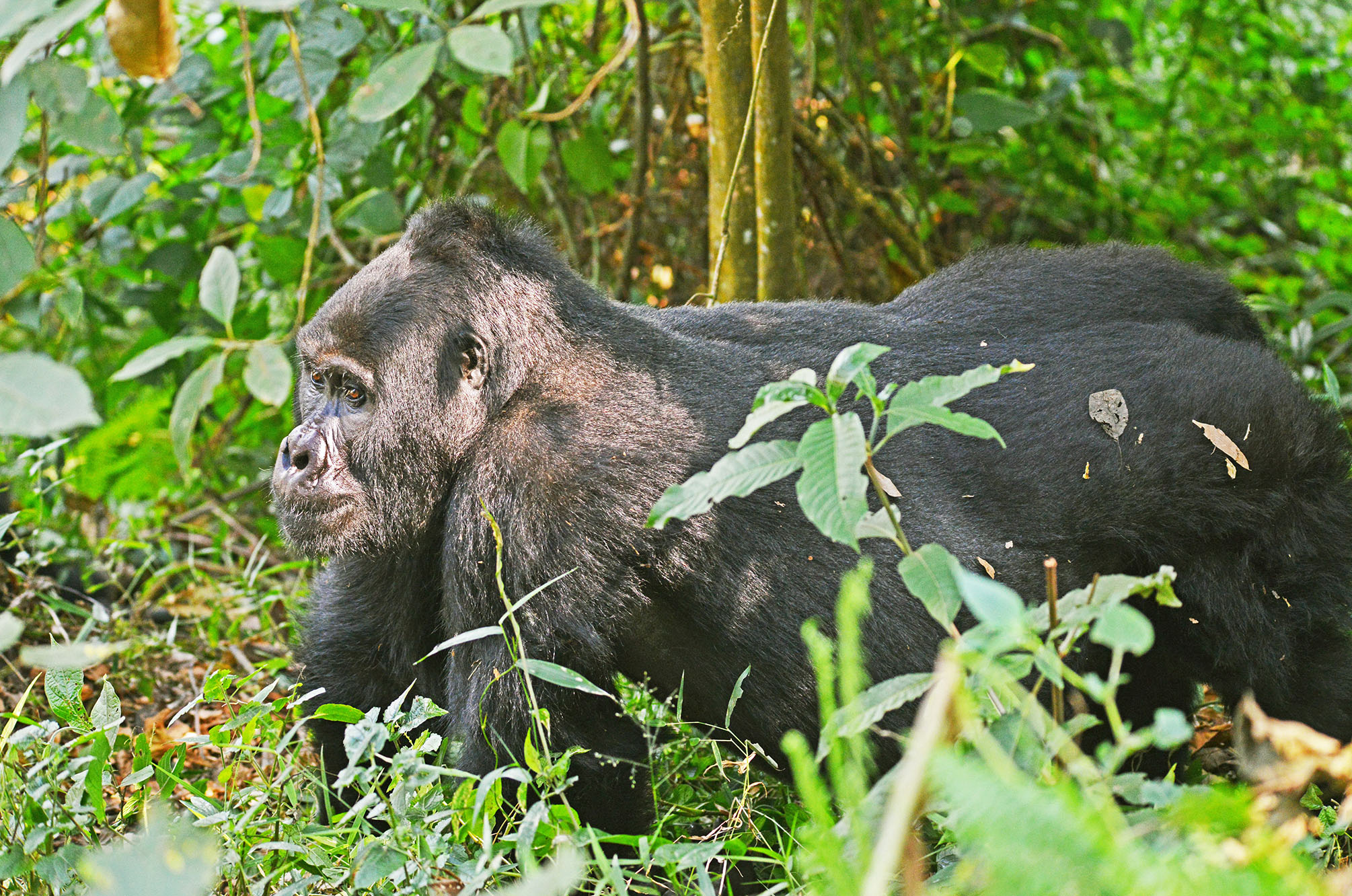
There are a lot of different gorilla species namely Eastern, Western and cross-river gorillas. Each one of these has different features as explained below,
Eastern gorillas
These are the dominant type of gorillas commonly known as Grauer’s gorillas. The eastern gorillas are divided into mountain gorillas and eastern lowland gorillas. This type of specie is easily identified by their short muzzle and their thumbs bigger than their fingers. These eastern gorillas have long arms, short hair and teeth. Their chest has no hair.
These eastern lowland gorillas mainly stay in the eastern Albertine rift forests of the Democratic Republic of Congo occupying about 13 per cent of the geographic range. Most of these gorillas live in Kahuzi-Biega and Maiko national park and the rest of the small numbers are spotted in different forest reserves like Tayna, Massig, Itombwe and Usala.
The eastern lowland gorillas look closely like mountain gorillas but they have various differences. These gorillas feed on insects, stems, fruits and bark leaves which is not the case with mountain gorillas.
They are very social and peaceful gorilla specie. They tend to stay in groups whereby each group has a male, female and their young ones. The silverback gorilla is responsible for protecting all members of the group.
Eastern lowland gorillas were estimated to be 17,000 but due to different threats, they are depleting to about 3500. The gorillas face various threats like researchers, poachers who find their meat special, destruction of their natural habitats through mining, logging and agriculture, and inbreeding.
Western gorillas
Western gorillas are the smallest gorilla species that exists. These western gorillas are divided into cross-river gorillas and western lowland gorillas. These gorillas stay in forests and swamps of Equatorial Guinea, Cameroon, Angola, and Gabon. They stay in groups led by a silverback whose responsibility is protecting them.
They are easily identified by rough hair covering the body apart from ears, eyes and face and silver hair that is found on their back. These primates are so intelligent that they are sometimes compared to humans. Their intelligence is seen when they turn materials into tools that help them acquire food and measure the depth of the river before crossing.
They can decide to spend the whole day feeding on fruits such as wild berries, tree bark, roots, and shoots. The vegetation cover grows rapidly and these gorillas find it easy to access food.
These western lowland gorillas are difficult to trek compared to mountain gorillas because one is required to walk long distances up to the extreme end of some parts of Africa in order to find them. The reason is that they tend to stay in remote areas of the forests and some remain undiscovered by humans. Chance to see these gorillas is always not a guarantee as compared to mountain gorillas.
These gorillas cannot be habituated. One is only able to see them in hidden and secret places as they wait for them to come out. They are spotted in places such as Loango and Doudou national park in Gabon, Dzanga Ndoki National Park in the central Republic and Monte alen national park in Guinea, and Cabindi Enclave in Angola
Cross river gorillas.
Cross river gorillas are a subspecies of the western gorillas commonly known as the Gorilla gorilla. These gorillas were discovered in the year 1904. These are regarded as the smallest in the gorilla family. They are mostly found in highland and mountainous places as well as forests. They are located in the forests bordering Nigeria and Cameroon.
These gorillas are regarded as closet relatives to the western lowland gorillas. They look similar when you first look at them but when you look at them closely, you find some differences. You will see that cross-river gorillas have tiny ears, palates, carnival vaults and skulls compared to other gorillas. They also have small feet, hands, bone length and limbs.
Cross-river gorillas are social and live in small family groups of about 4 to 7 individuals. They are led by a silverback whose responsibility is to protect them especially the females plus young ones. Most of the time, these gorillas feed on fruits and sometimes herbs plus tree bark since most of their food is seasonal
This means that during the rainy season, there’s plenty of food whereas in the dry season, fruits ripen and sweeten hence they have to feed on that.