+256-702 595 926 | info@bookgorillatracking.com

About Silverback Gorillas
- Silverbacks are the leaders, they make decisions about where to go, when to eat and how to respond to threats.
- They are supposed to ensure the safety and protection of the family members as they confront potential threats and predators to keep the group safe and sound.

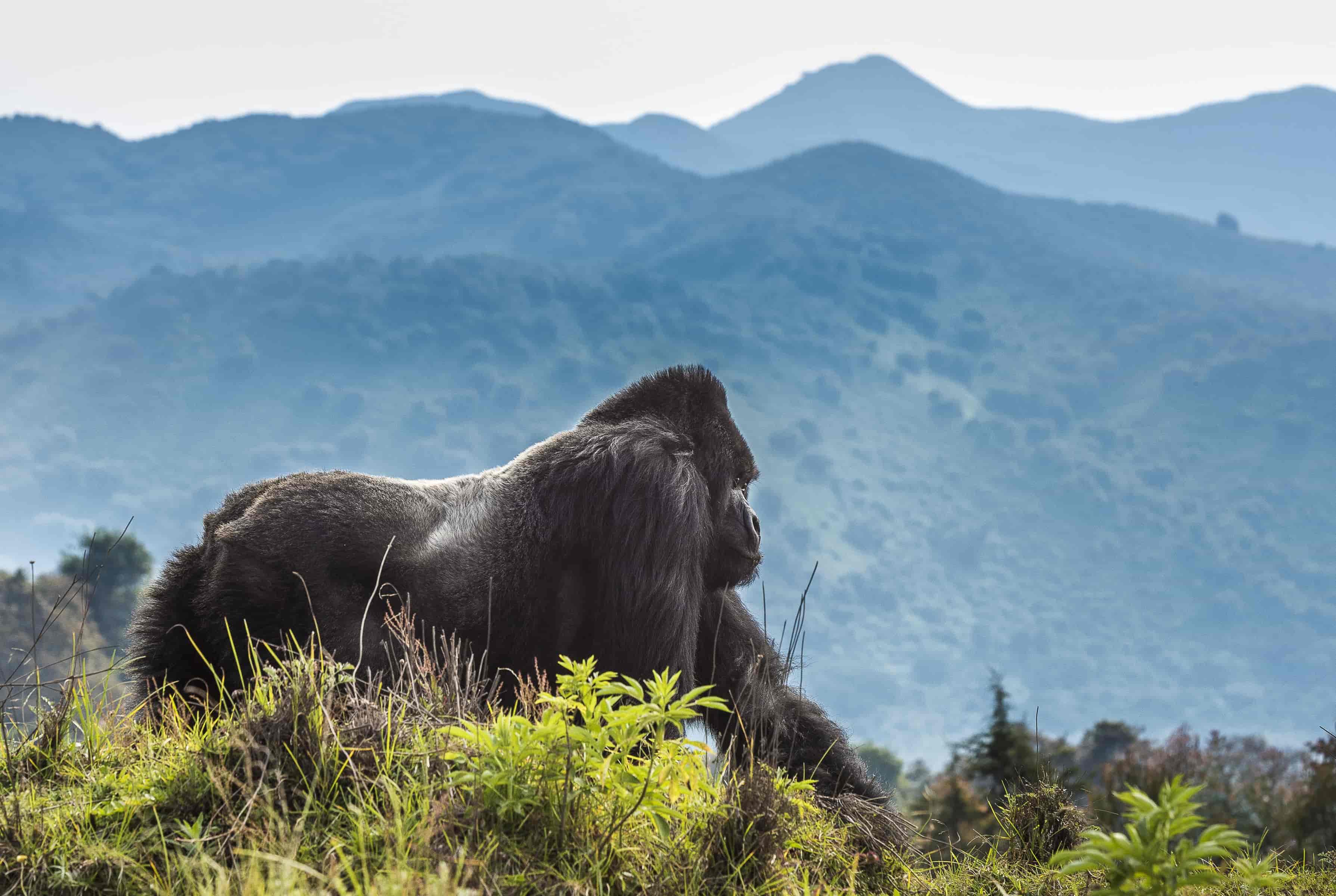
Silverback gorillas are a subspecies of the eastern gorillas known for their distinctive silver colored fur that is found on their backs which develops typically within the males as they grow older.
These are the largest and most dominant gorillas within the members of their social groups living within forests of central and east Africa. They are known to be herbivorous primarily feeding on vegetation.
Silverback gorillas are found in the areas of Volcanoes National Park in Rwanda, Bwindi and Mgahinga Gorilla National Parks in Uganda, Virunga and Kahuzi Biega National Park in Democratic Republic of Congo, Cameroon, Gabon, Equatorial Guinea, and the Nouabale –Ndoki national park in the Republic of Congo.
Silverbacks are supposed to lead and protect their gorilla family members which are usually organized in troops. They are known for their impressive physical characteristics.
Adult males get their names from the distinctive silvery gray hair on their backs which develops as they mature starting from the age of 12 years. The gray color is a sign of their adulthood and dominance.
These silverback gorillas are the largest of all gorilla species standing about 5.9 feet tall when upright and weighing about 300 to 500 pounds which is 227 kilograms which makes their size and height so impressive.
These silverbacks have well-developed and powerful muscles, especially in their chest and shoulders. Their muscular appearance is essential for their role in protecting their gorilla groups.
They have large and sharp canines used for display, aggressive purposes and establish dominance in their social hierarchy.
Another distinguished feature about these silverbacks is the broad nose which is part of their facial structure and aids in their sense of smell which is important for communication and finding food.
Some of these silverbacks are known to have a bony crest on the tops of the skulls which is also known as the sagittal crest. This feature is more prominent in males and serves as an anchor point for their powerful jaw muscles.
The lifespan of silverback gorillas is about 35 to 40 years while in the wild. However, they can live for more than 40 years, often reaching 50 years of age. Their life span typically depends on various factors like health, environmental conditions and protection threats like poaching and habitat loss.
Role of silverback gorillas in a gorilla family.
- Silverbacks are the leaders, they make decisions about where to go, when to eat and how to respond to threats.
- They are supposed to ensure the safety and protection of the family members as they confront potential threats and predators to keep the group safe and sound.
- Silverbacks are the primary breeders within the group, they are able to monopolize mating rights with the females and this ensures the genetic diversity of the group and survival of their offspring.
- They also play a crucial role in maintaining social bonds within the family which forms close relationships with females and their offspring.
- Silverbacks are supposed to mediate conflicts within the group by using vocalizations and different body language to maintain order and prevent disputes among family members.
- Silverbacks are responsible for teaching the younger infant and juvenile gorilla members within the gorilla family. They are seen as role models for the younger gorillas and teach them important skills and behaviors of survival and protection against internal and external threats within their natural habitat.
- Silverbacks have a distinctive way of communication like grunts, roars, chest beatings and body language.
The term silverbacks not only means mature male gorillas and their physical appearance but also signifies their important role as leaders and protectors of their social groups.