+256-702 595 926 | info@bookgorillatracking.com

Lake Ihema Boat Safari Rwanda – Fees, Prices, Wildlife & Rules

Boat Safari on Lake Ihema, Akagera National Park Rwanda: Fees, Boat Prices, Rules, Wildlife and What to Expect
Boat Safari on Lake Ihema: A Complete Guide to Rwanda’s Aquatic Wildlife Experience
A boat safari on Lake Ihema is one of the most rewarding activities to include in a visit to Akagera National Park in eastern Rwanda. While traditional game drives allow visitors to explore the park’s savannah plains, woodland and open grasslands, a boat excursion offers a different perspective of its wildlife and natural habitats.
Lake Ihema is famous for its large hippopotamus populations, Nile crocodiles and impressive variety of waterbirds. During a guided boat trip, visitors glide along the lake’s shoreline, passing papyrus swamps, aquatic vegetation and areas where wildlife gathers to drink, feed or rest.
The experience is particularly attractive to birdwatchers, wildlife photographers, families and travellers who want a relaxing activity between game drives. Depending on the departure time, visitors can enjoy the fresh atmosphere of an early morning cruise, an afternoon wildlife excursion or a sunset trip across the water.
For travellers planning a Rwanda safari, Lake Ihema can also be combined with mountain gorilla trekking in Volcanoes National Park, chimpanzee trekking in Nyungwe Forest National Park and other wildlife experiences across the country.
This guide explains where Lake Ihema is located, what to expect during a boat safari, the animals and birds you may encounter, the published 2026 park entrance fees, boat trip prices, departure times, visitor rules and practical tips for planning your excursion.
1. Where Is Lake Ihema Located?
Lake Ihema is situated in the southern section of Akagera National Park in eastern Rwanda, close to the country’s border with Tanzania. It is the largest lake within Akagera National Park and forms part of the extensive wetland and river system associated with the Akagera River.
The lake is surrounded by papyrus swamps, woodland, grassland and other wetland habitats that support a rich variety of wildlife. Its shallow shoreline areas are particularly important for hippos, crocodiles and waterbirds.
Akagera National Park is Rwanda’s principal savannah wildlife reserve and is managed through a partnership involving the Rwanda Development Board and African Parks. The park protects a diverse landscape of lakes, wetlands, rolling hills, woodland and open plains.
Lake Ihema is one of the park’s major attractions because it allows visitors to explore the aquatic side of Akagera’s ecosystem.
How Far Is Lake Ihema from Kigali?
Akagera National Park is approximately 110 kilometres east of Kigali, although the actual driving time depends on the park entrance, road conditions and the location of the boat departure point.
A road journey from Kigali generally takes around two and a half to three hours to reach the southern entrance area, followed by additional driving inside the park to Lake Ihema.
Visitors planning to take the morning boat excursion should leave Kigali early enough to complete park entry procedures and reach the lake before their scheduled departure.
For a more relaxed experience, an overnight stay in or near Akagera is recommended, particularly if you want to enjoy an early morning or sunset boat safari.
2. Why Visit Lake Ihema on a Boat Safari?
A boat safari provides a different wildlife experience from a conventional game drive. Instead of observing animals from a 4×4 vehicle, visitors explore the lake aboard a guided boat, enjoying close views of the shoreline and aquatic habitats.
The main attractions include:
- Large groups of hippos resting and swimming in the water.
- Nile crocodiles basking along the shoreline.
- African fish eagles searching for fish.
- Kingfishers, herons, egrets and other waterbirds.
- Elephants and buffaloes visiting the lake to drink.
- Papyrus wetlands and scenic shoreline vegetation.
- Beautiful morning and sunset photography opportunities.
Lake Ihema is also a peaceful place to appreciate Akagera’s natural environment. The gentle movement of the boat, calls of waterbirds and occasional sounds of hippos create an experience that differs considerably from the activity of a busy game drive.
A boat excursion is especially worthwhile for visitors interested in aquatic wildlife, bird photography and nature interpretation.
3. Wildlife to Expect During a Lake Ihema Boat Safari
Lake Ihema supports a variety of wildlife species, with the greatest concentration of sightings often occurring around the water and shoreline.
Although sightings vary according to the season and conditions, several animals and birds are regularly associated with the lake.
A. Hippopotamuses
Hippos are among the main attractions of Lake Ihema. The lake supports large groups of these semi-aquatic mammals, which spend much of the day resting in the water to keep their bodies cool.
During a boat safari, visitors may see hippos emerging to breathe, swimming near the surface or resting in groups with only their eyes, ears and nostrils visible above the water.
Hippos are powerful and territorial animals. Despite their calm appearance when resting, they can be dangerous, particularly when they feel threatened or when a boat approaches too closely.
Your boat guide will maintain a safe distance and explain their behaviour.
What to expect: Hippo pods, splashing water, loud calls and occasional displays of territorial behaviour.
B. Nile Crocodiles
Nile crocodiles are another important attraction on Lake Ihema. These large reptiles can often be seen resting along the muddy banks or partially submerged near the shoreline.
They may remain motionless for long periods while waiting for an opportunity to catch prey. Their ability to blend into the surrounding environment makes them fascinating subjects for wildlife photography.
Visitors should never attempt to approach crocodiles, enter the water or encourage the boat to move dangerously close.
C. African Fish Eagles
The African fish eagle is one of the most recognisable birds associated with African lakes and wetlands.
It can often be identified by its white head and chest, dark brown body and powerful hooked beak. Its distinctive call is frequently heard around water bodies.
During a Lake Ihema boat trip, visitors may see fish eagles perched in trees, flying over the lake or searching for fish.
Watching one dive towards the water in search of food can be a memorable highlight for bird photographers.
D. Malachite Kingfishers
Malachite kingfishers are small, colourful birds commonly associated with freshwater habitats. Their bright blue and orange plumage makes them particularly attractive to birdwatchers.
They may be seen perched among reeds or vegetation close to the water, watching for small fish and aquatic prey.
A camera with a suitable zoom lens and a pair of binoculars can improve the chances of observing these small birds.
E. Herons and Egrets
Lake Ihema’s shallow waters and wetland margins attract several species of herons and egrets.
Visitors may encounter:
- Goliath herons.
- Grey herons.
- Great egrets.
- Little egrets.
- Cattle egrets.
- Other wetland-associated birds.
These birds often feed in shallow water or stand motionless near the shoreline while searching for fish and other prey.
F. African Jacanas
African jacanas are fascinating wetland birds that walk across floating vegetation using their long toes and legs.
They are sometimes called lily-trotters because of their ability to move over floating leaves.
Their presence adds to the diversity of birdlife visitors can observe during a Lake Ihema excursion.
G. Saddle-Billed Storks and Yellow-Billed Storks
These large wading birds may be encountered around the lake’s shallow margins and wetlands.
The saddle-billed stork is particularly striking because of its impressive size, long legs and distinctive bill markings.
Yellow-billed storks are also associated with wetland environments, where they feed on fish and other aquatic animals.
H. Other Wildlife Around the Shoreline
The surrounding land provides opportunities to see terrestrial wildlife approaching the lake for water.
Depending on the location and conditions, visitors may encounter:
- African elephants.
- African buffaloes.
- Waterbucks.
- Warthogs.
- Various antelope species.
- Monkeys and other small mammals.
These sightings are not guaranteed, but they add to the variety of wildlife experiences around the lake.
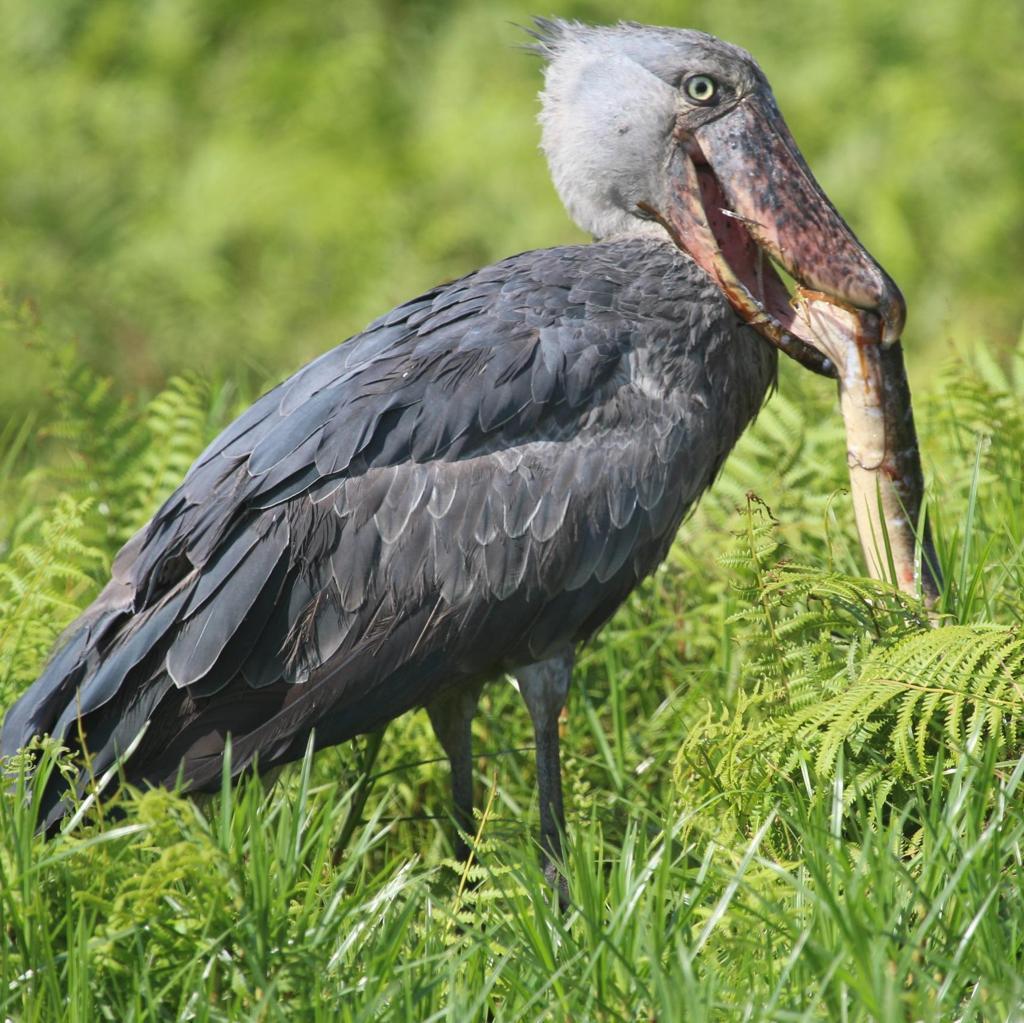
Can You See the Shoebill Stork on Lake Ihema?
The shoebill stork is one of Africa’s most sought-after bird species. It is associated with extensive freshwater wetlands and papyrus swamps, where it hunts fish and other aquatic prey.
However, it is an elusive bird, and visitors should not expect to see it on every Lake Ihema boat safari. Its presence and visibility depend on the location, habitat conditions and season.
Birdwatchers interested in the shoebill should discuss their expectations with an experienced guide and understand that a sighting cannot be guaranteed.
4. Lake Ihema Boat Safari Experience: What Happens During the Trip?
A Lake Ihema boat safari is a guided excursion that takes visitors across selected areas of the lake to observe wildlife and enjoy the surrounding scenery.
The experience generally begins at the designated boat departure point, where visitors meet the crew and receive instructions before boarding.
Arrival at the Boat Departure Point
Visitors should arrive ahead of their scheduled departure time. This allows enough time for registration, confirmation of bookings and any safety instructions.
If you are travelling from Kigali, allow sufficient time for the road journey and park entry procedures. Late arrival may mean missing the scheduled departure.
Safety Briefing and Boarding
Before departure, the crew provides instructions about boarding, seating and conduct on the water.
Passengers should listen carefully, follow the crew’s instructions and remain seated when requested.
Once everyone is ready, the boat begins its journey across the lake.
Exploring the Lake and Shoreline
The guide takes visitors through selected areas of Lake Ihema, looking for hippos, crocodiles and waterbirds.
The boat may move along papyrus-fringed shorelines, shallow wetlands and areas where animals gather.
The guide explains the behaviour of the animals, the importance of the lake ecosystem and the relationship between aquatic and terrestrial wildlife.
Wildlife Photography and Birdwatching
Visitors can photograph hippos, crocodiles, birds and the surrounding landscape.
The boat provides a useful viewing position for observing birds perched near the water and wildlife resting along the banks.
Photographers should avoid sudden movements and listen to the guide’s instructions when positioning cameras.
Returning to the Departure Point
After approximately one hour on a scheduled morning or daytime excursion, the boat returns to the departure point.
The published 2026 park pricing list describes scheduled morning and daytime boat trips as one-hour activities. The sunset timetable runs from 4:30 pm to 6:00 pm, giving it a longer scheduled window. Confirm the exact duration when booking.
5. Lake Ihema Boat Safari Fees and Prices 2026
One of the most important considerations when planning a boat safari is understanding the difference between the park entrance fee and the boat excursion charge.
The Akagera National Park entrance fee and Lake Ihema boat fee are separate charges. Visitors should budget for both unless their safari quotation clearly includes them.
The following prices are taken from the published Akagera Management Company 2026 pricing list.
A. Scheduled Lake Ihema Boat Safari Fees
| Boat trip | Departure time | Adult (13+) | Child (6–12) |
|---|---|---|---|
| Scheduled morning trip | 7:30 am | USD 35 | USD 20 |
| Scheduled morning trip | 9:00 am | USD 35 | USD 20 |
| Scheduled afternoon trip | 3:00 pm | USD 35 | USD 20 |
| Scheduled sunset trip | 4:30 pm | USD 45 | USD 30 |
The 2026 tariff lists children aged five and below as free for park entry and activities. Visitors aged 13 and above pay adult activity rates.
Important: The 2026 pricing table describes the scheduled sunset boat trip as one hour, while the published daily schedule gives the 4:30 pm to 6:00 pm window. Confirm the exact duration and current departure arrangements with Akagera management when making your booking.
B. Private Lake Ihema Boat Safari Fees
Visitors who prefer a private excursion can arrange a non-scheduled boat trip, subject to availability.
The 2026 published tariff lists:
| Private boat option | Maximum capacity | Price per boat | Duration |
|---|---|---|---|
| Smaller private boat | 11 passengers | USD 200 | 1 hour |
| Larger private boat | 18 passengers | USD 360 | 1 hour |
Private boat trips are charged per boat rather than per passenger. This can be a convenient arrangement for families, groups of friends, photography groups and private safari parties.
The published booking information states that private trips are arranged at non-scheduled times, generally starting between 10:30 am and 1:30 pm.
Always confirm the available boat size, maximum passenger capacity and departure time before paying.
C. Akagera National Park Entrance Fees 2026
The boat excursion fee does not replace the park entrance fee. Visitors entering Akagera National Park must also pay the applicable entrance charge.
The published 2026 park tariff gives the following rates for a one-day or one-night visit:
| Visitor category | Adult entry fee | Child entry fee (6–12) |
|---|---|---|
| Rwandan/EAC citizen | RWF 15,000 | RWF 10,000 |
| Foreign resident in Rwanda/EAC | USD 50 | USD 30 |
| International visitor | USD 150 | USD 50 |
| Pan-African visitor, outside EAC | USD 50 | USD 30 |
| Pan-African/EAC resident | USD 25 | USD 15 |
Children aged five and below are exempt from park entry and activity fees under the published tariff.
The applicable visitor category depends on nationality and residency documentation. Visitors should carry the required identification or proof of residency.
D. Park Entrance Fees for Longer Stays
The park’s 2026 pricing list provides different entrance rates for visitors staying overnight inside Akagera.
For example, the published international adult entry rates are:
| Length of stay | International adult |
|---|---|
| 1 day/night | USD 100 |
| 2 nights | USD 150 |
| 3 nights | USD 200 |
The park’s tariff explains that the entry charge is reduced for the second and third nights, with no additional entry fees beyond three nights for stays of up to one week.
Visitors staying outside the park are treated as day visitors and pay the applicable entry fee for each day they enter.
E. Vehicle Entrance Fees
A vehicle charge may also apply, depending on its registration and type.
The 2026 tariff lists:
| Vehicle category | Fee |
|---|---|
| Vehicle/minibus registered in Rwanda or EAC | USD 10 |
| Omnibus, bus or overlander registered in Rwanda or EAC | USD 20 |
| Foreign-registered vehicle/minibus | USD 40 |
| Foreign-registered omnibus, bus or overlander | USD 100 |
These charges are separate from individual park entry and boat activity fees.
F. Example: What Does a Lake Ihema Boat Safari Cost?
Consider one international adult visiting Akagera for a day and joining a scheduled morning boat trip.
| Cost item | Amount |
|---|---|
| Akagera National Park entry | USD 100 |
| Scheduled morning boat trip | USD 35 |
| Subtotal | USD 135 |
This example excludes transport, vehicle entrance charges, meals, accommodation, game drives and any additional services.
For two international adults taking the same scheduled morning boat trip, the subtotal would be USD 270 before any vehicle or transport costs.
Booking advice: Ask your tour operator for an itemised quotation showing park entrance, boat activity, vehicle charges and transport separately. This helps you understand the complete cost of your Akagera safari.
The official 2026 tariff is available from Akagera National Park’s published pricing list.
6. Lake Ihema Boat Safari Schedule: Which Departure Should You Choose?
Akagera publishes four scheduled boat departures each day. The best option depends on your accommodation, wildlife interests and the rest of your safari itinerary.
7:30 am: Early-Morning Boat Safari
The early-morning departure is a good choice for visitors staying overnight in or near the park.
The cooler morning conditions can be pleasant for birdwatching and photography. Waterbirds may be active around the lake’s edges, and the soft morning light can create attractive photographic conditions.
This departure is less convenient for visitors travelling from Kigali on the same day because of the road journey and time needed to reach the lake.
9:00 am: Morning Boat Safari
The 9:00 am excursion is a practical option for many day visitors, provided they leave Kigali early enough.
It allows visitors to enjoy the boat trip before continuing with a game drive or other activities in the park.
It is also a suitable choice for travellers who want to combine aquatic wildlife viewing with exploration of Akagera’s southern and northern landscapes.
3:00 pm: Afternoon Boat Safari
The afternoon trip is ideal for visitors who have spent the morning exploring the park or who prefer a later start.
It provides another opportunity to observe hippos, crocodiles and waterbirds.
However, visitors on a day trip should consider how the afternoon excursion fits into their remaining game drive time and the park’s closing hours.
4:30 pm: Sunset Boat Safari
The sunset boat safari is one of the most attractive options for travellers staying overnight in Akagera.
The changing light creates beautiful reflections across the lake, while the surrounding papyrus vegetation and shoreline provide excellent scenery for photography.
The experience offers a peaceful way to end a day of wildlife viewing.
Because the scheduled sunset excursion runs until 6:00 pm, it is important to confirm the latest arrangements and ensure that your accommodation and park access plans are suitable.
7. Rules and Safety Guidelines for a Lake Ihema Boat Safari
Lake Ihema is a wildlife habitat containing large animals, including hippos and Nile crocodiles. Visitors must follow the boat crew’s instructions and respect the natural environment.
The following guidelines help ensure a safe and responsible experience.
1. Follow the Boat Crew’s Instructions
Listen carefully to the safety briefing before departure. The captain and guide are responsible for operating the boat and directing passengers.
Follow their instructions throughout the excursion.
2. Remain Seated When the Boat Is Moving
Avoid standing, changing seats or moving around unnecessarily while the boat is underway.
Sudden movements can affect balance and create safety risks.
3. Do Not Lean Over the Boat
Keep your arms, legs and personal belongings inside the boat. Never attempt to touch the water or reach towards hippos, crocodiles or other wildlife.
4. Maintain a Safe Distance from Wildlife
Hippos and crocodiles are dangerous wild animals. Do not ask the boat operator to approach them too closely for photographs.
A responsible guide will choose a suitable viewing distance without disturbing the animals.
5. Do Not Feed Wildlife
Feeding animals can change their natural behaviour and create dangerous associations between wildlife and people.
Never throw food into the water or attempt to attract birds and other animals with snacks.
6. Avoid Loud Noise and Sudden Movements
Keep noise levels low and avoid shouting or making sudden movements that may disturb wildlife.
A quiet boat also provides a better experience for birdwatchers and photographers.
7. Use the Safety Equipment Provided
Follow the crew’s instructions concerning life jackets and other safety equipment. Ask for assistance if you do not understand how to use the equipment.
Families travelling with children should confirm the available safety arrangements before boarding.
8. Do Not Throw Rubbish into the Lake
Plastic bottles, food wrappers and other waste must not be thrown into the water.
Carry your rubbish back to the departure point and dispose of it appropriately.
9. Respect Other Passengers
Allow other visitors to enjoy wildlife viewing and photography. Avoid obstructing their view or making unnecessary movements during important sightings.
10. Follow Park Regulations
Akagera National Park has regulations designed to protect wildlife and visitors. Violations may result in penalties under the park’s rules.
The 2026 tariff lists a USD 150 fine for breaking park rules and regulations. Visitors should follow all instructions provided by park staff and activity operators.
8. What to Pack for a Lake Ihema Boat Safari
You do not need extensive equipment for a one-hour boat excursion, but a few essential items can make the experience more comfortable.
Recommended items include:
- Binoculars for observing distant birds.
- Camera with a zoom lens.
- Sunglasses.
- Sunscreen.
- Hat or cap.
- Light jacket for early-morning and sunset departures.
- Insect repellent.
- Drinking water.
- Comfortable clothing.
- A small waterproof bag for electronic equipment.
Photography Tips
A camera with a zoom lens is useful for photographing birds and animals along the shoreline.
Early morning and late afternoon often provide attractive natural light. Keep your camera secure and avoid leaning outside the boat to obtain a photograph.
For bird photography, binoculars can help locate birds before attempting to photograph them.
9. Best Time to Visit Lake Ihema
Lake Ihema can be visited throughout the year, but weather conditions and seasonal changes can influence the experience.
June to September: Dry Season
The dry season is a popular period for visiting Akagera.
Advantages include:
- Generally favourable conditions for wildlife viewing.
- Comfortable conditions for boat excursions.
- Opportunities to photograph animals gathering around water sources.
- Good conditions for combining boat trips with game drives.
This is also a busy safari period, so advance planning is advisable.
October to December: Short Rains
The short rainy season brings fresh vegetation and changing wetland conditions.
Birdwatchers may enjoy the variety of birdlife around the lake, while photographers can appreciate the greener landscape.
Rain showers can affect some activities, so remain flexible with your itinerary.
January to February: Relatively Drier Period
These months can provide good opportunities for combining Lake Ihema with other wildlife experiences in Akagera.
Conditions vary from year to year, and visitors should confirm the forecast before travelling.
March to May: Long Rains
The long rainy season can bring lush vegetation and attractive scenery. However, heavy rain may affect road conditions and outdoor activities.
Visitors should allow flexibility in case weather affects the scheduled boat trip.
Overall recommendation: June to October is a popular period for a classic Akagera safari, but Lake Ihema is a year-round destination. The best time for your boat excursion also depends on whether you prefer birdwatching, photography or a sunset experience.
10. How to Get to Lake Ihema
Lake Ihema is accessed through Akagera National Park in eastern Rwanda.
By Road from Kigali
Most visitors travel from Kigali by road. The journey to the southern entrance area generally takes approximately two and a half to three hours, depending on traffic and road conditions.
After entering the park, you continue towards the Lake Ihema boat departure point.
A private 4×4 safari vehicle is a convenient option because visitors need to travel within the park between the entrance, boat location and other wildlife-viewing areas.
By Private Safari Vehicle
A private safari vehicle allows visitors to combine the boat excursion with a game drive and other activities.
It is especially useful for families, couples and small groups who want to explore Akagera at their own pace.
Can I Visit Lake Ihema on a Day Trip from Kigali?
Yes. A day trip from Kigali is possible, although it requires an early start.
A practical itinerary may include:
- Early morning departure from Kigali.
- Arrival at Akagera’s southern entrance.
- Park entry procedures.
- A scheduled Lake Ihema boat excursion.
- A game drive in the park.
- Return to Kigali in the late afternoon or evening.
Visitors should choose a boat departure that leaves sufficient time for the road journey and other activities. The 9:00 am departure can be convenient for day visitors, provided the journey is planned carefully.
11. Can You Combine Lake Ihema Boat Safari with Other Akagera Activities?
Yes. Lake Ihema is one of several attractions within Akagera National Park, and visitors can combine the boat excursion with other activities.
A. Game Drives
Game drives are the main land-based wildlife activity in Akagera.
Visitors explore the park’s savannah plains, woodland and open grasslands in search of lions, elephants, giraffes, zebras, buffaloes, antelopes and other wildlife.
Combining a game drive with a boat safari provides a broader experience of Akagera’s different habitats.
B. Night Game Drives
A night game drive provides an opportunity to explore the park after dark with an authorised guide.
Visitors may look for nocturnal animals and predators that are more active during the night.
Night drives are separately charged and must be booked according to park arrangements.
C. Birdwatching
Akagera is an excellent destination for birdwatching, with wetland, woodland and savannah habitats supporting a wide range of species.
Lake Ihema is particularly attractive for observing waterbirds, while other parts of the park offer different birdwatching opportunities.
D. Fishing at Lake Shakani
Fishing is a separate activity associated with Lake Shakani rather than the Lake Ihema boat safari.
The 2026 tariff lists a fishing charge of USD 25 per adult and USD 15 per child aged 6–12 per day, with visitors required to bring their own equipment.
E. Community Cultural Experiences
Akagera also offers community-based cultural activities in collaboration with local residents.
These may include visits to a dairy farm, honey cooperative or banana-beer maker, depending on availability and arrangements.
Such activities provide insight into the communities living around the park and help connect wildlife tourism with local livelihoods.
12. Where to Stay When Visiting Lake Ihema
Visitors can choose between accommodation inside Akagera National Park and hotels or lodges in nearby towns.
Staying inside the park is particularly convenient if you want to enjoy the early-morning or sunset boat safari without a long drive from Kigali.
Accommodation Inside Akagera
Akagera has accommodation options that allow visitors to experience the park over more than one day.
Options include:
- Ruzizi Tented Lodge: A lakeside accommodation option offering a nature-focused stay.
- Akagera Game Lodge: Located within the park’s southern area.
- Karenge Bush Camp: A seasonal camp in the northern part of Akagera.
- Mihindi Campsite: A camping option for travellers seeking a closer connection with the natural environment.
Confirm the operating season, location, availability and current rates before booking.
Accommodation Outside the Park
Visitors can also stay in accommodation around Akagera or in nearby towns, depending on their itinerary and preferred comfort level.
For a one-day visit from Kigali, staying in the capital and arranging an early transfer may be more convenient.
For an overnight safari, accommodation inside or near the park is generally a better option.
13. Sample 2-Day Akagera Safari with Lake Ihema Boat Trip
A two-day itinerary allows visitors to enjoy a boat safari and explore more of Akagera’s wildlife habitats.
Day 1: Kigali to Akagera – Lake Ihema Boat Safari and Game Drive
After an early breakfast, depart Kigali and drive towards Akagera National Park.
On arrival, complete park entry procedures and continue towards Lake Ihema for your scheduled boat excursion.
During the boat safari, look for hippos, Nile crocodiles, fish eagles, kingfishers, herons and other wetland birds.
After the excursion, enjoy lunch and continue with a game drive through selected areas of the park.
Depending on wildlife sightings and road conditions, you may encounter elephants, buffaloes, giraffes, zebras, antelopes and other animals.
In the evening, transfer to your lodge or camp for dinner and overnight accommodation.
Accommodation: Akagera lodge or camp.
Meals: Lunch and dinner, depending on the package.
Day 2: Morning Game Drive and Return to Kigali
Wake up early for breakfast before embarking on a morning game drive.
Explore more of the park in search of wildlife that may not have been encountered on the previous day.
Depending on the itinerary, you may also arrange a birdwatching experience or another park activity.
After lunch, begin your return journey to Kigali.
Meals: Breakfast and lunch, depending on the package.
14. Combining Lake Ihema with Rwanda Gorilla Trekking
For visitors interested in Rwanda’s wildlife diversity, a Lake Ihema boat safari can be combined with mountain gorilla trekking in Volcanoes National Park.
These destinations provide very different but complementary experiences.
Gorilla Trekking in Volcanoes National Park
Volcanoes National Park is located in northwestern Rwanda and protects endangered mountain gorillas in the Virunga Mountains.
Gorilla trekking involves hiking through montane forest with authorised park guides and trackers to locate a habituated gorilla family.
Visitors who obtain a valid gorilla trekking permit can spend up to one hour observing the gorillas once they are located, subject to park rules.
Akagera Wildlife Safari
Akagera National Park offers a different experience, with savannah wildlife, wetlands, lakes and boat excursions.
Visitors can look for elephants, lions, giraffes, buffaloes, zebras, antelopes, hippos and crocodiles.
Why Combine the Two Destinations?
A combined Rwanda itinerary allows visitors to experience:
- Mountain gorilla trekking in Volcanoes National Park.
- Savannah wildlife viewing in Akagera.
- A Lake Ihema boat safari.
- Birdwatching and wetland exploration.
- Rwanda’s changing landscapes and cultural attractions.
Travellers with additional time can also consider Nyungwe Forest National Park for chimpanzee trekking and canopy walks.
15. Frequently Asked Questions About Lake Ihema Boat Safari
1. How much is a Lake Ihema boat safari in 2026?
The published 2026 Akagera tariff lists scheduled morning and daytime boat trips at USD 35 per adult and USD 20 per child aged 6–12. The scheduled sunset trip is USD 45 per adult and USD 30 per child.
2. How much is a private boat safari on Lake Ihema?
The published 2026 tariff lists USD 200 for a private one-hour boat carrying up to 11 passengers and USD 360 for a larger boat carrying up to 18 passengers.
3. Are Akagera National Park entrance fees included in the boat safari price?
No. The park entrance fee and boat excursion fee are separate charges unless your safari package specifically includes both.
4. What time do Lake Ihema boat safaris depart?
The published schedule lists departures at 7:30 am, 9:00 am, 3:00 pm and 4:30 pm. The last departure is the sunset trip.
5. How long does the Lake Ihema boat safari take?
The 2026 tariff lists scheduled morning and daytime trips as one-hour activities. The sunset schedule runs from 4:30 pm to 6:00 pm. Confirm the exact duration of your chosen departure before booking.
6. What animals can I see during a Lake Ihema boat safari?
Visitors may encounter hippos, Nile crocodiles, African fish eagles, kingfishers, herons, egrets, storks and other waterbirds. Elephants and buffaloes may also be seen along the shoreline.
7. Can I see the shoebill stork on Lake Ihema?
The shoebill is an elusive wetland bird, and a sighting is not guaranteed. Visitors should enjoy the wider birdlife of Lake Ihema rather than planning the entire excursion around finding one species.
8. Is the Lake Ihema boat safari safe?
The excursion is operated with a boat crew and guided wildlife-viewing arrangements. Visitors should follow all safety instructions, remain seated when required and maintain a safe distance from hippos and crocodiles.
9. Can children participate in the boat safari?
Children can participate under the park’s activity arrangements. The published 2026 tariff provides a child rate for ages 6–12 and lists children aged five and below as free. Confirm any age-specific safety requirements before booking.
10. Can I visit Lake Ihema from Kigali in one day?
Yes. A day trip is possible, but it requires an early departure and careful planning. The road journey, park entry procedures and boat departure time should all be considered.
11. Can I combine the boat safari with a game drive?
Yes. Many visitors combine the boat excursion with a game drive to experience both aquatic and savannah wildlife in Akagera.
12. Is a sunset boat safari worth it?
Yes. The sunset excursion offers attractive lighting, beautiful scenery and a peaceful atmosphere. It is particularly suitable for photographers and travellers staying overnight in or near the park.
13. Can I book a private Lake Ihema boat safari?
Yes. Private non-scheduled excursions can be arranged subject to availability. The published tariff provides two boat sizes with different passenger capacities and prices.
14. What happens if bad weather affects the boat safari?
The park’s 2026 cancellation policy states that when management cancels an activity because of bad weather or other operational reasons, a full refund is given. An alternative time may also be offered at management’s discretion. Confirm the latest terms when booking.
16. Book Your Lake Ihema Boat Safari and Rwanda Wildlife Adventure
A boat safari on Lake Ihema is an excellent way to experience the aquatic wildlife and natural beauty of Akagera National Park. From large hippo pods and Nile crocodiles to colourful kingfishers, fish eagles and other wetland birds, the lake offers a memorable addition to a Rwanda safari.
Whether you choose an early-morning excursion, an afternoon boat trip or a scenic sunset cruise, the experience provides a different perspective of Rwanda’s wildlife beyond traditional game drives.
At Book Gorilla Tracking, we help travellers explore Rwanda’s outstanding wildlife and primate destinations. A Lake Ihema boat safari can be incorporated into a wider Rwanda itinerary that includes mountain gorilla trekking in Volcanoes National Park, chimpanzee trekking in Nyungwe Forest and savannah wildlife viewing in Akagera.
We can help you plan a safari that considers your travel dates, accommodation preferences, transport arrangements, park fees and preferred activities.
Plan your Rwanda adventure today. Contact our team to request a personalised itinerary combining Lake Ihema, Akagera National Park and Rwanda’s unforgettable gorilla trekking experiences.
[…] boat safari is one of the most rewarding activities in Akagera National Park. It gives visitors an opportunity […]
[…] rhinoceroses, buffaloes, giraffes, zebras, antelopes and numerous bird species. A boat excursion on Lake Ihema adds another dimension to the experience, with opportunities to observe hippos, crocodiles and […]