Call: +256 702 595 926 | Email: info@bookgorillatracking.com

Uganda Martyrs Catholic Shrine Namugongo – History, Things to Do & Travel Guide

Uganda Martyrs Catholic Shrine Namugongo: History, Things to Do and Visitor Guide
Uganda Martyrs Catholic Shrine Namugongo: History, Things to Do and Visitor Guide
The Uganda Martyrs Catholic Shrine in Namugongo is one of East Africa’s most important Christian pilgrimage destinations and a significant historical landmark in Uganda. Located in Namugongo, Wakiso District, approximately 11 kilometres from Kampala city centre, the shrine commemorates the Catholic converts who were executed during the reign of Kabaka Mwanga II of Buganda in the late 19th century.
The shrine is dedicated to the memory of the Uganda Martyrs, particularly the 22 Catholic converts who were killed between 1885 and 1887. Their story of faith, courage and commitment to their beliefs has made Namugongo a major destination for Catholic pilgrims from Uganda, Africa and other parts of the world.
The site is more than a place of prayer. Its impressive Basilica, sacred grounds, historical memorials and annual pilgrimage celebrations make it an important attraction for travellers interested in Uganda’s religious heritage and cultural history.
Whether you are a Catholic pilgrim, a history enthusiast or an international visitor exploring Kampala, a visit to Namugongo offers an opportunity to understand an important chapter in Uganda’s past. It can also be included in a Kampala city tour before or after a gorilla trekking safari in Bwindi Impenetrable National Park.
Where Is Uganda Martyrs Catholic Shrine Namugongo Located?
The Uganda Martyrs Catholic Shrine is located in Namugongo, Kira Municipality, Wakiso District, along Pope Paul VI Road, off the Kampala–Jinja Highway.
It is approximately 11 kilometres from Kampala city centre, although the journey can take longer depending on traffic conditions. Visitors can reach the shrine by private vehicle, taxi or an organised Kampala city tour.
Namugongo is also home to the neighbouring Anglican Uganda Martyrs Shrine. Although the two sites commemorate the same wider history of Christian martyrdom in Buganda, they are separate religious institutions with their own places of worship and visitor arrangements.
The Catholic shrine is particularly associated with the 22 Catholic martyrs who were canonised by Pope Paul VI in 1964.
History of Uganda Martyrs Catholic Shrine
The history of the shrine is closely connected to the arrival of Christianity in the Kingdom of Buganda and the persecution of early Christian converts during the reign of Kabaka Mwanga II.
Arrival of Christianity in Buganda
Christian missionaries arrived in the Kingdom of Buganda during the late 19th century. Protestant missionaries from the Church Missionary Society arrived in 1877, followed by Catholic missionaries, particularly the White Fathers, in 1879.
Their teachings attracted interest among members of the royal court, including young palace pages and other people close to the Kabaka. Some converts embraced Christianity and began practising their new faith alongside their responsibilities at the royal court.
The growing influence of Christianity introduced new religious ideas and loyalties into the kingdom. These developments took place within a period of political and religious tension involving the royal court, traditional institutions and competing religious groups.
Persecution Under Kabaka Mwanga II
Kabaka Mwanga II became ruler of Buganda in 1884. During his reign, tensions increased between the royal authorities and some Christian converts.
The converts were expected to follow the king’s authority and royal customs, but their Christian beliefs sometimes placed them in conflict with demands made at court. Some refused to abandon their faith despite threats and pressure.
Between 1885 and 1887, a number of Christian converts were killed. Among them were Catholic and Anglican believers who became known collectively as the Uganda Martyrs.
The Martyrdom at Namugongo in 1886
The most widely remembered executions took place on 3 June 1886 at Namugongo. A group of Christian converts, many of whom had served as pages at the royal court, were taken to the execution ground and killed for refusing to renounce their Christian faith.
Saint Charles Lwanga, who had been responsible for the royal pages, became one of the best-known Catholic martyrs. He is remembered for encouraging and protecting younger converts during the persecution.
Saint Kizito, traditionally recognised as the youngest of the Catholic martyrs, is also an important figure in the history of Namugongo.
The courage of these converts became central to the growth of Christian devotion in Uganda. Their story continues to inspire pilgrims who visit the shrine to pray and reflect on their example.
Canonisation of the Uganda Catholic Martyrs
The Catholic martyrs were formally recognised by the Catholic Church through the process of beatification and canonisation.
Pope Benedict XV beatified the Uganda Martyrs in 1920. On 18 October 1964, Pope Paul VI canonised the 22 Catholic martyrs, officially recognising them as saints of the Catholic Church.
Their canonisation gave Namugongo international religious importance and strengthened its position as a major pilgrimage destination.
Construction of the Uganda Martyrs Catholic Basilica
The present Basilica of the Uganda Martyrs was developed to provide a fitting memorial to the Catholic converts who died for their faith.
The idea of establishing a permanent shrine at Namugongo gained momentum following a pilgrimage to the martyrdom site in 1920. The parish later moved from Kyaliwajjala to Namugongo, and the shrine parish was established in 1935.
In 1967, Cardinal Emmanuel Nsubuga initiated the construction of the present shrine. The building project was developed with the support of the Catholic Church and completed in 1975.
The Basilica was officially opened on 3 June 1975. On 7 February 1993, Pope John Paul II declared it a Minor Basilica during his pastoral visit to Uganda.
Today, the Basilica is the central place of worship at the Catholic shrine and a focal point for the annual Uganda Martyrs’ Day celebrations.
Architecture of the Uganda Martyrs Basilica
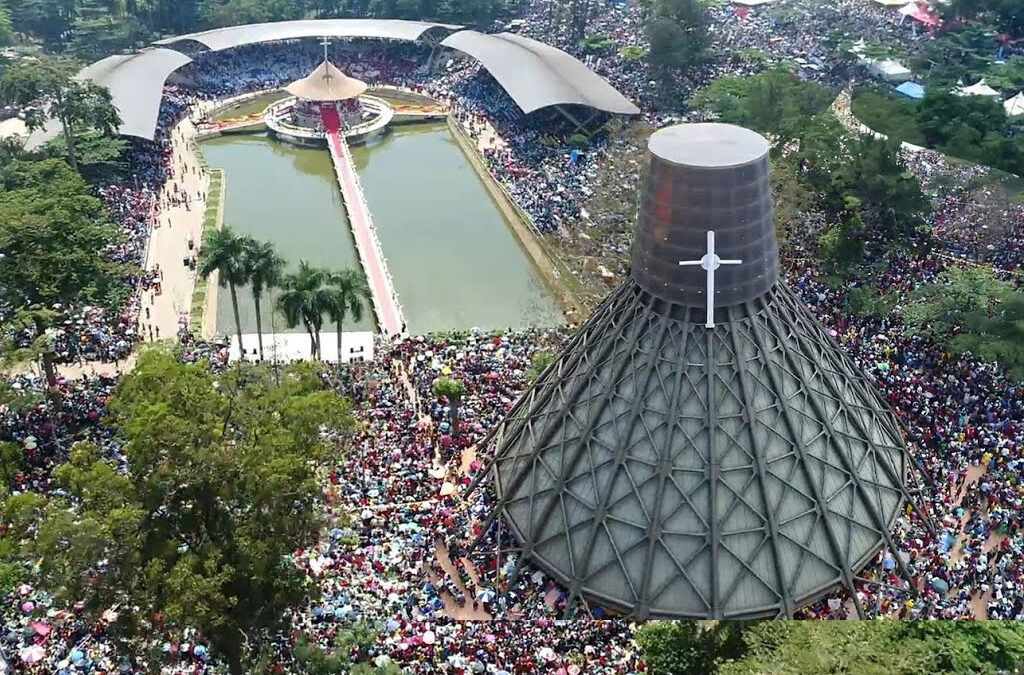
One of the most striking features of the Uganda Martyrs Catholic Shrine is the architecture of its Basilica.
The building was designed by German architect Justus Dahinden and draws inspiration from the traditional round, cone-shaped thatched huts associated with Buganda architecture.
Its circular design creates a distinctive appearance, while the roof rises above the surrounding grounds. The structure is supported by 22 copper-clad pillars, representing the 22 Catholic martyrs honoured at the shrine.
The design connects the memorial to Uganda’s cultural heritage while providing a large space for worship and pilgrimage gatherings.
Inside, visitors can appreciate the spacious sanctuary, religious artwork and the atmosphere of prayer. The Basilica remains an active place of worship, so visitors should behave respectfully and follow the guidance of shrine staff.
Things to Do at Uganda Martyrs Catholic Shrine Namugongo
A visit to Namugongo offers several religious, historical and cultural experiences. Visitors can explore the Basilica, learn about the martyrs, attend Mass, walk through the memorial grounds and experience the atmosphere of one of Uganda’s most important pilgrimage destinations.
1. Visit the Uganda Martyrs Basilica
The Basilica is the main attraction at the Catholic shrine. Visitors can enter the church to appreciate its architecture, religious artwork and spiritual atmosphere.
The building commemorates the 22 Catholic martyrs and provides a place for worshippers to pray and participate in religious celebrations.
Even visitors who are not Catholic can appreciate the building’s historical and architectural importance. During your visit, remain quiet inside the church, especially when Mass or another religious service is taking place.
2. Learn About the Uganda Catholic Martyrs
The shrine provides an opportunity to understand the lives and sacrifices of the Catholic converts who were executed during the late 19th-century persecution.
Visitors can learn about prominent figures such as:
- Saint Charles Lwanga: A leader among the royal pages who encouraged other Christian converts to remain firm in their faith.
- Saint Kizito: Remembered as the youngest of the Catholic martyrs.
- Saint Joseph Mukasa Balikuddembe: An early Catholic convert and royal official who protested the killing of Bishop James Hannington.
- Saint Matthias Mulumba Kalemba: A prominent Catholic convert who endured severe suffering before his death.
A guided visit can provide additional historical context and help visitors understand the circumstances surrounding the persecution.
3. Explore the Martyrs’ Memorial Grounds
The shrine grounds contain memorial features and religious spaces associated with the Uganda Martyrs.
Walking around the grounds gives visitors time to reflect on the history of the site and its importance to Catholic communities. You can also appreciate the scale of the pilgrimage centre and observe how worshippers use the different spaces for prayer and reflection.
A guided tour is particularly useful for visitors who want to understand the meaning of the memorials and their connection to the martyrs.
4. Visit Martyrs’ Lake
Martyrs’ Lake is one of the notable features associated with the Namugongo pilgrimage site.
The lake forms part of the shrine’s spiritual and commemorative landscape. It is associated with the history of the martyrs and provides a peaceful setting for prayer and reflection.
Visitors can explore the surrounding area, learn about its significance and appreciate the role of water and sacred spaces in the shrine’s pilgrimage traditions.
Follow the site’s instructions and avoid entering restricted areas.
5. Attend Holy Mass
Attending Holy Mass is one of the most meaningful experiences for Catholic visitors to Namugongo.
The shrine hosts regular liturgical celebrations throughout the week, allowing pilgrims and parishioners to participate in prayer and worship.
Visitors who wish to attend Mass should check the current schedule before travelling, as service times and arrangements may change during special celebrations.
Even if you are not Catholic, you can respectfully observe an open religious service, provided you follow the instructions of the church and worshippers.
6. Participate in Prayer and Personal Reflection
The shrine is an important destination for prayer, thanksgiving and personal reflection.
Pilgrims visit Namugongo to pray for their families, seek spiritual guidance, express gratitude and remember the martyrs. Some visitors also come as part of organised parish pilgrimages and religious retreats.
The peaceful atmosphere of the shrine provides an opportunity to step away from everyday activities and reflect on the history of faith and sacrifice associated with the site.
7. Join a Guided Pilgrimage Tour
A guided tour is one of the best ways to understand the historical and religious importance of Namugongo.
The shrine’s pilgrims’ office provides information and access to guides who can explain the history of the Uganda Martyrs and the development of the Catholic shrine.
Guides can help visitors understand the significance of the Basilica, memorial grounds and other important features.
International travellers who are unfamiliar with Uganda’s Christian history may find a guided visit particularly valuable.
8. Attend Uganda Martyrs’ Day Celebrations
Uganda Martyrs’ Day is celebrated every year on 3 June and is the most important annual event at Namugongo.
On this day, thousands of Catholic pilgrims and other visitors gather at the shrine to commemorate the martyrs. Pilgrims travel from different parts of Uganda and neighbouring countries, while some undertake long journeys on foot as an act of devotion.
The celebration includes prayer, religious processions, hymns and the main Holy Mass.
For visitors interested in experiencing Uganda’s religious traditions, Martyrs’ Day offers a remarkable cultural and spiritual experience. However, expect heavy traffic, large crowds, security arrangements and limited accommodation availability during this period.
9. Explore the Nearby Anglican Uganda Martyrs Shrine
Namugongo has two major pilgrimage destinations: the Catholic Basilica and the neighbouring Anglican Uganda Martyrs Shrine.
Both sites commemorate Christian converts who were executed during the persecution under Kabaka Mwanga II. The Anglican shrine is associated with the 23 Anglican martyrs, while the Catholic Basilica commemorates the 22 Catholic martyrs canonised in 1964.
Visiting both locations provides a broader understanding of the shared history of Christianity in Uganda.
The two shrines are separate institutions, so visitors should respect their individual worship arrangements and visitor guidelines.
Uganda Martyrs’ Day: Why 3 June Is Important
Every year on 3 June, Uganda commemorates the Uganda Martyrs, particularly those who were killed at Namugongo in 1886.
The date has become one of the most significant days in Uganda’s Catholic calendar and an important event for Christian communities across Africa.
Pilgrims travel from different parts of Uganda, Kenya, Tanzania, Rwanda, South Sudan and other countries. Some walk long distances to reach Namugongo, while others arrive in organised church groups and pilgrimage delegations.
The main celebrations at the Catholic shrine include a large Holy Mass attended by religious leaders, government representatives and pilgrims.
What to Expect During Uganda Martyrs’ Day
Visitors planning to attend the celebrations should prepare for:
- Large numbers of pilgrims and worshippers.
- Heavy traffic around Namugongo and the Kampala–Jinja Highway.
- Security checks and organised pedestrian routes.
- Religious processions, prayer and singing.
- Limited accommodation availability near the shrine.
- Increased demand for transport and other visitor services.
It is advisable to arrive early and arrange accommodation and transport well in advance.
Visitor Information for Uganda Martyrs Catholic Shrine
Planning your visit in advance makes it easier to enjoy the shrine and respect its religious environment.
Location and Accessibility
The shrine is in Namugongo, Wakiso District, approximately 11 kilometres from Kampala city centre. It is accessible by road from central Kampala and surrounding areas.
Visitors travelling from Entebbe International Airport should allow sufficient time for the journey, particularly during peak traffic hours.
Opening Hours
The Catholic shrine’s pilgrims’ office publishes daily visitor access and guide arrangements. The parish website also lists office hours, while the Kampala Archdiocese provides information about pilgrimage visits and religious services.
Because published office and pilgrimage hours may differ, contact the shrine before visiting to confirm the current access arrangements.
Entrance Fees
Check with the shrine before your visit for the latest information about any guided-tour, group or special visitor charges. Do not assume that every organised activity has the same arrangements as entry to the worship grounds.
Dress Code
Visitors should dress modestly because the shrine is an active place of worship.
Recommended clothing includes:
- Clothes that cover the shoulders and knees.
- Comfortable walking shoes.
- Modest attire suitable for a religious setting.
Avoid clothing that may be considered inappropriate for a sacred place.
Photography
Visitors should follow the shrine’s photography guidelines. Be respectful when taking photographs around worshippers, religious services and memorial areas. Ask for permission before photographing individuals or organised religious activities.
Guided Tours
Guided tours can be arranged through the pilgrims’ office. Visitors interested in the history of the martyrs should consider using a guide to gain a deeper understanding of the site.
For group visits, contact the shrine in advance to discuss arrangements.
Best Time to Visit Uganda Martyrs Catholic Shrine
Namugongo can be visited throughout the year. The best time depends on whether you prefer a quiet historical visit or the large religious celebrations associated with Uganda Martyrs’ Day.
For a quieter visit: Consider an ordinary weekday when there are fewer pilgrimage crowds. This gives you more time to explore the Basilica, speak with guides and reflect around the grounds.
For a religious experience: Visit around 3 June to participate in the annual Uganda Martyrs’ Day celebrations. This is the busiest period and offers an opportunity to witness one of the region’s most important Christian pilgrimages.
For a Kampala cultural tour: You can include Namugongo at the beginning or end of your Uganda safari, allowing enough time for road travel and other activities.
Places to Visit Near Uganda Martyrs Catholic Shrine
Namugongo can be combined with other cultural, historical and religious attractions in and around Kampala.
Anglican Uganda Martyrs Shrine
Located near the Catholic Basilica, the Anglican shrine commemorates the 23 Anglican martyrs. It provides another perspective on the history of Christian persecution in Buganda.
Bahá’í Temple
The Bahá’í House of Worship on Kikaaya Hill is an important religious and architectural landmark. Visitors can explore its distinctive nine-sided design, peaceful gardens and information about the Bahá’í Faith.
Uganda Museum
The Uganda Museum in Kampala presents collections relating to the country’s cultural heritage, traditional lifestyles, archaeology, history and natural environment.
Kabaka’s Palace at Mengo
Also known as Lubiri, Kabaka’s Palace is an important historical site associated with the Buganda Kingdom. It provides insight into the monarchy and Uganda’s political history.
Namirembe Cathedral
Namirembe Cathedral is one of Kampala’s major Anglican landmarks. Its history and hilltop setting make it a worthwhile stop on a religious and cultural city tour.
Rubaga Cathedral
Rubaga Cathedral is an important Catholic landmark in Kampala and provides further insight into the history of Catholicism in Uganda.
Suggested One-Day Kampala Cultural and Religious Tour
Travellers with a day in Kampala can combine Namugongo with other important attractions.
Morning
- Depart from your hotel in Kampala.
- Visit the Uganda Martyrs Catholic Shrine in Namugongo.
- Explore the Basilica and memorial grounds.
- Arrange a guided visit to learn about the martyrs.
- Visit the neighbouring Anglican Uganda Martyrs Shrine, subject to access arrangements.
Afternoon
- Continue to the Bahá’í Temple on Kikaaya Hill.
- Visit the Uganda Museum.
- Explore selected historical landmarks such as Namirembe Cathedral or Rubaga Cathedral, depending on available time.
Late afternoon
- Return to your hotel or continue with your onward travel arrangements.
This itinerary can be adjusted according to traffic, opening hours and the interests of the travellers.
Combining Namugongo with a Uganda Gorilla Trekking Safari
For international visitors, the Uganda Martyrs Catholic Shrine can be included in a wider Uganda safari itinerary.
Travellers arriving at Entebbe International Airport can spend time exploring Kampala’s religious and cultural landmarks before continuing to the country’s national parks.
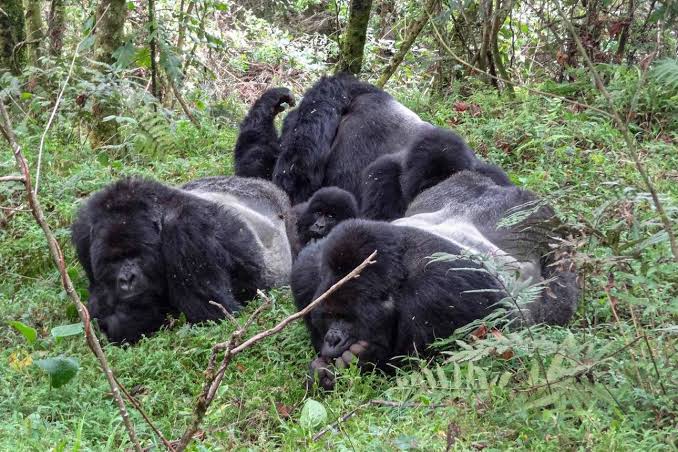
After visiting Namugongo, you can travel to southwestern Uganda for mountain gorilla trekking in Bwindi Impenetrable National Park or Mgahinga Gorilla National Park.
Other safari experiences can include:
- Chimpanzee tracking in Kibale Forest National Park: An opportunity to observe wild chimpanzees in their natural forest habitat.
- Wildlife safaris in Queen Elizabeth National Park: Explore savannah landscapes and look for elephants, buffaloes, antelopes, lions and other wildlife.
- Boat cruise on the Kazinga Channel: Enjoy a water-based wildlife experience between Lake Edward and Lake George.
- Lake Bunyonyi: Relax among the scenic islands and hills of southwestern Uganda.
- Batwa cultural experiences: Learn about the history and cultural heritage of the Batwa communities through responsible community-led activities.
Book Gorilla Tracking can help organise a safari that combines Uganda’s religious heritage with gorilla trekking, wildlife viewing and cultural experiences.
Responsible Tourism at Uganda Martyrs Catholic Shrine
The Uganda Martyrs Catholic Shrine is an active religious institution and an important heritage site. Visitors should help preserve its peaceful atmosphere and respect its spiritual significance.
Responsible visitor practices include:
- Dress modestly and behave respectfully.
- Keep noise levels low inside the Basilica.
- Follow instructions from shrine staff and pilgrimage guides.
- Avoid littering or damaging the grounds.
- Ask permission before photographing people.
- Respect worshippers during Mass and prayer.
- Avoid entering restricted areas.
- Support authorised local services and businesses where appropriate.
Respectful tourism helps protect the shrine’s religious and historical importance for future generations.
Frequently Asked Questions About Uganda Martyrs Catholic Shrine Namugongo
1. Where is Uganda Martyrs Catholic Shrine located?
The shrine is located in Namugongo, Kira Municipality, Wakiso District, approximately 11 kilometres from Kampala city centre.
2. Why is Namugongo Catholic Shrine important?
It commemorates the Catholic converts who were executed for their Christian faith during the reign of Kabaka Mwanga II. The shrine is especially associated with the 22 Catholic martyrs who were canonised by Pope Paul VI in 1964.
3. When were the Uganda Martyrs killed?
The executions took place between 1885 and 1887. The best-known group of Catholic and Anglican martyrs was killed at Namugongo on 3 June 1886.
4. How many Catholic Uganda Martyrs were canonised?
Twenty-two Catholic martyrs were canonised by Pope Paul VI on 18 October 1964.
5. When is Uganda Martyrs’ Day celebrated?
Uganda Martyrs’ Day is celebrated every year on 3 June. It attracts large numbers of pilgrims to Namugongo from Uganda and other countries.
6. Who was Saint Charles Lwanga?
Saint Charles Lwanga was a leader among the royal pages in the court of Kabaka Mwanga II. He is remembered for encouraging other Christian converts to remain firm in their faith during the persecution.
7. Can non-Catholics visit Namugongo Catholic Shrine?
Yes. Visitors from different religious backgrounds can explore the shrine, learn about its history and appreciate its religious and architectural significance, subject to the site’s visitor guidelines.
8. What can visitors do at Namugongo Catholic Shrine?
Visitors can explore the Basilica, learn about the Uganda Martyrs, walk around the memorial grounds, visit Martyrs’ Lake, attend Mass, participate in prayer and arrange guided pilgrimage tours.
9. Is there another Uganda Martyrs Shrine in Namugongo?
Yes. The Anglican Uganda Martyrs Shrine is located near the Catholic Basilica. It commemorates the 23 Anglican martyrs and is a separate pilgrimage site.
10. Can I visit Namugongo before going gorilla trekking?
Yes. Namugongo can be included in a Kampala city tour before travelling to Bwindi Impenetrable National Park or Mgahinga Gorilla National Park for mountain gorilla trekking.
Plan Your Uganda Cultural Tour with Book Gorilla Tracking
The Uganda Martyrs Catholic Shrine in Namugongo is an important destination for understanding Uganda’s religious history and cultural heritage. Its Basilica, memorial grounds and annual pilgrimage celebrations preserve the story of the Christian converts whose faith shaped an important chapter in the country’s history.
Whether you are visiting as a pilgrim, a cultural traveller or an international tourist, Namugongo offers a meaningful experience that can be combined with other Kampala attractions and Uganda’s famous wildlife destinations.
Contact Book Gorilla Tracking to include Namugongo in your Uganda itinerary and combine a cultural tour of Kampala with an unforgettable mountain gorilla trekking experience in Bwindi or Mgahinga.

[…] Uganda Martyrs Shrine at Namugongo is one of the country’s most important Christian pilgrimage […]