Call: +256 702 595 926 | Email: info@bookgorillatracking.com

A Complete Guide to Shoebill Tracking in Mabamba Swamp

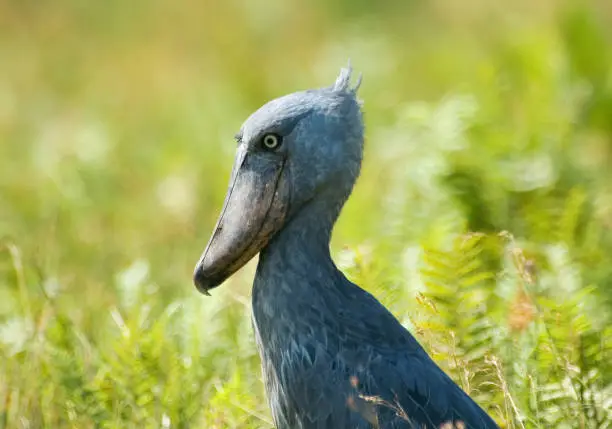
Deep within the heart of the Lake Victoria basin, a short distance from the bustling energy of Entebbe and Kampala, lies one of Uganda’s most remarkable natural treasures: the Mabamba Bay Wetland System. This sprawling papyrus swamp is a Ramsar site of international importance, but for most travelers, it holds a singular, magnetic allure. It is the premier destination in the world to see the Shoebill Stork – a bird so ancient and peculiar in appearance that it looks like a relic from the age of dinosaurs.
Whether you are a seasoned ornithologist adding a “lifer” to your list or a curious traveler hoping to witness a mythical creature, this guide covers everything you need to know about Shoebill tracking and the best time to visit Mabamba Swamp.
The Mystery of the Shoebill
Before embarking on the journey, it is essential to understand why this bird is so revered. The Shoebill (Balaeniceps rex), also known as the Whale-headed Stork or Shoe-billed Stork, is a massive, grey bird that can stand up to 1.5 meters tall with a wingspan of over 2.5 meters. Its most defining feature is its shoe-shaped bill, which is hook-tipped and capable of decapitating a lungfish or a baby crocodile in a single strike.
But it is the bird’s behavior that captivates visitors. The Shoebill is a master of stillness. It can stand motionless in the water for hours, statuesque and unblinking, waiting for prey to swim by. When it moves, it does so slowly and deliberately, often described as “gliding.” Its piercing, pale yellow eyes seem to hold an ancient wisdom. Seeing a Shoebill in the wild feels less like observing an animal and more like encountering a spirit from the past.
Getting There and the Journey
The journey to Mabamba Swamp is an adventure in itself, setting the tone for the wild experience ahead. While you can reach the swamp by road through the town of Kasenyi, the most scenic and recommended route is by boat. Starting from the Nakiwogo landing site in Entebbe, a 45-minute to one-hour motorboat ride takes you across the open waters of Lake Victoria.
As you leave the shoreline behind, the vastness of Africa’s largest lake envelopes you. Along the way, you may pass local fishermen in wooden canoes, catch glimpses of the Ssese Islands on the horizon, and feel the fresh spray of the lake. Upon arrival at the edge of the swamp, the scenery shifts dramatically. The open blue water gives way to a dense, green wall of papyrus reeds, tall sedges, and water lilies. This is the labyrinth.
Tracking in the Papyrus Canoe
Once inside the swamp, the large boat is exchanged for a traditional motorised canoe. These canoes are narrow and sit low in the water, allowing for silent navigation through the narrow channels cut through the papyrus. Your guide and the boat captain are experts; they know the “highways” of the swamp intimately.
The tracking begins instantly. As you glide deeper into the wetland, the noise of civilisation fades, replaced by the sounds of nature: the rustling of reeds in the wind, the calls of hidden frogs, and the splash of leaping fish. The water is often covered in a thick carpet of duckweed and other floating vegetation, creating a surreal green landscape.
Spotting a Shoebill requires patience and sharp eyes. The guides rely on their intimate knowledge of the birds’ territories and behaviour. You will scan the clumps of papyrus and the open water channels. Suddenly, the boat engine might cut, and your guide will point excitedly to a grey shape in the distance. The adrenaline spikes. As the boat drifts silently closer, the silhouette resolves into the unmistakable figure of the Shoebill.
A Birder’s Paradise Beyond the Shoebill
While the Shoebill is the star attraction, Mabamba Swamp is a birding hotspot of global significance. It hosts over 260 recorded bird species, making it a paradise for twitchers. As you search for the main prize, your eyes will be dazzled by a kaleidoscope of colour.
The swamp is teeming with waterbirds. You are almost guaranteed to see the majestic African Fish Eagle soaring overhead or perched on a dead branch, its distinctive call echoing over the water. The Malachite Kingfisher, a tiny jewel of electric blue and orange, is a common sight along the channels. The elusive Papyrus Gonolek, a bird with a black head and brilliant yellow underparts, may be heard calling from deep within the reeds.
Other notable species include the Blue-breasted Bee-eater, the Purple Swamphen, the African Jacana (often called the “Jesus Bird” for its ability to walk on lily pads), and the Hammerkop. If you are lucky, you might even spot the Saddle-billed Stork or the majestic Goliath Heron. The swamp is also a haven for butterflies, including the spectacular Swamp Monarch.
The Best Time to Visit Mabamba Swamp
Timing your visit is crucial to maximising your chances of seeing the Shoebill and enjoying the overall experience. Uganda is situated on the equator, so it enjoys a tropical climate with relatively warm temperatures year-round. However, the country experiences distinct wet and dry seasons that significantly affect water levels and bird activity.
The Dry Seasons (June to August & December to February)
During these months, the water levels in the swamp recede. As the water drops, the fish become concentrated in smaller, deeper channels and pools. Consequently, the Shoebills are forced to move to these areas to hunt. This makes them easier to locate as they are confined to specific zones rather than being spread out across the vast, flooded wetland.
From June to August, the weather is generally dry and pleasant. The sunshine is abundant, making for great photography conditions. Similarly, the months of December, January, and February offer a window of dry weather before the heavy rains of March. The vegetation is also less dense during these times, allowing for better visibility through the papyrus stands.
The Wet Seasons (March to May & September to November)
The wet seasons offer a different experience. The rains cause the water levels to rise significantly, flooding the swamp and expanding the wetland area. During these months, the Shoebills have a much larger area to hunt and can disappear deep into the flooded papyrus forests where canoes cannot follow. Consequently, sighting success rates can be slightly lower, and the hunt may take longer.
However, the wet season is the best time for migratory birds. From September to November, and to a lesser extent in March to April, Mabamba hosts an influx of Palearctic migrants. Birds like the Blue Swallow, White-winged Tern, and various species of waders arrive to escape the northern winter. If your goal is to see a wide variety of species rather than just the Shoebill, the wet season can be incredibly rewarding. The landscape is also lush and vibrant during this time, and the dramatic skies offer spectacular photographic backdrops.
Conclusion
Mabamba Swamp is more than just a birdwatching destination; it is a sanctuary of silence and wild beauty, accessible yet entirely removed from the modern world. Tracking the Shoebill here is a pilgrimage for nature lovers, a chance to lock eyes with a creature that has remained virtually unchanged for millions of years.
Whether you choose to visit during the dry months for the highest probability of a sighting or the wet months for the bustling spectacle of migratory birds, the journey through the papyrus channels is unforgettable. As you glide through the dark water, surrounded by the rustling reeds and the calls of kingfishers, the anticipation builds. And when the Shoebill finally emerges from the mist, it is a moment of pure magic that defines the very best of Ugandan adventure.
[…] of the most famous birding destinations near the lake is Mabamba Bay Wetland, west of Entebbe, where visitors can take a guided canoe excursion in search of the […]
[…] Shoebill stork excursion in Mabamba Swamp […]
[…] Swamp, also known as Mabamba Bay Wetland, is one of Uganda’s most famous birdwatching destinations. Located on the northern shores of […]
[…] Mabamba Bay is one of Uganda’s most famous birdwatching destinations. […]