+256-702 595 926 | info@bookgorillatracking.com

Gorilla Trekking Experience


Few wildlife experiences match the emotional power of gorilla trekking. Whether it is your first safari or you have already travelled across Africa, the moment you set foot into a rainforest to search for gorillas is different. There’s anticipation in the air, half excitement, half reverence, because you’re not simply looking for animals. You’re entering the habitat of a wild, intelligent species that has evolved in isolation and deserves respectful distance.
A gorilla trekking experience is physical, immersive, and unpredictable in the best way. You may hear gorillas before you see them. You may walk through thick undergrowth, cross muddy patches, and pause to listen for sounds, crucial details that tell you you’re close. And when you finally arrive at the gorilla family, the experience becomes calm and intensely real, like stepping into a moment that belongs to them, not to you.
This article walks you through what gorilla trekking feels like, how it works, what you are likely to see, how to prepare, and how to make the most of your one permitted viewing period.
Trek Day Starts Earlier Than You Think
Gorilla trekking days usually begin early, often before sunrise or around morning tea time, because the search depends on where the gorilla family is that day and how the rangers choose the trail. Your day may feel structured at first: registration, instructions, then assignment to your trekking group and ranger team.
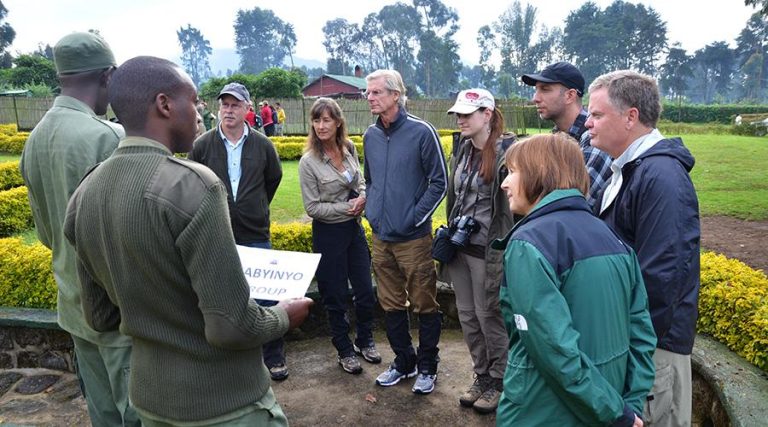
You’ll be briefed on important rules, which usually include maintaining a respectful distance, limiting noise, and following ranger guidance on how to move through the forest. Some parks also require that you observe health or hygiene standards to reduce disease risk for the gorillas. Even if you’ve trekked elsewhere, the briefing matters because it’s about safety and conservation, not just logistics. Once you receive your final instructions and step into the trailhead area, the experience shifts from “planning” to “presence.”
Rainforest Trekking (Physical, Not Extreme, but Definitely Challenging)
A gorilla trek is best understood as a guided hike into rugged rainforest terrain, not a walk on a marked trail. Forest paths can be slippery, narrow, and filled with roots, vines, and dense vegetation. The ground may be muddy, especially during wet seasons, and the air can feel humid and heavy.
Even if you consider yourself fit, gorilla trekking can feel demanding because the vegetation slows your pace, you’ll need to step carefully around roots and slopes, and you may hike longer than you expect if the gorillas are moving.
There’s also a mental component. Unlike a typical hike where the goal is distance or scenery, your goal is sound and signs. Rangers watch for hints, calls, movement in the canopy, broken branches, or fresh signs on the forest floor. Your job is to stay quiet and follow the pace without rushing.
One of the surprising parts of gorilla trekking is how quickly you start measuring your energy. You learn to take deep breaths, keep steady footing, and accept that progress may be slow when terrain is difficult.
Searching, Listening, and Waiting
Before you see gorillas, there’s a long stretch of anticipation. This part of the trek can be as memorable as the final encounter.
As you move through the forest, you’ll notice how your senses sharpen. You listen more closely than you normally would. You pay attention to direction, how rangers react or pause. You may hear distant calls that sound almost like rhythmic grunts. Sometimes you’ll hear a rustle and feel the group tense, even before anyone points out what’s happening.
Rangers typically manage movement to keep your group safe and respectful. They may instruct you to stop, spread out slightly for visibility, or move carefully through thicker vegetation.
This searching phase changes the atmosphere of a trek. It’s no longer “just hiking.” It’s suspenseful and almost sacred, because you know you’re approaching living creatures that have their own social structure and communication patterns.
The Moment the Forest “Answers Back”
When you’re close, the rainforest becomes louder in a subtle way. The sounds you were hearing become clearer and more directional. You might notice changes in ranger behavior, slower movement, sudden stillness, and the kind of quiet focus that spreads through your group.
Then comes the first breakthrough: a silhouette in the greenery, a movement between branches, or the unmistakable shape of a gorilla family moving through cover. Even if you don’t see the full group immediately, the discovery itself feels like a shift, like a curtain lifting.
From that point, your role is to remain calm, quiet, and observant. Rangers will guide you to a viewing position. They may keep you slightly back and ensure you’re placed in a way that respects both you and the gorillas.
What Seeing Gorillas Up Close Actually Feels Like
When gorillas finally come into view, it’s not always loud or dramatic. Often, it is surprisingly peaceful. You may see adults moving with strength and control, juveniles climbing or playing, and infants pressed close to protectors. Depending on the family and the day’s mood, gorillas may feed steadily, rest and groom, move through the understory with careful attention, or communicate with vocalizations that carry through the canopy.
One of the most striking aspects is their presence. Gorillas don’t feel like “animals you spotted.” They feel like individuals with relationships and attention. You notice their posture, how they balance weight, how they pause, and how they react to changes in the forest.
Emotionally, many trekkers describe a “calm shock.” You’re overwhelmed but focused. You may feel your heart rate rise, but you still keep quiet because you understand that this encounter is fragile, both for the gorillas and for the moment.
You’ll have a set amount of time for viewing, which can feel either short or long depending on what’s happening. When you’re close enough to see small details, hands moving through leaves, eyes watching your group, fur texture visible through gaps, you realize why the rules are strict: the experience must be safe and non-disruptive.
Photography and Observation
Most people want to photograph the encounter. That’s natural, this is the kind of moment you never forget. But gorilla trekking requires discipline with your camera. Guides usually emphasize quiet behavior, no sudden movement, and keeping within the viewing boundaries you’re given.
You may find it more rewarding to photograph briefly and then just watch. In fact, some of the best memories are when you lower your camera and observe with full attention. You start noticing patterns: how a dominant gorilla responds to a call, how a juvenile interacts, or how the family reorganizes when they sense activity.
The Trek Back
After viewing ends, your group moves away carefully. This part can feel almost surreal. You might feel relieved, especially if the trek was physically difficult, but you also feel emotionally unfinished, like the encounter was too precious to end abruptly. The walk back to the trail can feel slower and calmer. Sometimes you’ll see people talking quietly, replaying what they saw, pointing out details they didn’t notice in the moment. Others will just keep a thoughtful silence. In many ways, the trek back becomes part of the experience: you’re leaving the gorillas behind, knowing you can’t take anything from them except what you learned through respect and distance.
Why People Remember Gorilla Trekking for a Lifetime
A gorilla trekking experience is not just a wildlife activity, it is a rare meeting with another species in its own world. You arrive expecting a “sighting,” but you often leave having experienced something closer to a conversation between human presence and wild life.
The physical challenge reminds you that this is real terrain, not a staged attraction. The searching phase teaches patience and attention. And the encounter itself becomes a memory you carry for years.
If you’re planning an East Africa safari, gorilla trekking deserves to be a centerpiece, not an afterthought. It changes how you see wildlife, how you understand conservation, and how you value moments that cannot be repeated on demand.