+256-702 595 926 | info@bookgorillatracking.com

Are Gorillas Dangerous? Gorilla Behaviour & Safety Guide

Are Gorillas Dangerous? Understanding Gorilla Behaviour and Safety During Gorilla Trekking
Gorillas are the largest living primates and share approximately 98% of their DNA with humans. They are highly intelligent animals capable of displaying emotions, forming strong social bonds, and caring for their young. These remarkable similarities make mountain gorilla trekking in Uganda and Rwanda one of Africa’s most fascinating wildlife experiences.
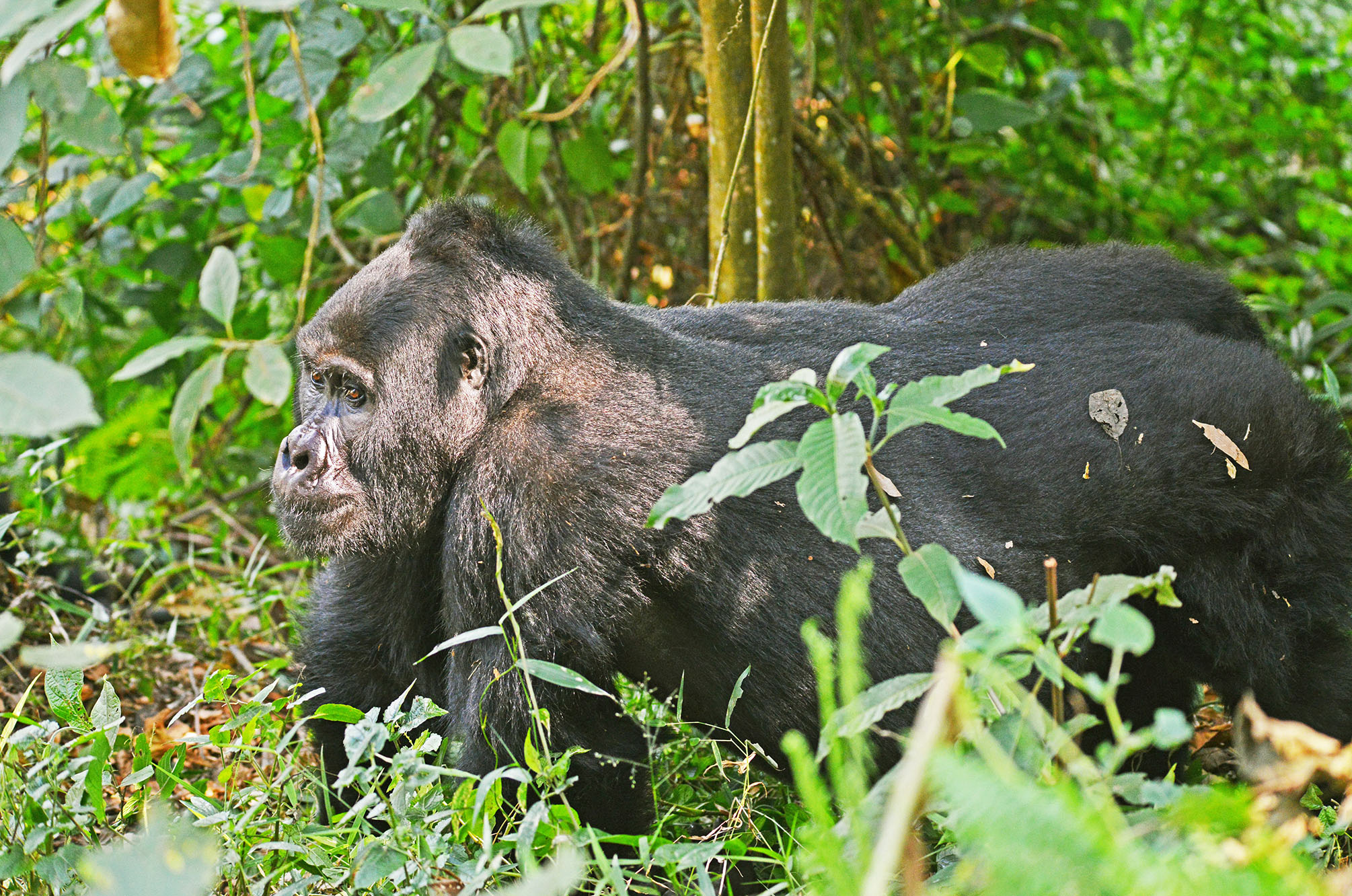
Gorillas can be recognised by their large nostrils, broad chests, powerful bodies, and dark hair covering most of their bodies, except for areas such as the face, ears, palms, and soles of their feet. Although their size and strength can appear intimidating, gorillas are generally peaceful animals when left undisturbed.
Understanding gorilla behaviour, their social structure, and the circumstances that may trigger defensive reactions can help visitors enjoy a safe and responsible gorilla trekking experience.
Physical Characteristics of Gorillas
Adult male gorillas are known as silverbacks because they develop distinctive silver or grey hair across their backs as they mature. A silverback is usually the dominant male in a gorilla family and plays an important role in protecting the group, maintaining order, and guiding its movements.
Adult gorillas have muscular bodies, strong arms, and powerful jaws. Fully grown males are considerably heavier than females, and their weight varies depending on the subspecies, age, and individual condition. Their size and strength allow them to defend themselves and their families when they perceive a threat.
Although gorillas can climb trees, adult silverbacks generally spend more time on the ground because of their size and weight. Younger gorillas are more agile and may climb trees to play, find food, or rest. Most gorillas construct sleeping nests from vegetation, either on the ground or in trees, depending on their size and the surrounding habitat.
Gorilla Social Structure and Family Life
Gorillas are social animals that typically live in groups consisting of a dominant silverback, adult females, juveniles, and infants. Some groups also include younger males or additional silverbacks. Group sizes vary considerably depending on the species, habitat, and social circumstances.
The dominant silverback provides leadership and protection. He helps maintain group cohesion, mediates certain social interactions, and responds to potential threats. Females play an important role in raising infants, while young gorillas learn social behaviours through play and interaction with other group members.
Mountain gorillas live in the forests of Uganda, Rwanda, and the Democratic Republic of the Congo. In Uganda, visitors can encounter habituated mountain gorilla families in Bwindi Impenetrable National Park and Mgahinga Gorilla National Park.
Gorillas can live for several decades in the wild. Their strong family bonds, communication, and complex social relationships make them among the most captivating animals to observe in their natural habitat.
What Do Gorillas Eat?
Gorillas are primarily herbivorous, feeding on a wide variety of plant material. Their diet may include leaves, shoots, stems, pith, roots, tree bark, and seasonal fruits. The exact foods they consume depend on the species, habitat, and availability of vegetation.
Mountain gorillas eat substantial quantities of vegetation each day to meet their nutritional needs. They spend much of their time feeding, moving through the forest, resting, and interacting with other members of their group.
Gorillas often feed more actively during the morning and later in the day, with periods of rest in between. In the evening, they usually build fresh sleeping nests using leaves, stems, and branches.
During a gorilla trekking experience, visitors may see gorillas feeding, grooming one another, playing, resting, or caring for their infants. These natural behaviours are among the highlights of observing mountain gorillas in the wild.
Are Gorillas Dangerous to Humans?
Gorillas are generally peaceful animals and do not normally seek out confrontations with humans. However, they are powerful wild animals and can become dangerous if they feel threatened, startled, cornered, or provoked.
A gorilla may react defensively if a person gets too close, blocks its escape route, behaves unpredictably, or ignores signs that it wants more space. A silverback may also display defensive behaviour when protecting females, infants, or other members of the group.
This is why visitors participating in gorilla trekking in Uganda or Rwanda must follow the instructions of trained guides and park rangers. Habituated gorillas are accustomed to the controlled presence of humans, but habituation does not make them domesticated or completely predictable.
What Can Trigger Defensive Behaviour in Gorillas?
Gorilla encounters are carefully managed to reduce the risk of disturbing the animals. Certain human behaviours can nevertheless cause stress or provoke a defensive response.
1. Using Flash Photography
Sudden flashes and intrusive photography can disturb wildlife. Visitors should follow their guide’s instructions and avoid flash photography when observing gorillas. Use a camera without flash and maintain the required viewing distance.
2. Making Loud or Sudden Noises
Shouting, screaming, or making abrupt noises may startle gorillas. Speak quietly, move calmly, and avoid sudden movements during the encounter.
3. Getting Too Close
Approaching a gorilla beyond the permitted viewing distance can make it feel threatened. Visitors should maintain the distance specified by park authorities and their guide, who will provide instructions based on the circumstances.
4. Surrounding or Blocking a Gorilla
Gorillas need space to move freely through the forest. Never surround a gorilla, block its path, or position yourself between a mother and her infant. Allow the animals to move without obstruction.
5. Touching a Gorilla
Visitors must never attempt to touch, feed, or interact physically with wild gorillas. Even when a gorilla appears calm or approaches unexpectedly, it is essential to follow the guide’s instructions and avoid contact.
6. Ignoring the Guide’s Instructions
Gorilla trekking is conducted under specific conservation and safety rules. Ignoring instructions about distance, movement, photography, or behaviour can put both visitors and gorillas at risk.
7. Approaching Unhabituated Gorillas
Gorillas that have not been habituated to the presence of humans may perceive people as a threat and respond unpredictably. Tourists should never attempt to find or approach unhabituated gorillas independently. Visits must take place through authorised conservation programmes.
8. Wearing Bright Clothing
Bright clothing is not generally recognised as a direct cause of gorilla attacks. However, neutral-coloured outdoor clothing is a practical choice for forest trekking and helps visitors blend into the surroundings. Following park guidance is more important than assuming a particular clothing colour will prevent an encounter from becoming defensive.
9. Eating or Chewing During the Encounter
Visitors should follow their guide’s instructions regarding food and drink. Do not offer food to gorillas or leave food waste in the forest. Eating in their presence should be avoided when instructed, particularly because human food can encourage unwanted interactions and create hygiene risks.
10. Remaining Too Long or Disturbing the Group
Gorilla visits are subject to strict time limits, commonly around one hour for standard trekking permits, although specific activities may have different rules. The time limit helps reduce disturbance and supports conservation. Visitors must leave when instructed by their guide or ranger.
How Do Gorillas Warn Humans Before an Attack?
Gorillas use a range of vocalisations, postures, and movements to communicate. When a gorilla feels threatened or wants to establish dominance, it may display behaviours such as chest-beating, loud vocalisations, ground-slapping, vegetation tearing, charging, or moving rapidly.
These displays do not always mean an attack will follow. They may serve as warnings, expressions of agitation, or demonstrations of strength. Their meaning depends on the wider context and the individual animal’s behaviour.
Visitors should never attempt to interpret these signals independently or respond aggressively. If a gorilla displays concerning behaviour, remain calm and follow the guide’s instructions immediately.
During gorilla trekking, guides and rangers are trained to monitor animal behaviour and manage encounters. Their experience is essential in helping visitors respond appropriately to unexpected situations.
What Happens If a Gorilla Charges or Attacks?
Although serious incidents are uncommon during properly managed gorilla trekking, gorillas are capable of causing severe injuries because of their strength and size.
If a gorilla charges, visitors should not scream, run away, make sudden movements, or attempt to fight the animal. Follow the instructions of the guide or ranger, who will direct the group according to the gorilla’s behaviour and the circumstances.
A charge may be a display rather than an attempt to make physical contact, but visitors must never assume that a charging gorilla is harmless. The safest response is to remain calm and follow professional guidance.
If physical contact occurs, do not attempt to provoke, strike, or chase the animal. Follow the guide’s immediate instructions and seek medical attention if anyone is injured.
The most effective way to reduce the risk of an incident is to maintain an appropriate distance, avoid blocking the gorillas’ movement, and follow all conservation and safety rules.
Do Gorillas Fight Among Themselves?
Gorilla groups generally maintain established social relationships, but conflicts can occur. Competition between males, changes in group membership, mating opportunities, and attempts by males to establish or maintain dominance may lead to aggressive encounters.
Silverbacks may challenge one another over access to females or group leadership. Some confrontations involve displays of strength, including chest-beating, vocalisations, and charging. Other encounters can escalate into physical fights and cause serious injuries.
Not every confrontation ends in a fight, and gorilla social relationships are more complex than a simple rule that one male always controls every female. Group dynamics vary, and females also influence social relationships and group stability.
These interactions are part of the natural behaviour of wild gorillas and are one reason visitors should observe them only under authorised, carefully managed conditions.
How to Stay Safe During Gorilla Trekking in Uganda and Rwanda
Responsible gorilla trekking depends on respecting the animals, following conservation regulations, and listening to trained guides and park rangers.
Here are important guidelines for visitors:
- Maintain the viewing distance required by park authorities and your guide.
- Follow all instructions from your guide and ranger.
- Speak quietly and avoid sudden movements.
- Never touch, feed, chase, or surround gorillas.
- Do not use flash photography.
- Avoid pointing directly at gorillas or making threatening gestures.
- Never attempt to trek gorillas without the required authorisation.
- Follow park rules regarding illness, hygiene, food, and waste disposal.
- Stay calm if a gorilla approaches or displays unexpected behaviour.
- Respect the permitted viewing time and leave when instructed.
Gorillas are also susceptible to some human respiratory infections. Visitors who are ill should follow the relevant park health requirements and inform their operator before the trek. Protecting gorilla health is just as important as protecting visitor safety.
Where Can You See Mountain Gorillas in Uganda?
Uganda is one of the best destinations in Africa for mountain gorilla trekking. Visitors can track habituated gorilla families in two protected areas.
Bwindi Impenetrable National Park
Bwindi is a UNESCO World Heritage Site renowned for its mountain gorillas, rich biodiversity, and ancient tropical forest. The park has several trekking sectors, including Buhoma, Ruhija, Rushaga, and Nkuringo. The sector assigned for your trek influences where you stay and how you plan your travel.
Bwindi is particularly suitable for travellers who want to combine gorilla trekking with birdwatching, forest walks, cultural experiences, and scenic drives through southwestern Uganda.
Mgahinga Gorilla National Park
Located in southwestern Uganda, Mgahinga Gorilla National Park forms part of the Virunga conservation landscape shared by Uganda, Rwanda, and the Democratic Republic of the Congo. It offers mountain gorilla trekking in a dramatic setting of forested slopes and volcanic mountains.
Mgahinga can also be included in itineraries featuring golden monkey tracking and guided volcano hikes, subject to availability and the relevant park regulations.
Plan Your Gorilla Trekking Safari with Epic Uganda Vacation
A mountain gorilla encounter is one of the most memorable wildlife experiences in East Africa. Seeing a gorilla family feeding, grooming, playing, or resting in its natural habitat provides a rare opportunity to appreciate the intelligence and social complexity of these remarkable primates.
Although gorillas are powerful wild animals, responsible tourism, experienced guides, and strict conservation rules help make authorised gorilla trekking a carefully managed experience.
Epic Uganda Vacation organises tailor-made Uganda safaris featuring mountain gorilla trekking, chimpanzee tracking, wildlife game drives, birdwatching, and cultural experiences. Whether you are planning a short gorilla trekking trip or a longer East African safari, your itinerary can be designed around your travel dates, preferred accommodation, and interests.
Contact Epic Uganda Vacation to plan your Uganda gorilla trekking safari and discover the country’s extraordinary wildlife and landscapes while supporting responsible tourism and gorilla conservation.