Call: +256 702 595 926 | Email: info@bookgorillatracking.com

African Green Broadbill in Uganda: Where to See It

African Green Broadbill in Uganda: Where to See It in Bwindi Forest
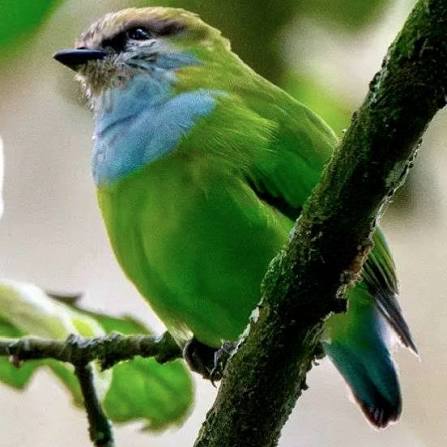
The African Green Broadbill is one of Africa’s most remarkable forest birds and a prized sighting for birdwatchers visiting Uganda. Known scientifically as Pseudocalyptomena graueri, this small, vividly coloured bird is associated with the montane forests of the Albertine Rift and is particularly sought after by birders exploring Bwindi Impenetrable National Park.
Its bright green plumage helps it blend into the surrounding foliage, making it surprisingly difficult to spot despite its distinctive appearance. For birdwatchers planning a specialised Uganda birding safari, the Ruhija sector of Bwindi, especially the Mubwindi Swamp trail, is a key destination for searching for this rare species.
Uganda’s exceptional bird diversity, mountain forests and range-restricted Albertine Rift species make the country an outstanding destination for specialist birding tours. A visit focused on the African Green Broadbill can also introduce travellers to other rare forest birds, scenic highland trails and the conservation importance of Bwindi.
What Is the African Green Broadbill?
The African Green Broadbill, also called Grauer’s Broadbill, is a small forest bird belonging to the family Eurylaimidae. Its scientific name is Pseudocalyptomena graueri.
It is a compact bird with predominantly bright green plumage, a short tail and a broad bill. Blue colouring on the throat, breast and rump adds to its distinctive appearance. Despite its vivid colours, it can be difficult to distinguish among leaves and dense forest vegetation. The species is associated with montane forest in the Albertine Rift region of Central and East Africa. Its restricted distribution and specialised forest habitat make it an important target for birders interested in rare and range-restricted species.
Why Is the African Green Broadbill Special?
Several features make this bird especially attractive to experienced birdwatchers:
- Distinctive appearance: Its vivid green plumage and blue markings make it memorable when seen clearly.
- Restricted range: It occurs in a limited part of the Albertine Rift region.
- Specialised habitat: It depends on suitable montane forest environments.
- Birding significance: It is one of the most sought-after species for visitors undertaking specialist birding in Bwindi.
- Conservation importance: Protecting its forest habitat also benefits many other species that share the same ecosystem.
For dedicated birders, finding the African Green Broadbill can be a highlight of a Uganda birding safari.
Where Can You See the African Green Broadbill in Uganda?
1. Bwindi Impenetrable National Park
Bwindi Impenetrable National Park in southwestern Uganda is the principal destination for birdwatchers hoping to find the African Green Broadbill.
The park protects extensive montane rainforest and supports more than 350 recorded bird species, including numerous Albertine Rift endemics. Its varied elevations, dense vegetation and different forest habitats provide opportunities to search for many specialised forest birds.
Bwindi is also internationally famous for mountain gorilla trekking. This makes it possible to combine a specialist birding experience with gorilla trekking, provided the itinerary allows sufficient time for both activities.
However, gorilla trekking and birdwatching are separate experiences. Travellers planning to target rare birds should arrange dedicated birding time rather than assuming that a gorilla trek will provide equivalent opportunities.
2. Ruhija Sector
Ruhija, in the eastern part of Bwindi, is a particularly important base for specialist birdwatching. Its high-elevation forest and access to specialised habitats make it a priority for birders searching for Albertine Rift endemics.
The sector is best known among birdwatchers for the Mubwindi Swamp trail, where experienced local guides search for the African Green Broadbill and other highland forest species.
Ruhija is a useful choice for travellers whose main goal is birding rather than simply adding a short birdwatching activity to a general safari.
Before booking accommodation, confirm the location of the lodge in relation to the planned birding routes. Staying near Ruhija can reduce early-morning transfers and allow more time in the field.
3. Mubwindi Swamp Trail
The Mubwindi Swamp trail is one of the best-known birding routes in Bwindi and a major attraction for birdwatchers visiting Ruhija.
The trail passes through montane forest towards swamp habitat, offering opportunities to search for specialised birds associated with the forest and wetland environment. The African Green Broadbill is one of the main target species, alongside other Albertine Rift endemics.
The walk can be physically demanding, with uneven ground, slopes and potentially muddy sections. Visitors should assess their fitness, wear suitable hiking footwear and carry rain protection.
A sighting is never guaranteed. Bird movements, calling activity, weather and visibility all affect the chances of finding the species on a particular day.
Best Time to See the African Green Broadbill
The African Green Broadbill can be searched for throughout the year in suitable habitat, but the best time for an individual sighting depends on local bird activity, weather and the experience of the guide.
Early mornings are generally productive for forest birding because many species are more vocal and active around dawn. An early departure also allows birders to spend more time searching before afternoon weather changes.
Seasonal conditions affect trail quality and visibility. During wetter periods, forest trails can become muddy, while dry spells may offer easier walking conditions. Neither season guarantees better sightings of the broadbill.
For a specialist trip, it is sensible to plan more than one birding session in Ruhija. Spending additional time in the area gives you further opportunities to search and to observe other forest birds if the broadbill is not located.
How to Find the African Green Broadbill
Finding this bird requires patience, careful observation and local knowledge. Its green plumage can blend into the forest, and even experienced birdwatchers may need time to locate it.
Hire an Experienced Birding Guide
A specialist guide can help identify suitable habitat, recognise bird calls and interpret movement within the vegetation. Local knowledge is particularly valuable when searching for rare forest species.
When booking, explain that the African Green Broadbill is a priority target. Ask whether the guide has experience with Ruhija’s specialist birding trails and whether the proposed itinerary includes enough time for a focused search.
Listen Carefully
Forest birding often involves identifying sounds before seeing the bird. Learning the broadbill’s calls from a reliable birding resource before the trip can help visitors understand what their guide is listening for.
However, calls and bird activity can vary, and hearing a sound does not always mean the species is close enough to observe.
Bring Binoculars
Good binoculars are essential for locating birds among dense leaves and branches. A camera with a suitable telephoto lens can help with photography, although low light and obstructed views may make clear images difficult.
Avoid approaching too closely or disturbing birds to obtain photographs.
Be Patient and Flexible
Birdwatching rarely follows a guaranteed schedule. You may spend considerable time observing other species while waiting for a target bird to appear.
Allow enough time in Ruhija and avoid scheduling a long transfer immediately after a demanding morning birding session.
Other Birds to Look for in Ruhija
A birding trip focused on the African Green Broadbill can also provide opportunities to search for other highland forest species. Sightings vary, but notable targets in the wider Bwindi birding area include:
- Grauer’s Rush Warbler: A specialised bird associated with high-altitude swamp vegetation.
- Shelley’s Crimsonwing: A sought-after Albertine Rift forest species.
- Rwenzori Batis: A regional forest bird that attracts specialist birders.
- Handsome Francolin: A distinctive forest-associated species.
- Mountain Masked Apalis: Another interesting target for birders exploring suitable montane forest habitats.
- Regal Sunbird: A striking highland bird that may be encountered in appropriate habitat.
These species do not all occupy identical habitats, and their likelihood of encounter varies by location and conditions. A good guide will adapt the route to the species you most want to see. <Cite refs={[“turn915390search4″,”turn915390search11”]}/>
Birdwatching or Gorilla Trekking: Which Should You Choose?
Bwindi offers both specialist birding and mountain gorilla trekking, but the activities serve different interests.
Birdwatching involves slower movement, careful listening and extended observation of forest habitats. Gorilla trekking focuses on locating a habituated gorilla family under the guidance of park staff and spending the authorised viewing time with the group.
Travellers interested in both should allow separate time for each. The African Green Broadbill is not a bird that can be promised during a gorilla trek.
The Ruhija sector is particularly relevant to birders, while the best gorilla trekking sector depends on permit availability and the location assigned by the relevant authorities. Plan the itinerary around the birding targets and confirmed permits.
Suggested African Green Broadbill Birding Itinerary
Day 1: Arrive in the Bwindi Region
Travel to southwestern Uganda and continue to accommodation in the Ruhija area. Depending on arrival time and conditions, enjoy a short birding session around suitable forest edges or lodge grounds.
Day 2: Mubwindi Swamp Birding Trail
Start early with an experienced birding guide and search for the African Green Broadbill along the Mubwindi Swamp trail. Spend time observing other highland forest species and enjoy the scenery along the route.
The trail can be demanding, so allow adequate time and carry water, rain protection and suitable footwear.
Day 3: Additional Ruhija Birding
Arrange another morning birding session to search for target species missed on the previous day. Depending on access and the guide’s advice, explore a different suitable route or habitat.
After the birding session, continue to another destination in your Uganda itinerary or add a gorilla trekking experience if you have the appropriate permit and enough time.
This itinerary can be expanded to include Buhoma birding, Kibale Forest, Queen Elizabeth National Park or other destinations for a broader Uganda birding safari.
Conservation of the African Green Broadbill
The African Green Broadbill’s restricted distribution makes the protection of suitable forest habitat particularly important. Forest degradation and fragmentation can affect species that depend on specialised montane environments.
Bwindi’s conservation value extends well beyond any single bird. Its forests support mountain gorillas, numerous bird species, mammals, butterflies and many other organisms.
Visitors can support responsible conservation tourism by following park regulations, using authorised guides, remaining on designated trails and avoiding disturbance to birds or other wildlife.
Choosing locally guided birding experiences can also contribute to livelihoods connected with the protection of natural habitats. Responsible birdwatchers should avoid playback or other methods that cause excessive disturbance, particularly when birds are breeding or defending territories.
Plan an African Green Broadbill Birding Safari with Raptors Africa Safaris
The African Green Broadbill is an outstanding target for birdwatchers visiting Uganda. Bwindi Impenetrable National Park, particularly the Ruhija sector and Mubwindi Swamp trail, should be a central part of an itinerary designed around this rare forest species.
Raptors Africa Safaris can help you plan a specialist birding trip that combines Ruhija with other Uganda birding destinations. The itinerary can be tailored to your target species, available time, accommodation preferences and interest in gorilla trekking or wider wildlife experiences.
Contact Raptors Africa Safaris to plan your African Green Broadbill birding safari in Uganda.
Frequently Asked Questions About the African Green Broadbill
What is the scientific name of the African Green Broadbill?
Its scientific name is Pseudocalyptomena graueri. It is also known as Grauer’s Broadbill.
Where is the best place to see the African Green Broadbill in Uganda?
Bwindi Impenetrable National Park is the main destination. The Ruhija sector and Mubwindi Swamp trail are especially well known among birders searching for this species.
Is the African Green Broadbill endemic to Uganda?
No. It is associated with the Albertine Rift region and is found in a restricted area extending beyond Uganda. Its distribution is limited compared with widespread forest birds.
Why is the African Green Broadbill difficult to see?
Its green plumage blends with forest foliage, and it may remain hidden in dense vegetation. Finding it often requires patience, suitable conditions and an experienced birding guide.
When should I go birdwatching for the African Green Broadbill?
Early-morning birding sessions are a sensible choice. Allowing several sessions in Ruhija may provide more opportunities than relying on a single walk.
Can I see the African Green Broadbill during gorilla trekking?
It is possible to encounter birds while walking in the forest, but a gorilla trek is not a dedicated birding excursion. Arrange a separate guided birding walk if the broadbill is a priority.
What should I bring for African Green Broadbill birding?
Bring binoculars, comfortable waterproof hiking boots, rain protection, drinking water and a camera if desired. A regional bird field guide or bird identification app can also be helpful.
Can beginners go birdwatching for the African Green Broadbill?
Yes. Beginners can join a guided birding excursion, although the species can be challenging to locate. A guide can help with identification and introduce visitors to other birds along the trail.