+256-702 595 926 | info@bookgorillatracking.com

Bwindi Impenetrable National Park Safaris

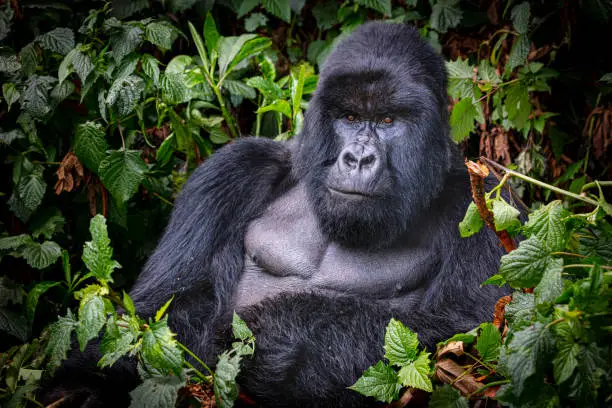
In the southwestern corner of Uganda, where the rolling hills of the Kigezi region flatten out into a rugged, volcanic landscape, lies a forest that seems to have been plucked from a mythology. This is Bwindi Impenetrable National Park, a UNESCO World Heritage site and, without a doubt, one of the most biologically diverse and atmospherically unique places on the African continent. A safari to Bwindi is not the traditional image of open 4×4 vehicles cruising across sun-drenched savannas. Instead, it is an active, immersive, and deeply personal journey into one of the last remaining sanctuaries of the mountain gorilla. It is an adventure that challenges the body and stirs the soul.
The Unrivaled Main Event
The primary draw for every visitor to Bwindi is the mountain gorilla. Home to roughly half of the world’s remaining population of these gentle giants, the park is the epicenter of gorilla conservation. The “safari” here is defined by the trek. It is a pursuit that requires patience, fitness, and a sense of adventure. Unlike a game drive where animals are often spotted from a distance, a gorilla trek in Bwindi brings you into the intimate personal space of a wild family unit.
The experience begins at dawn at the park headquarters. After a briefing on etiquette and safety, small groups of eight trekkers set out into the mist, accompanied by armed rangers and trackers. The terrain is as “impenetrable” as the name suggests. It is a tangled labyrinth of dense undergrowth, hanging vines, and towering trees draped in moss. The hike can last anywhere from thirty minutes to eight hours, involving steep ascents and descents through the slippery valleys.
However, the moment the ranger signals to lower your voice and drop your bags, the fatigue vanishes. Pushing through the final thicket, you suddenly find yourself in a clearing, face-to-face with a silverback. The next hour is a window into a world that feels strangely familiar. Watching a mother groom her infant, or a juvenile beat its chest in a display of mock bravado, creates a profound connection. It is a humbling reminder of our shared ancestry. This close-proximity wildlife viewing is the gold standard of safaris, offering a level of intimacy that no open-plain game drive can replicate.
Beyond the Giants: Biodiversity in the Mist
While the gorillas are the crown jewel, a Bwindi safari offers rich rewards for those interested in the broader ecosystem. The park is a biodiversity hotspot, boasting over 120 species of mammals, 348 species of birds, and 220 species of butterflies.
For primate enthusiasts, the forest is alive with activity. The noisy chatter of the Black-and-white Colobus monkey echoes through the canopy, their striking white tails flashing like beacons against the green. L’Hoest’s monkeys, with their distinctive white beards, can often be seen foraging on the forest floor, while the Blue Monkeys and Red-tailed Monkeys swing high above. Though rarely seen, the forest also shelters chimpanzees, forest elephants, and several species of tiny antelopes like the Duiker.
Bwindi is also a premier birding destination. It is one of the best places in East Africa to spot the Albertine Rift endemics, birds found nowhere else in the world. Serious ornithologists flock here in hopes of sighting the African Green Broadbill, a rare and elusive jewel of the canopy, or the handsome Shelley’s Crimsonwing. The vibrant calls of the Great Blue Turaco and the regal Rwenzori Turaco add a splash of color and sound to the hikes, making the forest a living aviary.
The Four Sectors of Bwindi
Bwindi is divided into four main sectors, each offering a slightly different safari experience. Understanding these helps travelers choose the adventure that suits them best.
Buhoma: Located in the northwest, Buhoma is the pioneer of gorilla tourism in the park. It is the most accessible sector, with a wider range of accommodation options from budget to luxury. The forest here is lush but generally less steep than other sectors, making it a favorite for families or those wanting a slightly less strenuous trek. The community walks in Buhoma are particularly enriching, offering visits to local hospitals and schools.
Ruhija: Situated on the eastern edge, Ruhija is the highest altitude sector. The air is crisp and cool, and the views are spectacular. This is the premier location for birdwatchers, as it provides easy access to the Mubwindi Swamp, a hotspot for rare species. The gorilla families here, such as the Bitukura group, are known for being relatively placid and easy to track.
Rushaga: In the south, Rushaga has the highest concentration of gorilla families, including the famous Nshongi group. Because there are many families here, it offers a higher chance of securing a permit during peak seasons. The terrain is rugged and steep, rewarding hikers with incredible views of the volcanoes across the border in Rwanda. Rushaga is also the only sector that offers the “Gorilla Habituation Experience,” a four-hour excursion that allows visitors to spend time with a semi-habituated group, offering a deeper insight into the research and conservation process.
Nkuringo: Perhaps the most scenically dramatic, Nkuringo lies on the Nteko Ridge. The views from the lodges here are unparalleled, looking straight across the valley to the Virunga volcanoes. However, it is physically demanding. The trails can be steep and challenging, but the reward is an experience that feels wild and remote.
The Batwa Experience
A holistic safari in Bwindi is not just about the wildlife; it is about the people. The forest was originally home to the Batwa pygmies, the indigenous hunter-gatherers who were the original custodians of the forest. When the park was gazetted to protect the gorillas, they were evicted, losing their ancestral home. Today, cultural walks and the Batwa Experience offer visitors a chance to learn about their ancient way of life.
Led by Batwa guides, visitors are taken into the forest to see how they lived, hunted, and gathered honey for millennia without harming the ecosystem. They demonstrate their traditional shelters, medicinal plants, and the use of bows and arrows. It is a poignant, humbling experience that adds a critical layer of cultural understanding to the biological safari, highlighting the complex relationship between conservation and human rights.
The Eco-Luxury of the Rainforest
The accommodation in Bwindi has evolved remarkably. Gone are the days of basic camping; today, the park is surrounded by eco-lodges that blend luxury with sustainability. These lodges are often perched on the edges of the forest, utilizing solar power, harvesting rainwater, and employing local staff.
Staying in a lodge like the Sanctuary Gorilla Forest Camp or Bwindi Lodge is an integral part of the safari experience. Imagine sitting on a private deck, sipping a hot coffee as the mist lifts off the canopy, watching a troop of Colobus monkeys leaping through the trees. The sound of the forest at night is the true soundtrack of Africa. These accommodations provide a sanctuary of comfort after a long day trekking, allowing travelers to reflect on the day’s encounters in style.
[…] convenient for travellers who want to enjoy a short excursion before or after a safari to Bwindi Impenetrable National Park, Kibale Forest, Murchison Falls, or Queen Elizabeth National […]
[…] to see the Big Five alongside other wildlife experiences, including mountain gorilla trekking in Bwindi Impenetrable National Park, chimpanzee trekking in Kibale Forest and boat safaris on the Nile or Kazinga […]
[…] The African Green Broadbill is one of Africa’s most remarkable forest birds and a prized sighting for birdwatchers visiting Uganda. Known scientifically as Pseudocalyptomena graueri, this small, vividly coloured bird is associated with the montane forests of the Albertine Rift and is particularly sought after by birders exploring Bwindi Impenetrable National Park. […]
[…] Bitukura Gorilla Family is associated with Ruhija, one of the four main gorilla trekking sectors of Bwindi Impenetrable National Park. Ruhija lies in the eastern part of the park and is known for its mountainous terrain, forest […]