+256-702 595 926 | info@bookgorillatracking.com

Rugendo Gorilla Family – History of Congo’s Gorillas

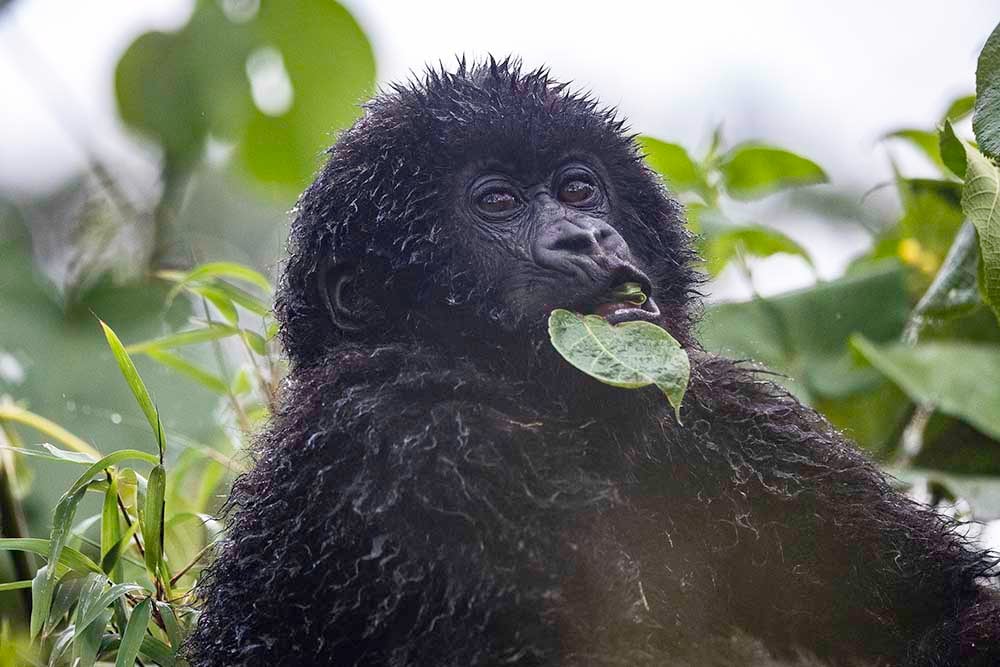
Rugendo Gorilla Family – History of Virunga’s Mountain Gorillas in Congo
The Rugendo Gorilla Family is one of the oldest and most historically significant mountain gorilla families in Virunga National Park, located in the eastern Democratic Republic of Congo (DRC). Known for its remarkable history, this family has experienced leadership changes, family divisions, tragic losses and continued conservation efforts.
The group is named after its former dominant silverback, Rugendo, who played an important role in the development of mountain gorilla conservation in Virunga. It was among the first mountain gorilla families to undergo habituation, allowing researchers and trackers to observe the gorillas closely in their natural habitat.
Over the years, the Rugendo family has been led by several dominant silverbacks, including Rugendo, his son Senkwekwe and later Bukima. Following Bukima’s death in June 2024, silverback Gongomani assumed leadership.
Today, the Rugendo Gorilla Family has 20 members according to Virunga National Park’s published family information.
The family’s story is particularly important because it highlights the challenges mountain gorillas have faced in eastern Congo, including armed conflict, poaching, habitat threats and the dedication of conservation teams working to protect them.
In this guide, discover the history of the Rugendo Gorilla Family, its silverback leaders, family members, tragic events and its contribution to mountain gorilla conservation.
Where Is the Rugendo Gorilla Family Found?
The Rugendo Gorilla Family lives in Virunga National Park in the eastern Democratic Republic of Congo.
Virunga is located within the Albertine Rift region and forms part of the Virunga Massif, a mountain ecosystem shared by the Democratic Republic of Congo, Uganda and Rwanda.
The family occupies the Mikeno sector of Virunga National Park, particularly the forested areas around Bukima and Bikenge.
This mountainous landscape provides suitable habitat for endangered mountain gorillas, offering natural food, shelter and protection.
The Mikeno sector is also home to other mountain gorilla families, including Bageni, Kabirizi, Humba, Nyakamwe, Mapuwa and Lulengo.
Virunga’s community trackers monitor these groups regularly, recording their movements, family relationships, births and changes in leadership.
History of the Rugendo Gorilla Family
The Rugendo family has a long history dating back to the early years of mountain gorilla habituation in Virunga National Park.
The group was among the first mountain gorilla families habituated for research and tourism, with habituation beginning in the mid-1980s.
It was originally led by a dominant silverback named Rugendo, who established a strong family structure consisting of adult females, young gorillas and subordinate males.
During the 1990s, the family experienced several changes as younger males matured and competition for dominance increased.
One of the most significant events occurred in 1998 when Rugendo’s son, Humba, separated from the group following repeated confrontations with his father.
Humba left with several family members and established his own independent gorilla family.
Despite this separation, Rugendo continued leading the remaining members.
The Death of Silverback Rugendo in 2001
On July 15, 2001, the Rugendo family experienced a devastating loss.
During armed clashes in the area, the dominant silverback Rugendo was shot and killed near Bukima.
His death was a major setback for the family and created uncertainty about its future leadership.
Following Rugendo’s death, his son Senkwekwe took over leadership of the remaining group.
Senkwekwe became an important figure in Virunga’s mountain gorilla conservation history and helped maintain the family after the loss of his father.
Senkwekwe Becomes the New Family Leader
After Rugendo’s death, Senkwekwe assumed leadership of the family.
He was known as a strong but gentle silverback who played an important role in maintaining relationships among the surviving members.
Under his leadership, the family gradually recovered through births and the arrival of females from neighbouring gorilla groups.
By 2007, the family had grown to approximately 12 individuals.
However, the group would soon experience another devastating event.
The Tragic 2007 Gorilla Massacre
In July 2007, the Rugendo family suffered one of the most tragic events in Virunga’s mountain gorilla conservation history.
Several members of the family were killed in a deliberate attack.
The victims included silverback Senkwekwe and adult females Safari, Mburanumwe and Neza. Another female, Macibiri, was subsequently found dead.
The incident shocked the international conservation community and highlighted the dangers faced by mountain gorillas living in conflict-affected regions.
Following the massacre, the surviving gorillas were left without a dominant silverback.
Among the surviving young gorillas was Ndeze, an infant who required urgent care.
Her brother Kongomani was observed carrying her on his back, but conservation teams recognised that she needed specialised care to survive.
Veterinarians eventually rescued Ndeze and transferred her to a safe environment.
This tragic incident contributed to the establishment of the Senkwekwe Centre in Virunga National Park, which provides care for orphaned mountain gorillas.
Who Is Senkwekwe and Why Is He Important?
Senkwekwe was the silverback who succeeded his father Rugendo as leader of the family after Rugendo’s death in 2001.
He became an important symbol of mountain gorilla conservation because of his role in maintaining the family during a difficult period.
His death in July 2007, together with other family members, was a devastating loss.
Today, his memory lives on through the Senkwekwe Centre in Virunga National Park.
The centre is recognised as the world’s only facility dedicated to the care of orphaned mountain gorillas.
It provides a protected environment for gorillas that have lost their families through poaching, conflict and other human-related threats.
The Leadership of Bukima Silverback
Following the 2007 massacre, the surviving Rugendo family remained without a dominant leader for some time.
In 2008, conservation trackers discovered a solitary silverback named Bukima leading the group.
Bukima had previously lived in the Buhanga family and later spent time in the Munyaga group before becoming solitary.
He subsequently established himself as the dominant male of the Rugendo family.
Under Bukima’s leadership, the family gradually recovered and continued to experience changes through births and migration.
Bukima became an important figure in the family’s recovery and helped maintain its social structure for many years.
However, his leadership eventually came to an end.
In June 2024, Bukima died, creating another important transition in the history of the Rugendo family.
Who Is the Current Leader of the Rugendo Gorilla Family?
Following the death of Bukima in June 2024, silverback Gongomani took over leadership of the Rugendo family.
According to Virunga National Park’s published conservation information, Gongomani is the current dominant silverback.
His leadership represents another chapter in the long history of this mountain gorilla family.
Like other dominant silverbacks, Gongomani plays an important role in maintaining the group’s social structure, directing movement and protecting family members.
The continued monitoring of the group helps conservation teams understand how the family adapts to changes in leadership.
How Many Members Are in the Rugendo Gorilla Family?
Virunga National Park currently lists the Rugendo family as having 20 members.
Its membership includes different age and social categories:
-
- Dominant silverback Gongomani.
-
- Other mature silverbacks.
-
- Adult female gorillas.
-
- Blackback males.
-
- Juvenile gorillas.
-
- Infant gorillas.
The exact composition of the family can change as gorillas are born, die or move between groups.
Conservation trackers use individual identification methods, including unique nose prints and physical characteristics, to monitor each gorilla.
The group’s population is therefore regularly updated through field observations.
Why Is the Rugendo Gorilla Family Important?
The Rugendo family is particularly significant for several reasons.
1. One of Virunga’s Oldest Habituated Families
The group was among the first mountain gorilla families habituated in Virunga National Park.
Its long history has provided valuable opportunities for researchers and conservationists to study mountain gorilla behaviour.
2. A Family with Several Generations of Silverbacks
The family has been led by several important silverbacks, including Rugendo, Senkwekwe, Bukima and Gongomani.
Its leadership history demonstrates how mountain gorilla families adapt to the death or departure of dominant males.
3. A Remarkable Conservation History
Despite suffering devastating losses, the family survived and continued through the efforts of park rangers, trackers and veterinary teams.
4. Connection to the Senkwekwe Centre
The tragic events of 2007 contributed to the establishment of the Senkwekwe Centre, which provides specialised care for orphaned mountain gorillas.
5. An Important Research Group
Because the Rugendo family has been monitored for decades, it provides valuable information about mountain gorilla reproduction, social organisation, family divisions and leadership changes.
Understanding the Social Structure of the Rugendo Gorilla Family
Like other mountain gorilla groups, the Rugendo family has a social structure organised around a dominant silverback.
The group consists of several categories of gorillas.
The dominant silverback: Gongomani leads the family and plays an important role in protecting its members and maintaining social stability.
Other silverbacks: Mature males may live within the family as subordinate individuals. They can contribute to the protection and stability of the group.
Adult females: Female gorillas play an important role in reproduction and caring for infants.
Blackbacks: These are younger males that have not yet developed the characteristic silver-grey hair across their backs.
Juveniles: Young gorillas spend time playing, exploring and learning social behaviours.
Infants: Infant gorillas depend on their mothers for feeding, protection and care.
Family membership can change as young males mature, females migrate and new gorillas are born.
How Is the Rugendo Gorilla Family Protected?
Protecting the Rugendo family requires continuous monitoring and conservation work.
Virunga National Park works with trackers, rangers, veterinarians and conservation partners to protect mountain gorillas and their natural habitat.
Important conservation activities include:
Daily Gorilla Monitoring
Trackers follow the family to record movements, social interactions, births and changes in membership.
Anti-Poaching Patrols
Rangers conduct patrols to reduce threats from illegal hunting, snares and other human activities.
Veterinary Care
Gorilla doctors provide medical assistance when gorillas suffer injuries or illnesses requiring intervention.
Habitat Protection
Protecting the forest is essential for maintaining natural food sources and suitable living conditions.
Care for Orphaned Gorillas
The Senkwekwe Centre provides specialised care for mountain gorillas that have lost their mothers or families.
These conservation activities help ensure the survival of the Rugendo family and other endangered mountain gorilla groups in Virunga National Park.
Can Tourists Visit the Rugendo Gorilla Family?
Virunga National Park has historically offered mountain gorilla trekking experiences, allowing visitors to encounter habituated gorilla families under the guidance of trained park rangers.
However, tourism operations depend on security conditions and official park decisions.
As of November 2026, Virunga National Park’s official visitor information states that mountain gorilla trekking is closed until further notice.
Visitors should confirm the latest park access information directly with Virunga before making travel arrangements.
For travellers interested in seeing mountain gorillas in East Africa, Uganda offers trekking opportunities in Bwindi Impenetrable National Park and Mgahinga Gorilla National Park, subject to park access and permit availability.
Book Gorilla Tracking can help travellers explore available Uganda gorilla trekking packages and organise their safari arrangements.
Rugendo Gorilla Family Compared with Other Congo Gorilla Families
Virunga National Park is home to several recognised mountain gorilla families.
Each has a unique history and social structure.
Some of the best-known families include:
-
- Bageni: Recognised as Virunga’s largest mountain gorilla family.
-
- Kabirizi: A historically important family led by Bageni’s father.
-
- Humba: Established after a separation from the original Rugendo family in 1998.
-
- Nyakamwe: Formed in 2014 following a split from the Humba family.
-
- Mapuwa: A family established by silverback Mapuwa, another son of Rugendo.
-
- Lulengo: One of the historically important mountain gorilla groups in the Mikeno sector.
-
- Munyaga: A family with a complex history of leadership changes.
-
- Wilungula: A growing mountain gorilla family.
-
- Baraka: Another family monitored by Virunga’s conservation teams.
The Rugendo family is particularly important because of its historical contribution to mountain gorilla habituation and research.
Frequently Asked Questions About the Rugendo Gorilla Family
1. Where is the Rugendo Gorilla Family found?
The Rugendo family lives in Virunga National Park in eastern Democratic Republic of Congo. It occupies the Mikeno sector, particularly areas around Bukima and Bikenge.
2. How many gorillas are in the Rugendo family?
Virunga National Park’s published information lists 20 members in the Rugendo family. Membership can change through births, deaths and migration.
3. Who is the current leader of the Rugendo Gorilla Family?
The current leader is silverback Gongomani, who took over following the death of Bukima in June 2024.
4. Who was Rugendo the silverback?
Rugendo was the original dominant silverback of the family. He was an important figure in Virunga’s early mountain gorilla habituation programme and was killed during armed clashes in July 2001.
5. Who was Senkwekwe?
Senkwekwe was Rugendo’s son and successor. He became the family’s dominant silverback after his father’s death in 2001 but was killed during the July 2007 gorilla massacre.
6. When was the Rugendo Gorilla Family habituated?
The family was among the first mountain gorilla groups habituated in Virunga National Park during the mid-1980s.
7. Why did Humba leave the Rugendo family?
Humba separated from his father’s family in December 1998 following repeated confrontations and competition for dominance. He left with several members and established an independent family.
8. What happened to the Rugendo family in 2007?
The family suffered a devastating attack in July 2007, during which Senkwekwe and several other gorillas were killed. The surviving members were subsequently monitored and supported by conservation teams.
9. What is the Senkwekwe Centre?
The Senkwekwe Centre is a specialised mountain gorilla sanctuary in Virunga National Park. It provides care for orphaned mountain gorillas that have lost their families through poaching, conflict and other threats.
10. Can I trek the Rugendo Gorilla Family?
Virunga National Park’s official visitor information currently states that gorilla trekking is closed until further notice. Travellers should check directly with park authorities for reopening announcements.
11. What do Rugendo family gorillas eat?
Mountain gorillas are primarily herbivores. Their diet consists of leaves, stems, shoots, roots and other forest vegetation, with fruit and other natural foods eaten when available.
12. Why is the Rugendo family important for gorilla conservation?
The family has a long history of habituation, research and conservation monitoring. Its survival despite severe losses provides valuable insight into mountain gorilla resilience and the importance of wildlife protection.
Discover Mountain Gorilla Trekking in Uganda with Book Gorilla Tracking
The Rugendo Gorilla Family represents an important part of the history of mountain gorilla conservation in Africa.
From the original silverback Rugendo to Senkwekwe, Bukima and the current leader Gongomani, the family has experienced extraordinary changes over several decades.
Its story highlights the importance of protecting mountain gorillas, preserving their natural habitats and supporting the conservation teams working in challenging environments.
Although gorilla trekking in Virunga National Park is currently suspended, travellers can explore mountain gorilla trekking opportunities in Uganda.
At Book Gorilla Tracking, we specialise in arranging mountain gorilla trekking experiences in Bwindi Impenetrable National Park and Mgahinga Gorilla National Park.
Contact our team to learn more about Uganda’s habituated gorilla families, gorilla trekking permits and available safari packages.
Book your Uganda gorilla trekking adventure with Book Gorilla Tracking and discover the extraordinary world of mountain gorillas.