+256-702 595 926 | info@bookgorillatracking.com

King’s Palace Rwanda: Tours, History and Things to See

A Tour to the King’s Palace in Rwanda: Exploring Royal Heritage, History and Culture
Introduction
A tour to the King’s Palace in Rwanda is one of the most fascinating cultural experiences for travellers interested in African history, traditional kingdoms, royal heritage and indigenous customs. Located in Nyanza District in Rwanda’s Southern Province, the King’s Palace Museum offers visitors an opportunity to explore the history of Rwanda’s ancient monarchy, discover traditional royal architecture and understand the cultural traditions that shaped Rwandan society.
The King’s Palace, locally associated with Rukari, is among Rwanda’s most important historical attractions. It preserves the heritage of the former Rwandan monarchy through traditional architectural structures, historical exhibitions and cultural presentations. Visitors learn about the country’s former kings, their leadership responsibilities, royal ceremonies and the important role played by cattle in traditional Rwandan society.
Nyanza was an important royal centre, particularly during the reign of King Mutara III Rudahigwa. Today, the King’s Palace Museum welcomes visitors interested in understanding Rwanda’s history beyond its internationally recognised mountain gorilla trekking experiences.
For travellers planning a Rwanda holiday, a visit to the King’s Palace can be combined with Kigali city tours, cultural excursions, visits to historical museums and gorilla trekking in Volcanoes National Park.
Whether you are visiting Rwanda for a cultural holiday, historical exploration or wildlife safari, the King’s Palace is an attraction worth including in your itinerary.
Where Is the King’s Palace Located in Rwanda?
The King’s Palace Museum is located in Nyanza District, Southern Province, approximately 88 kilometres south of Kigali, Rwanda’s capital city.
The journey from Kigali takes approximately two hours by road, depending on traffic and road conditions. Nyanza is historically significant because it served as one of the principal centres of the traditional Rwandan monarchy.
The area became particularly important during the reign of King Mutara III Rudahigwa, whose royal residence is closely associated with the museum.
Visitors can access the King’s Palace using private transportation, organised cultural tours or guided excursions from Kigali. The attraction can be explored as a standalone day trip or incorporated into a longer Rwanda cultural and wildlife safari.
Historical Background of the King’s Palace in Rwanda
To appreciate a visit to the King’s Palace, it is important to understand the historical significance of Rwanda’s monarchy.
Before Rwanda became a republic, the country was governed by a traditional monarchy that played a central role in political administration, cultural development and social organisation.
The king, traditionally known as the Mwami, occupied the highest position in the kingdom. His responsibilities included overseeing the kingdom, maintaining political relationships, supervising traditional institutions and participating in important cultural ceremonies.
The monarchy evolved over several generations, with different kings contributing to Rwanda’s political and cultural development.
Nyanza became one of the most important royal centres, especially during the twentieth century. King Mutara III Rudahigwa, who ruled from 1931 until 1959, is particularly associated with the historical development of the royal residence in the area.
The monarchy eventually came to an end in 1961 when Rwanda became a republic. Today, the King’s Palace Museum preserves important elements of this historical period and provides visitors with an opportunity to understand Rwanda’s traditional leadership system.
What to Expect on a Tour to the King’s Palace
A guided tour of the King’s Palace Museum offers several interesting cultural and historical experiences.
1. Exploring the Traditional King’s Palace
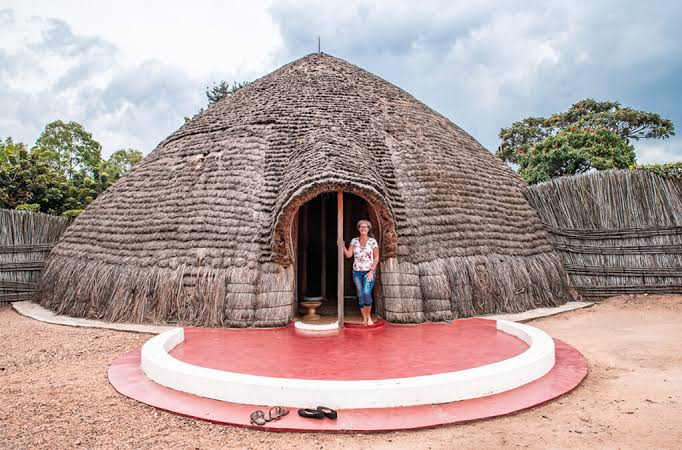
One of the main highlights of visiting the King’s Palace is exploring the reconstructed traditional royal residence.
The structure features a distinctive beehive-shaped design, with a large thatched roof and walls constructed using traditional materials. Its architectural style reflects the indigenous building techniques that were historically used in Rwanda’s royal courts.
Inside the traditional palace, visitors learn how the royal residence was organised, the functions of different sections and how members of the royal household lived.
A knowledgeable cultural guide explains the symbolism of the architecture, traditional household arrangements and the responsibilities of different people who served within the royal court.
The experience provides an interesting understanding of traditional Rwandan construction techniques and the cultural significance of royal residences.
2. Seeing the Royal Inyambo Cattle
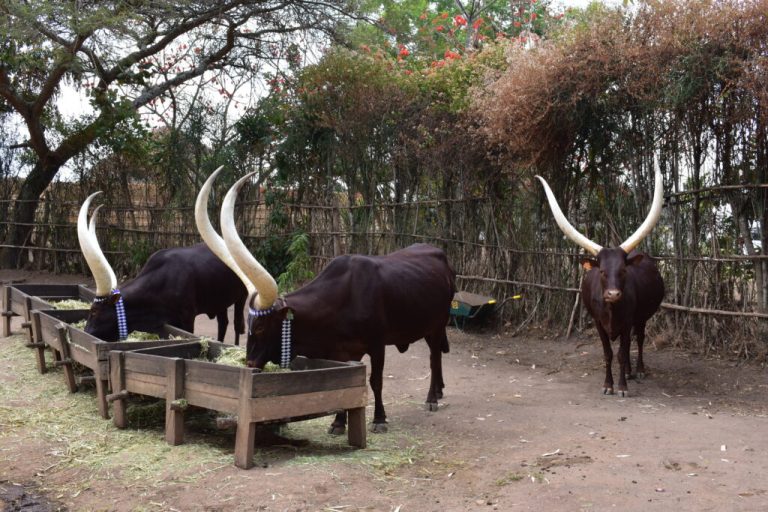
One of the most memorable experiences at the King’s Palace Museum is seeing the Inyambo cattle.
These magnificent long-horned cattle are associated with Rwanda’s royal heritage and traditional pastoral culture. Historically, they were considered symbols of prestige, wealth and royal authority.
Inyambo cattle were specially cared for and featured in important royal ceremonies. Their impressive horns and graceful appearance made them particularly significant within the traditional kingdom.
Visitors learn about their history, traditional care and cultural importance.
One fascinating aspect of Inyambo culture is the traditional practice of singing to the cattle. Historically, specially trained cattle keepers used songs, poems and gentle movements to guide and encourage the animals during ceremonial performances.
Seeing the Inyambo cattle provides a unique opportunity to understand the historical relationship between Rwandan society, livestock keeping and cultural identity.
Visitors interested in this experience should arrange the appropriate museum visit in advance.
3. Visiting King Mutara III Rudahigwa’s Modern Palace
Another important attraction within the museum compound is the modern palace associated with King Mutara III Rudahigwa.
Unlike the traditional beehive-shaped royal residence, this building reflects a different architectural style influenced by developments during the colonial period.
The palace provides insight into the changing lifestyles of Rwanda’s royal family during the twentieth century.
Visitors learn about King Mutara III Rudahigwa’s reign, his leadership and the historical circumstances that influenced Rwanda during this period.
The exhibitions also help explain the transformation of the monarchy and the events leading to the establishment of the republic.
4. Learning About Rwanda’s Traditional Monarchy
A visit to the King’s Palace is an excellent opportunity to understand Rwanda’s traditional political and social organisation.
Through historical exhibitions and guided explanations, visitors discover how the monarchy functioned and the responsibilities of different royal institutions.
Some of the subjects explored include:
-
The origins and development of Rwanda’s monarchy.
-
The responsibilities of traditional Rwandan kings.
-
The organisation of the royal court.
-
Traditional royal ceremonies and customs.
-
The historical importance of cattle.
-
The relationship between the monarchy and local communities.
-
The influence of colonial administration on traditional leadership.
-
The transition from monarchy to republican government.
This historical understanding helps visitors appreciate Rwanda’s cultural identity and the historical foundations of modern Rwandan society.
5. Discovering Traditional Rwandan Architecture
The King’s Palace Museum also provides an opportunity to explore traditional Rwandan architecture.
Visitors discover how traditional structures were constructed using locally available materials, including grass, wood and other natural resources.
The traditional royal residence demonstrates the architectural skills of earlier Rwandan communities and the importance of design in expressing social status and cultural identity.
Visitors can also learn about the organisation of traditional households, food preparation, milk preservation and other activities associated with royal life.
How to Get to the King’s Palace Museum in Nyanza
The King’s Palace Museum is accessible by road from several destinations in Rwanda.
From Kigali
Kigali is the most convenient starting point for visitors planning a King’s Palace excursion.
The drive from Kigali to Nyanza takes approximately two hours. Travellers can arrange private transportation, hire a vehicle or book an organised cultural tour.
The route passes through Rwanda’s beautiful countryside, providing opportunities to appreciate the country’s rolling hills, rural settlements and agricultural landscapes.
From Huye
Visitors travelling from Huye can reach Nyanza in approximately 45 minutes, depending on road conditions.
The two destinations can easily be combined into a cultural excursion featuring the King’s Palace Museum and the Ethnographic Museum.
From Volcanoes National Park
Travellers coming from Volcanoes National Park can also include the King’s Palace in a longer Rwanda itinerary.
The journey involves a considerable road transfer, so it is advisable to organise the excursion as part of a multi-day itinerary rather than rushing between destinations.
For visitors on a Rwanda gorilla trekking safari, the King’s Palace can be explored before or after visiting Volcanoes National Park.
King’s Palace Museum Entrance Fees
The King’s Palace Museum charges different admission fees depending on the visitor’s category.
The published admission schedule includes the following adult rates:
| Visitor category | Entrance fee |
|---|---|
| Rwandans and residents | RWF 6,000 |
| Africans and African-country residents | RWF 10,000 |
| International visitors | RWF 20,000 |
These rates should be confirmed with the museum before travelling, particularly where additional activities or special arrangements are involved.
Visitors should also establish whether guided services, special Inyambo cattle presentations and photography arrangements attract additional charges.
King’s Palace Museum Opening Hours
The Rwanda Cultural Heritage Academy indicates that national museums generally operate from 9:00 am to 5:00 pm daily.
However, on the last Saturday of every month, when Umuganda community work takes place, museums open at midday.
Museums are generally closed on:
-
7 April, during the commemoration of the 1994 Genocide against the Tutsi.
-
25 December, Christmas Day.
-
1 January, New Year’s Day.
Visitors should confirm the latest opening arrangements before setting off from Kigali or other destinations.
Best Time to Visit the King’s Palace in Rwanda
The King’s Palace Museum can be visited throughout the year because it is primarily a cultural and historical attraction.
However, the drier months from June to September are particularly convenient for travellers combining the museum visit with other outdoor excursions across Rwanda.
December to February is another suitable period for cultural tours and road trips.
Rwanda’s rainy seasons can bring occasional heavy showers, so visitors should allow additional time for transportation and outdoor activities.
Ultimately, the best time to visit depends on your wider Rwanda holiday itinerary and the other destinations you intend to explore.
Other Attractions to Combine with a King’s Palace Tour
Nyanza and the surrounding Southern Province have several attractions that can complement a visit to the King’s Palace.
1. Ethnographic Museum in Huye
The Ethnographic Museum in Huye is one of Rwanda’s most important cultural institutions.
It showcases the country’s traditional lifestyle, history, craftsmanship, cultural practices and social organisation.
Visitors can discover traditional household objects, agricultural tools, clothing, artistic works and historical artefacts.
Combining the Ethnographic Museum with the King’s Palace provides a deeper understanding of Rwanda’s cultural heritage.
2. Mwima Mausoleum
The Mwima Mausoleum in Nyanza is another historically significant attraction associated with Rwanda’s former royal family.
It is connected with King Mutara III Rudahigwa and Queen Rosalie Gicanda.
Visitors interested in Rwanda’s monarchy can include this historical site in their Nyanza excursion, subject to access arrangements.
3. Kigali City Tour
A Kigali city tour is an excellent addition to a King’s Palace excursion.
Kigali offers several interesting attractions, including historical memorials, cultural institutions, traditional markets and modern urban developments.
Visitors can explore the Kigali Genocide Memorial, visit local markets, discover Rwandan cuisine and experience the city’s vibrant atmosphere.
4. Nyungwe National Park
Travellers interested in combining cultural tourism with wildlife experiences can extend their journey to Nyungwe National Park.
Located in southwestern Rwanda, Nyungwe is famous for its montane rainforest, chimpanzees, other primates and impressive birdlife.
Popular activities include chimpanzee tracking, canopy walkway experiences, forest nature walks and birdwatching.
5. Volcanoes National Park
Volcanoes National Park is one of Rwanda’s most famous tourism destinations and is internationally recognised for mountain gorilla trekking.
Travellers can combine a King’s Palace cultural experience with mountain gorilla trekking, golden monkey tracking and other activities around the Virunga Mountains.
Can You Combine a King’s Palace Tour with Rwanda Gorilla Trekking?
Absolutely! Combining a King’s Palace visit with mountain gorilla trekking is an excellent way to experience Rwanda’s cultural heritage and natural attractions during one holiday.
Many international visitors travel to Rwanda primarily to see endangered mountain gorillas in Volcanoes National Park. However, exploring the country’s cultural attractions adds another dimension to the safari.
A well-organised itinerary can include Kigali city sightseeing, a visit to the King’s Palace Museum in Nyanza and gorilla trekking in Volcanoes National Park.
Suggested 5-Day Rwanda Cultural and Gorilla Trekking Safari
Day 1: Arrival in Kigali
Upon arrival at Kigali International Airport, meet your safari representative and transfer to your hotel.
Depending on your arrival time, you can enjoy a Kigali city excursion featuring selected cultural and historical attractions.
Day 2: Kigali to Nyanza – King’s Palace Tour
After breakfast, depart Kigali for Nyanza in Rwanda’s Southern Province.
Visit the King’s Palace Museum and explore the traditional royal residence, modern palace and Inyambo cattle experience.
You can also include a visit to the Ethnographic Museum in Huye, depending on your preferred itinerary and available time.
Return to Kigali or overnight in the Southern Province.
Day 3: Transfer to Volcanoes National Park
After breakfast, travel towards Musanze and Volcanoes National Park.
Enjoy Rwanda’s beautiful countryside along the way, with opportunities for photography and short stops.
Arrive at your lodge, relax and prepare for the following day’s gorilla trekking adventure.
Day 4: Mountain Gorilla Trekking
After an early breakfast, transfer to the park headquarters for a briefing from Rwanda Development Board officials.
You will receive instructions about gorilla trekking regulations and be assigned a gorilla family to track.
Accompanied by experienced park rangers, enter the forest in search of mountain gorillas.
Once you locate the family, enjoy the authorised observation period while watching these magnificent primates interact, feed and care for their young.
Return to your lodge after the trek.
Day 5: Golden Monkey Tracking or Departure
Depending on your departure arrangements, you can participate in golden monkey tracking or enjoy a cultural experience around Musanze.
Later, transfer to Kigali International Airport for your onward flight.
This itinerary can be customised depending on your travel dates, accommodation preferences and available time.
What to Pack for a King’s Palace Tour
A King’s Palace visit does not require specialised safari equipment. However, carrying a few essentials will make your experience more comfortable.
Consider packing:
-
Comfortable walking shoes.
-
Lightweight and comfortable clothing.
-
A hat or sunglasses.
-
Drinking water.
-
A camera, subject to museum photography regulations.
-
A notebook for recording historical information.
-
Some local currency for personal purchases.
Visitors should respect museum regulations and follow instructions from their cultural guides.
Why Book Your King’s Palace Tour with Book Gorilla Tracking?
At Book Gorilla Tracking, we believe that exploring Rwanda should go beyond mountain gorilla trekking. The country offers an incredible combination of wildlife, cultural heritage, historical attractions and beautiful landscapes.
We organise customised Rwanda tours that allow visitors to discover the country’s most remarkable destinations at a comfortable pace.
When booking a King’s Palace tour with us, you can benefit from:
-
Private transportation with experienced safari drivers.
-
Knowledgeable local guides.
-
Flexible cultural excursion arrangements.
-
Combination tours featuring Rwanda’s historical attractions.
-
Mountain gorilla trekking and golden monkey tracking packages.
-
Accommodation arrangements based on your preferred budget.
-
Customised itineraries for individuals, couples, families and groups.
Whether you are interested in a short cultural excursion from Kigali or a longer Rwanda safari combining history and wildlife, we can help organise an experience that matches your interests.
Frequently Asked Questions About Visiting the King’s Palace in Rwanda
1. Where is the King’s Palace located in Rwanda?
The King’s Palace Museum is located in Nyanza District, Southern Province, approximately 88 kilometres from Kigali.
2. How long does a King’s Palace tour take?
A visit generally takes approximately two to four hours, depending on the activities included, the time spent exploring the museum and the availability of guided experiences.
3. What is the King’s Palace famous for?
The museum is famous for its reconstructed traditional royal residence, King Mutara III Rudahigwa’s former palace and the long-horned Inyambo cattle.
4. Can tourists see the royal Inyambo cattle?
Yes. Visitors can arrange to see the Inyambo cattle through the museum’s designated visiting arrangements. Special presentations and additional charges may apply.
5. Is the King’s Palace worth visiting?
Yes. It is one of Rwanda’s most important cultural attractions and offers visitors an opportunity to understand the country’s royal history, traditional architecture and pastoral heritage.
6. Can I visit the King’s Palace from Kigali in one day?
Yes. The museum is approximately two hours from Kigali, making it suitable for a full-day cultural excursion.
7. Can I combine the King’s Palace with gorilla trekking?
Yes. You can include a King’s Palace visit in a customised Rwanda safari featuring mountain gorilla trekking in Volcanoes National Park.
8. What is the significance of Nyanza in Rwanda’s history?
Nyanza was an important centre of Rwanda’s traditional monarchy and became particularly significant during the reign of King Mutara III Rudahigwa.
9. Who was King Mutara III Rudahigwa?
King Mutara III Rudahigwa was the Rwandan monarch who ruled from 1931 until 1959. He played an important role in Rwanda’s twentieth-century history.
10. Is a guide necessary when visiting the King’s Palace?
A knowledgeable guide is highly recommended because guided explanations help visitors understand the historical significance of the palace, royal traditions, traditional architecture and Inyambo cattle.
Conclusion: Plan Your King’s Palace Tour with Book Gorilla Tracking
A tour to the King’s Palace Museum in Nyanza is an enriching cultural experience that introduces visitors to Rwanda’s royal heritage, traditional architecture, historical leadership and pastoral traditions.
From exploring the reconstructed royal residence to learning about King Mutara III Rudahigwa and discovering the impressive Inyambo cattle, every part of the experience provides valuable insight into Rwanda’s cultural identity.
For travellers planning a Rwanda holiday, the King’s Palace is an excellent addition to a gorilla trekking safari, golden monkey tracking adventure or broader cultural tour.
At Book Gorilla Tracking, we can help you organise a memorable cultural excursion or incorporate the King’s Palace into a customised Rwanda safari.
Contact Book Gorilla Tracking today to plan your King’s Palace tour and discover the fascinating history and cultural heritage of Rwanda.
[…] visit can also be combined with a tour of the King’s Palace Museum in Nyanza, Kigali city sightseeing or a wildlife safari to Nyungwe National […]
[…] visitors to Rwanda can learn about these remarkable animals at the King’s Palace Museum in Nyanza, where the royal cattle heritage is preserved and presented to […]