+256-702 595 926 | info@bookgorillatracking.com

Mount Nyamuragira: Complete Guide to the Active Volcano

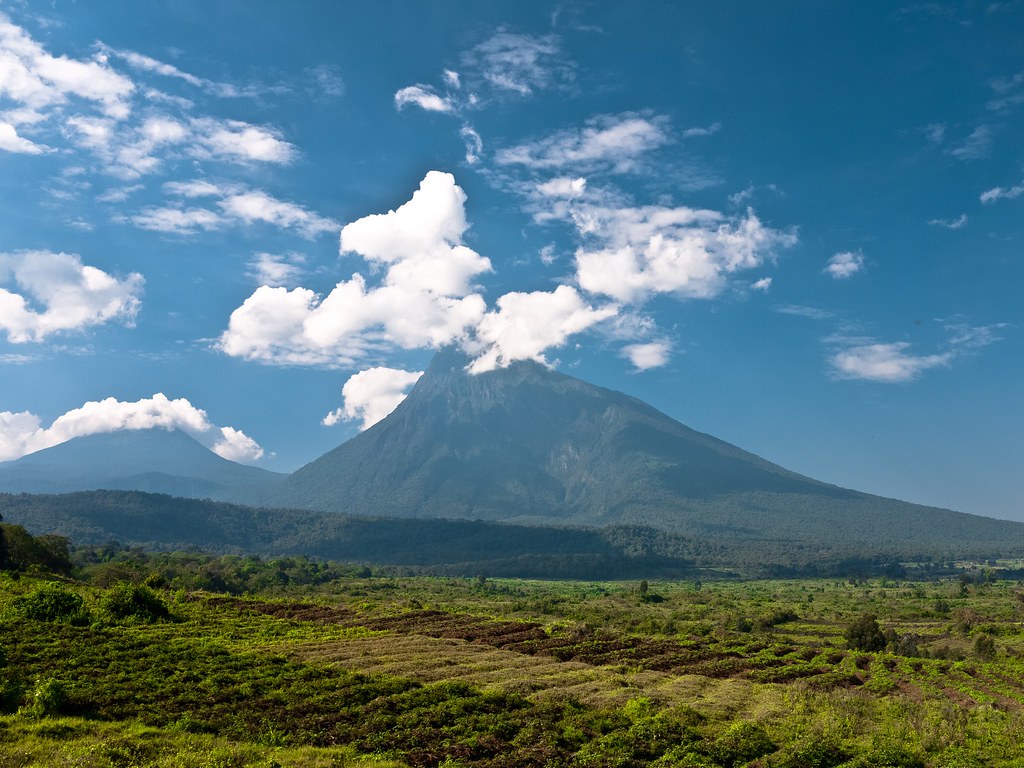
Mount Nyamuragira: Complete Guide to the Active Volcano in DR Congo
Mount Nyamuragira, also known as Mount Nyamulagira, is one of Africa’s most active volcanoes. Located in Virunga National Park in the eastern Democratic Republic of the Congo (DRC), this impressive volcanic mountain is known for its frequent eruptions, extensive lava flows and remarkable geological importance. Rising to approximately 3,058 metres above sea level, Nyamuragira is a major feature of the volcanic landscape of the Albertine Rift.
Unlike the steep, cone-shaped Mount Nyiragongo, Nyamuragira is a broad shield volcano formed by repeated eruptions of relatively fluid lava. Its volcanic activity has shaped the surrounding landscape over thousands of years, creating extensive lava fields and influencing the ecosystems of Virunga National Park.
For travellers, researchers, photographers and adventure enthusiasts, Mount Nyamuragira represents a fascinating part of Africa’s natural heritage. However, it is an active volcanic system, and access must never be assumed to be available for ordinary tourism. Visitors should check current volcanic activity, security conditions and official park restrictions before planning any excursion.
Where Is Mount Nyamuragira Located?
Mount Nyamuragira is located in North Kivu Province in the eastern Democratic Republic of the Congo. It lies within Virunga National Park, a UNESCO World Heritage Site celebrated for its extraordinary biodiversity, volcanic landscapes and mountain gorilla habitat.
The volcano is situated approximately 25 kilometres north of Lake Kivu and around 13 kilometres northwest of Mount Nyiragongo. Its location places it within the western branch of the East African Rift System, a geologically active region where tectonic processes contribute to volcanic activity.
The surrounding region includes forests, mountain slopes, volcanic rock formations and communities whose lives are closely connected to the landscape. Nyamuragira is therefore important not only as a geological feature but also as part of the wider ecological and conservation significance of Virunga National Park.
Mount Nyamuragira at a Glance
| Feature | Details |
|---|---|
| Officially used name | Nyamulagira or Nyamuragira |
| Country | Democratic Republic of the Congo |
| Province | North Kivu |
| Protected area | Virunga National Park |
| Elevation | Approximately 3,058 metres |
| Volcano type | Shield volcano |
| Geological region | Albertine Rift |
| Nearby major lake | Lake Kivu |
| Neighbouring volcano | Mount Nyiragongo |
| Main geological features | Summit caldera, volcanic fissures and extensive lava flows |
| Volcanic status | Active |
| Tourism access | Restricted and subject to official authorization, safety and security conditions |
The Geology of Mount Nyamuragira
Mount Nyamuragira is a basaltic shield volcano. Its wide profile and relatively gentle slopes developed through repeated eruptions that released fluid lava across the surrounding terrain.
Unlike volcanoes that primarily build steep-sided cones from layers of ash and thick lava, shield volcanoes can spread lava over extensive areas. At Nyamuragira, eruptions have occurred both within the summit caldera and through fissures on the volcano’s flanks.
The summit contains a caldera measuring approximately 2 by 2.3 kilometres. Over time, successive eruptions have created lava fields that extend far beyond the summit area, leaving a lasting geological record across the western branch of the East African Rift.
The volcano’s activity is linked to tectonic processes associated with the rifting of the African continent. These processes allow molten rock to rise towards the surface, resulting in eruptions that can change the landscape over relatively short periods.
Why Is Mount Nyamuragira One of Africa’s Most Active Volcanoes?
Nyamuragira is widely recognised as one of Africa’s most active volcanoes because of its frequent eruptive episodes and extensive lava production. Historical records document numerous eruptions, while modern satellite observations help scientists monitor activity in areas that may be difficult or dangerous to reach on foot.
Its activity includes lava emissions from the summit area and flank fissures. Depending on the eruption, lava can spread across large sections of the mountain, covering vegetation and creating new volcanic terrain.
According to the Smithsonian Institution’s Global Volcanism Program, an eruptive episode that began in April 2018 was still continuing in 2026. Satellite observations reported in August 2026 identified active lava flows on several flanks and incandescent activity in the summit caldera.
This ongoing activity makes Nyamuragira scientifically significant. It also means that conditions can change, and no visitor should approach the volcano without current information and explicit authorization from the relevant authorities.
Mount Nyamuragira and Mount Nyiragongo: What Is the Difference?
Mount Nyamuragira and Mount Nyiragongo are neighbouring active volcanoes in the Virunga region, but they differ in shape, volcanic structure and historical eruptive behaviour.
| Feature | Mount Nyamuragira | Mount Nyiragongo |
|---|---|---|
| Elevation | Approximately 3,058 metres | Approximately 3,470 metres |
| Volcano type | Shield volcano | Stratovolcano |
| General shape | Broad, gently sloping profile | Steeper, more pronounced cone |
| Notable characteristics | Frequent eruptions and extensive lava flows | Historically known for its summit lava lake and rapid lava flows |
| Location | Virunga National Park, DRC | Virunga National Park, DRC |
| Visitor access | Restricted; verify official authorization | Subject to official park operations and current safety conditions |
Although both volcanoes are important to the volcanic history of the Albertine Rift, they should not be treated as interchangeable tourism destinations. Nyiragongo has historically been associated with organised summit trekking, while Nyamuragira is primarily of interest for its geological significance and volcanic activity. Access arrangements for either mountain can change.
Can You Visit Mount Nyamuragira?
A visit to Mount Nyamuragira should never be assumed to be possible simply because the volcano appears on a map or in a travel guide.
The mountain is situated in a sensitive volcanic and security environment. Active lava flows, volcanic gases, unstable ground and changing access conditions make independent exploration unsafe.
Before considering an excursion, contact the official Virunga tourism office to establish whether any authorised observation activity is operating. Ask about the permitted area, guide arrangements, transport, safety procedures and any restrictions related to current eruptions.
Travellers should not attempt to hike to the summit, approach fresh lava flows or enter restricted sections of Virunga National Park without explicit authorization. If the volcano is inaccessible, visitors can instead explore other legally accessible attractions in the wider region, subject to current park operations and travel advisories.
Important: Virunga’s official tourism website has published closure notices for certain activities, including gorilla and Nyiragongo treks. These notices do not automatically establish the operating status of every attraction, so confirm the specific activity you intend to undertake before making travel arrangements.
Best Time to Visit Mount Nyamuragira
There is no universally best season for visiting Nyamuragira because access depends on more than rainfall or general tourist seasons. Volcanic activity, security conditions and official park decisions are the primary considerations.
In the wider Virunga region, drier periods may offer more favourable conditions for some outdoor activities. Wetter periods can bring muddy tracks, cloud cover and reduced visibility. However, neither season guarantees access to the volcano or a clear view of its summit.
For travel planning, consider the following:
- Weather: Rain, mist and cloud cover can affect visibility and ground conditions.
- Volcanic activity: Fresh eruptions and lava flows can make areas inaccessible.
- Security: Conditions in eastern DRC can change quickly and may affect travel routes.
- Official authorization: Any excursion must be approved and confirmed by the relevant authorities.
Always obtain updated information close to your intended travel date rather than relying exclusively on seasonal advice.
How to Get to Mount Nyamuragira
The volcano lies in eastern DR Congo, with Goma serving as a major regional gateway for travel in the wider area. However, reaching Goma does not mean that visitors can proceed directly to Nyamuragira.
A potential journey would require advance coordination with the relevant park authorities and confirmation that access to the intended area is permitted.
Step 1: Plan your arrival in eastern DR Congo
Review the current entry requirements for the Democratic Republic of the Congo, including visa requirements and applicable health documentation. Check the latest government travel advisory before booking transport.
Step 2: Contact Virunga National Park
Contact the official park tourism office to ask whether any authorised Nyamuragira-related excursion is available. Do not assume that standard gorilla trekking or Nyiragongo packages include access to this volcano.
Step 3: Confirm transport and security arrangements
Use only approved transport and guiding arrangements. Ask the park or authorised operator to confirm the permitted route, meeting point, security procedures and emergency arrangements.
Step 4: Prepare for changing conditions
Even if an excursion is approved, weather, volcanic activity or security developments may result in changes or cancellation. Keep your itinerary flexible and avoid making non-refundable arrangements that depend on unconfirmed access.
What Should You Pack for a Nyamuragira Expedition?
Packing requirements depend on the activity officially approved for visitors. Do not prepare for an independent summit hike when no such hike has been authorized.
For an approved outdoor excursion in the wider volcanic region, useful items may include:
- Sturdy, closed-toe walking shoes appropriate for the approved terrain.
- Lightweight clothing suitable for changing temperatures.
- A waterproof jacket and rain protection.
- Drinking water and any permitted food supplies.
- Sun protection, including a hat and sunscreen.
- Personal medication and a basic first-aid kit.
- A camera or binoculars, where permitted.
- Identification, required travel documents and proof of appropriate insurance.
Volcanic gases, including sulphur dioxide, can present serious health risks. Ordinary face coverings should not be considered sufficient protection from hazardous volcanic gas concentrations. Follow official safety instructions and remain outside any exclusion zones.
Wildlife and Conservation Around Mount Nyamuragira
Although Nyamuragira is primarily known for its volcanic activity, its setting within Virunga National Park connects it to one of Africa’s most important conservation landscapes.
Virunga contains a variety of habitats, including forests, savannahs, wetlands and mountain ecosystems. These support diverse mammals, birds, reptiles and other wildlife, although the species present vary by habitat and location.
Volcanic activity can have contrasting ecological effects. Lava flows may destroy existing vegetation and temporarily displace wildlife, while weathering and ecological succession gradually create conditions for new plant communities to develop.
The long-term relationship between volcanism and biodiversity makes the area valuable for scientific research. Protecting these landscapes also requires attention to the people living around the park, conservation management and the wider security situation.
Visitors interested in wildlife should arrange activities only in areas officially open to tourism rather than assuming that the volcano’s surroundings are freely accessible.
Is Mount Nyamuragira Safe for Tourists?
Mount Nyamuragira is an active volcano, and visiting its immediate surroundings can involve serious hazards. Safety depends on the current volcanic situation, the precise location, security conditions and the measures established by the responsible authorities.
Potential hazards include:
- Lava flows and sudden changes in eruptive activity.
- Volcanic gases that can irritate the eyes and respiratory system or cause severe harm.
- Unstable volcanic rock and uneven terrain.
- Restricted or difficult evacuation routes.
- Security risks associated with parts of eastern DR Congo.
Before travelling, check your government’s latest travel advice and contact the park directly. Follow all instructions from authorized guides and park staff, and do not enter an area that has been closed or designated as unsafe.
Travellers should also arrange comprehensive travel insurance that covers their planned activities and emergency medical evacuation, subject to the insurer’s terms and any applicable park requirements.
Other Attractions to Consider in Virunga National Park
If Nyamuragira is inaccessible, other destinations in the wider Virunga landscape may be worth considering, provided they are officially operating and safe to visit.
Mount Nyiragongo
Mount Nyiragongo is another major active volcano in the region. It has historically attracted attention for its summit crater and lava lake, but access and trekking operations are subject to closures and changing safety conditions.
Mountain Gorilla Conservation
Virunga National Park is internationally recognised for its mountain gorillas and conservation work. Gorilla trekking is a tightly managed activity that requires permits and official confirmation of availability.
Virunga’s Diverse Landscapes
The wider park contains forests, savannah plains, lakes and mountainous terrain. The activities available to visitors depend on the sector, current park operations and security restrictions.
For all these experiences, confirm current access before building them into an itinerary.
Frequently Asked Questions About Mount Nyamuragira
1. Where is Mount Nyamuragira located?
Mount Nyamuragira is located in North Kivu Province in the eastern Democratic Republic of the Congo, within Virunga National Park.
2. How high is Mount Nyamuragira?
Mount Nyamuragira stands at approximately 3,058 metres above sea level.
3. Is Mount Nyamuragira an active volcano?
Yes. Nyamuragira is one of Africa’s most active volcanoes. Satellite observations documented continuing eruptive activity in 2026.
4. Can tourists hike Mount Nyamuragira?
Visitors should not assume that summit hiking is available. Access is restricted and must be confirmed directly with the responsible park authorities. Do not attempt an independent hike.
5. What is the difference between Nyamuragira and Nyiragongo?
Nyamuragira is a broad shield volcano known for extensive lava flows, while Nyiragongo is a steeper stratovolcano historically known for its summit lava lake.
6. Is Mount Nyamuragira erupting in 2026?
The Smithsonian Institution’s Global Volcanism Program reported continuing eruptive activity during 2026, including observations of lava flows and incandescent activity. Conditions can change, so consult the latest monitoring reports before making any travel decision.
7. What is the best time to visit Mount Nyamuragira?
There is no fixed best season for visiting the volcano. Weather may influence visibility, but access depends primarily on official authorization, volcanic conditions and security.
8. Do I need a guide to visit Mount Nyamuragira?
Any authorized visit must follow the access and guiding arrangements established by the responsible authorities. Do not enter the volcanic zone independently.
9. Is Mount Nyamuragira the same as Mount Nyiragongo?
No. They are separate volcanoes in the Virunga region. They have different volcanic structures and eruptive histories.
10. Where can I find updated information about Mount Nyamuragira?
Consult the Smithsonian Institution’s Global Volcanism Program for volcanic monitoring information and the official Virunga tourism website for visitor access and operational notices.
Plan Your Visit to the Virunga Volcanic Region
Mount Nyamuragira offers an extraordinary example of the geological forces that continue to shape the African continent. Its broad volcanic structure, repeated eruptions and extensive lava fields make it an important destination for understanding the natural history of the Albertine Rift.
However, this is not an ordinary hiking destination. Any visit must be planned around current volcanic monitoring, security advice and official access restrictions.
If you are interested in exploring the wider Virunga region, begin by checking official park updates and identifying which attractions are operating. Responsible planning helps protect travellers, local communities and the fragile landscapes that make this part of Africa so remarkable.