+256-702 595 926 | info@bookgorillatracking.com

Lake Katwe Salt Mining, Uganda: Visitor Guide

Lake Katwe Salt Mining in Uganda: A Cultural Experience Near Queen Elizabeth National Park
Lake Katwe salt mining is one of Uganda’s most fascinating traditional industries and cultural tourism experiences. Located in Kasese District in southwestern Uganda, near Queen Elizabeth National Park, Lake Katwe is a saline crater lake where local communities have extracted salt for generations.
Unlike modern industrial mines that rely on large machinery, salt production at Lake Katwe largely depends on traditional knowledge, manual labour and the natural process of evaporation. Visitors can explore the salt pans, learn how different salt products are harvested and discover how the industry supports families in the surrounding community.
For travellers planning a Uganda safari, a visit to Lake Katwe offers something different from wildlife viewing. It provides a closer look at local livelihoods, traditional skills and the human stories connected to the landscapes of western Uganda.
Where Is Lake Katwe Salt Lake?
Lake Katwe is situated in Kasese District in western Uganda, close to the northern part of Queen Elizabeth National Park and the scenic crater-lake landscape surrounding the park.
The lake lies within a volcanic crater formed by ancient geological activity. Because it has no surface outlet, dissolved salts accumulate in its water as evaporation concentrates the brine. This natural environment has supported salt extraction for centuries.
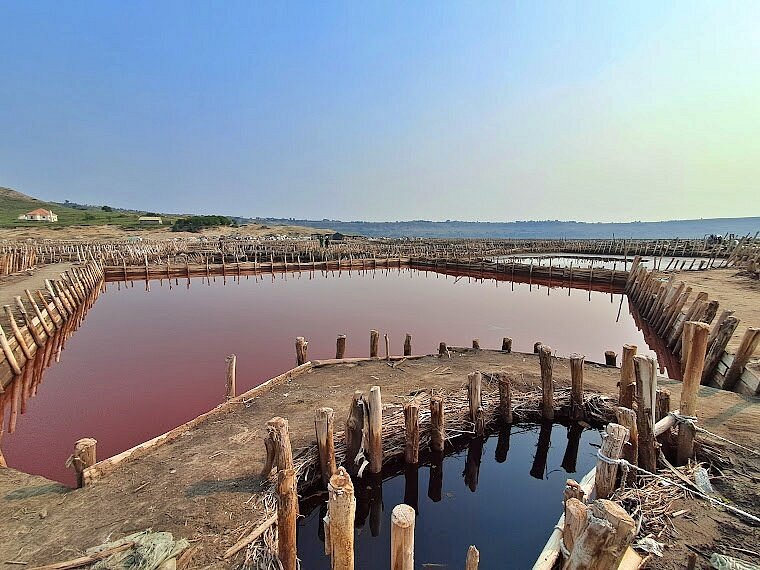
Lake Katwe is particularly interesting because it combines geological significance with an active local industry. The shoreline is divided into numerous salt pans, where workers collect and process salt using traditional methods.
The lake is also conveniently positioned for travellers exploring Queen Elizabeth National Park, making it a worthwhile cultural stop alongside wildlife safaris, birdwatching and scenic drives.
The History of Salt Mining at Lake Katwe
Salt extraction at Lake Katwe has a long history and remains an important source of income for local households. For generations, people have depended on the lake’s mineral-rich water and salt deposits to produce goods for domestic use and trade.
Salt was historically a valuable commodity because it was needed for seasoning food, preserving certain foods and supporting livestock. The industry helped connect communities in western Uganda with markets in other parts of the region.
Today, the work continues through a combination of inherited knowledge, family-managed salt pans and practical skills passed between generations. Visiting the lake with a knowledgeable local guide provides an opportunity to understand how this industry has developed and why it remains important to the Katwe community.
How Is Salt Extracted at Lake Katwe?
One of the highlights of a Lake Katwe salt mining tour is seeing how workers use traditional techniques to extract salt from the lake and its surrounding pans.
1. Collecting saline water
Lake Katwe contains highly saline water rich in dissolved minerals. Workers use this natural resource as the starting point for several forms of salt extraction.
2. Preparing the salt pans
Along the lake’s margins, shallow evaporation pans are separated by narrow earthen boundaries. Individual miners or families may manage particular pans, maintaining them and preparing them for production.
3. Evaporation under the sun
Saline water is directed into the pans, where sunlight and heat gradually evaporate the water. As the water level falls, salt becomes more concentrated and crystals form.
Dry weather generally favours this process, while rainfall can slow evaporation and interrupt production.
4. Collecting and sorting the salt
When sufficient salt has formed, workers collect it manually and separate products according to their characteristics and intended use. The work requires patience, physical effort and experience in judging when the material is ready to harvest.
5. Extracting rock salt
In addition to collecting crystals from evaporation pans, some workers extract blocks of rock salt from the lakebed. This is physically demanding work that may involve standing in concentrated brine and transporting heavy material.
Visitors should observe these activities from areas approved by their local guide rather than entering working pans or attempting extraction without permission.
What Types of Salt Are Produced at Lake Katwe?
Lake Katwe is associated with several salt products. The exact grade and use depend on the material collected and how it is processed.
- Crystallised salt: Salt crystals collected from evaporation pans. Some grades are intended for further preparation for human consumption.
- Rock salt: Solid salt deposits extracted from the lakebed and transported to shore.
- Lower-grade salty material: Some mineral-rich or muddy products are used for livestock salt licks or other purposes, depending on their composition and local markets.
The lake also contains other mineral salts, including trona. Not every product extracted from the lake is ordinary table salt, so it is useful to ask a local guide to explain the differences.
Visitors should not assume that raw salt seen at the site is ready to eat. Food-grade salt should meet appropriate processing and safety standards.
What to Expect on a Lake Katwe Salt Mining Tour
A guided Lake Katwe salt mining tour offers a closer look at the daily work and traditions of the local community.
Walk around the salt pans
Walk along designated paths and the narrow boundaries separating the pans. You can see the distinctive pattern of evaporation plots spread across the lake margins and observe the practical methods used to maintain them.
Some paths may be muddy, slippery or uneven, particularly after rain, so follow your guide’s instructions.
Meet local salt miners
With permission, visitors can speak with community members about their work, the challenges of salt production and the importance of the lake to household livelihoods.
These conversations can help travellers understand the human side of the landscape beyond the wildlife and scenery commonly associated with Uganda safaris.
Learn about traditional salt production
A local guide can explain the differences between evaporation-pan salt and rock salt, how weather influences production, and how salt is collected, sorted and prepared for sale.
Discover the local economy
Salt mining supports livelihoods through the work of miners, transporters, traders and other community members. A visit offers insight into how a natural resource contributes to local economic life.
Enjoy the surrounding crater landscape
The area around Lake Katwe features striking volcanic scenery and other crater lakes. The landscape offers opportunities for photography and can be combined with selected scenic stops in the Queen Elizabeth National Park region.
The Challenges Faced by Lake Katwe Salt Miners
Although salt mining provides an important livelihood, it can be demanding and hazardous.
Workers may spend long periods exposed to intense sunlight and concentrated saline water. Prolonged contact with brine can irritate or damage skin, while lifting and transporting salt places physical demands on the body.
The industry also depends heavily on weather. Rain can disrupt evaporation and reduce the amount of salt that can be collected from the pans.
These challenges are an important part of the story visitors learn during a responsible community tour. Travellers should approach the site with respect, recognising that it is an active workplace as well as a tourism attraction.
Best Time to Visit Lake Katwe Salt Mines
Lake Katwe can be visited throughout much of the year, but weather conditions affect what visitors see.
The drier periods are generally more favourable for salt production because strong sunlight supports evaporation. Rainier periods can slow harvesting, although a visit may still provide an interesting introduction to the lake, its geology and the local community.
For travellers combining Lake Katwe with a safari in Queen Elizabeth National Park, the broader dry seasons are often convenient for wildlife viewing and road travel. However, weather varies, and salt production is not guaranteed on any particular day.
Ask your tour operator or local guide about current conditions before visiting.
How to Get to Lake Katwe Salt Mining Site
Lake Katwe is usually visited by road as part of a western Uganda itinerary.
From Mweya Peninsula
Mweya is a convenient base for exploring the central section of Queen Elizabeth National Park. A visit to Lake Katwe can be arranged as a cultural excursion alongside other activities, depending on road conditions and your itinerary.
From Kasese
Travellers staying in or passing through Kasese can arrange road transport to the Katwe area. Travel time depends on the starting point, road conditions and stops along the way.
From Kampala or Entebbe
Lake Katwe can be included in a longer road safari from Kampala or Entebbe. Many visitors combine it with Queen Elizabeth National Park, the Kazinga Channel, Ishasha and, on extended trips, Bwindi Impenetrable National Park.
For the best experience, arrange the visit with a tour operator or local community guide who can confirm access arrangements and current tour details.
Combine Lake Katwe with Queen Elizabeth National Park
A Lake Katwe salt mining tour works particularly well as part of a broader Queen Elizabeth National Park safari.
Kazinga Channel boat cruise
The Kazinga Channel connects Lake Edward and Lake George. A boat cruise offers opportunities to observe hippos, crocodiles, elephants near the water and a variety of waterbirds. Wildlife sightings vary with conditions.
Game drives in Queen Elizabeth National Park
Game drives offer opportunities to look for elephants, buffaloes, antelopes, lions and other wildlife. Sightings cannot be guaranteed, and the best area to visit depends on your itinerary and current wildlife conditions.
Katwe crater-lake scenery
The surrounding volcanic landscape provides scenic viewpoints and opportunities to learn more about the region’s geological history. Stops should be selected according to road conditions, available time and local guidance.
Birdwatching near Lake Munyanyange
Lake Munyanyange, a separate crater lake near Katwe, is known as a potential birdwatching stop. Birdlife changes seasonally, and flamingos may be present at certain times. Sightings are never guaranteed.
Continue to Ishasha or Bwindi
Travellers with more time can continue to the Ishasha sector of Queen Elizabeth National Park or travel towards Bwindi for mountain gorilla trekking. The best route depends on accommodation, permit availability and the overall safari plan.
Responsible Tourism at Lake Katwe
Lake Katwe is a working environment, and respectful behaviour helps protect the dignity of the people who depend on it.
- Visit with a local guide or through an authorised community arrangement.
- Ask permission before photographing salt miners, their families or their work.
- Stay on approved paths and do not enter salt pans without permission.
- Do not handle tools, salt products or equipment unless invited to do so.
- Follow safety guidance around brine, uneven ground and slippery walkways.
- Consider purchasing suitable local products or using local guiding services when available.
- Avoid treating workers as a spectacle; remember that salt mining is their livelihood.
A thoughtful visit can help travellers appreciate the knowledge and effort behind traditional salt production while supporting community-based tourism.
Is Lake Katwe Salt Mining Worth Visiting?
Yes. Lake Katwe is worth considering for travellers interested in cultural experiences, traditional industries, geology and community tourism.
It offers a different perspective on southwestern Uganda, showing how people have adapted to a mineral-rich volcanic environment and built livelihoods around a natural resource. The experience complements the wildlife and scenery of Queen Elizabeth National Park rather than replacing its more familiar safari activities.
For photographers, culture enthusiasts and travellers seeking a deeper understanding of Uganda, a guided visit can become a memorable part of the journey.
Plan Your Lake Katwe Salt Mining Visit with Raptors Africa Safaris
Raptors Africa Safaris can help you include Lake Katwe salt mining in a tailor-made Uganda safari. Combine this cultural experience with wildlife viewing in Queen Elizabeth National Park, a Kazinga Channel boat cruise, crater-lake scenery and other destinations in western Uganda.
Whether you are planning a short Queen Elizabeth National Park safari or a longer journey that includes chimpanzee tracking and mountain gorilla trekking, our team can help organise an itinerary around your interests, travel dates and budget.
Contact Raptors Africa Safaris to plan your Uganda safari and discover the cultural and natural highlights of Lake Katwe.